

Maddy summaryHB 118 modifies North Carolina's property tax exemption for disabled veterans, replacing a flat $45,000 exclusion with a percentage-based system tied to the veteran's VA disability rating. It directly affects veterans with a 50% or higher service-connected disability rating (or surviving spouses under specific conditions), allowing them to exclude a portion of their home's appraised value from property taxes - equal to their disability percentage. For example, a veteran with a 70% disability rating would exclude 70% of their home's value from taxes. The bill takes effect for taxes due in 2025 and prohibits combining this relief with other property tax exemptions.
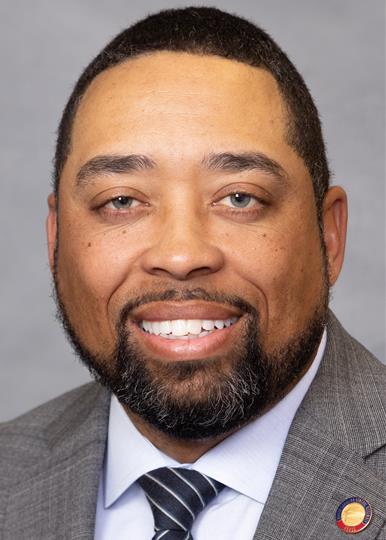
Rep. Ray Jeffers
Sponsored bills
Maddy summaryHB 612, the "Fostering Care in NC Act," updates North Carolina's laws governing child abuse, neglect, and dependency cases. It expands the definition of "abused juveniles" to include specific offenses like sexual crimes, human trafficking, and certain violent acts, affecting how cases are classified. The bill requires county social services directors to use either a family-centered assessment or a formal investigation when reviewing reports, and to collect military affiliation details of the juvenile's caregiver. It also clarifies that court jurisdiction over juveniles continues until age 18, emancipation, or death. These changes standardize responses to child welfare reports and improve information gathering for safety decisions.
Maddy summaryHB 91 amends North Carolina statutes to include the U.S. Space Force in the definition of "Armed Forces" for state benefits, ensuring Space Force members and their families qualify for military-related tax exemptions, tuition assistance, and residency rules. The bill also changes the name of Fort Bragg to Fort Liberty to align with the U.S. Department of Defense's renaming of the base. These updates reflect the federal establishment of the Space Force and ensure state law matches current military structure and base designations.
Maddy summaryHB 59 would increase the income eligibility limit for North Carolina's elderly or disabled property tax homestead exclusion from $25,000 to $48,000 for taxable years beginning July 1, 2026. This change would directly affect homeowners aged 65 or older, or those who are totally and permanently disabled, who meet other criteria (like being a North Carolina resident and owning their home as a permanent residence). The bill modifies the existing rule that currently limits eligibility to those with incomes under $25,000, raising the threshold to $48,000 while maintaining the exclusion amount as the greater of $25,000 or 50% of the home's appraised value. The change aims to expand access to this property tax relief for qualifying low-to-moderate income homeowners. (Note: The bill was withdrawn in June 2025 and has not become law.)
Maddy summaryHB 348 extends the period for carrying forward deferred property taxes on agricultural, horticultural, and forest land from three to six years. It creates local grant programs for counties and cities, using the excess tax funds generated by this change, to provide financial support to qualifying farmers for farm sustainability. The bill also requires cities to obtain county commission approval before annexing land classified under present-use value taxation. These provisions directly affect farmers who qualify for present-use value property taxation and local governments managing tax funds and annexation decisions.
Maddy summaryHB 578, the Jason Flatt Act, requires all North Carolina public K-12 schools to implement suicide prevention education and training for school staff. It mandates that licensed educators complete at least one hour of annual suicide prevention training, while staff working with grades 6-12 must receive guidelines for identifying at-risk students and procedures for referrals. Schools must adopt a mental health plan including these elements, with initial staff training of six hours (within six months of hire) and two hours annually thereafter. The law applies to all public schools, charter schools, regional schools, and lab schools starting the 2025-2026 school year.
Maddy summaryHB 126 requires state and local agencies to seek input from agricultural advisory boards before condemning or rezoning farmland within voluntary agricultural districts. It mandates that agencies request public hearings on such proposals, giving boards 45 days to review and submit recommendations. Agencies cannot proceed with condemnation or rezoning actions while the board is processing the request, extending the timeline to 120 days after the board submits its findings. The bill directly affects landowners in these districts and agencies making land use decisions, effective October 1, 2025.
Maddy summaryHB 543 requires all applicants for athlete agent registration in North Carolina to undergo a criminal history background check as a condition of obtaining or renewing their license. This directly affects individuals seeking to work as athlete agents within the state, including new applicants and those renewing existing registrations. The bill mandates that applicants pay a $250 fee for the check (as specified in Section 2 of the bill), consent to fingerprinting, and allows the State Bureau of Investigation to conduct the check using state and federal records. All background information remains confidential and is not considered a public record under North Carolina law.
Maddy summaryHB 231 establishes North Carolina's participation in the Social Work Interstate Licensure Compact, allowing licensed social workers from participating states to practice across state lines without obtaining separate licenses in each state. The bill directly affects licensed social workers seeking to provide services in multiple states, particularly those serving military families or addressing workforce shortages. Key provisions include mutual recognition of licenses among member states, accountability for social workers practicing where clients are located, and streamlined processes for disciplinary information sharing. This reduces duplicate licensing requirements while maintaining state authority to protect public health and safety through existing licensure systems.
Maddy summaryHB 577 creates a Towing and Recovery Commission within the North Carolina State Highway Patrol to resolve disputes over fees charged by towing services to law enforcement. It requires towing businesses to submit hourly rates to the commission for approval and establishes new permit requirements, including background checks (no felony convictions in the past 5-10 years), insurance, training, and proof of a compliant storage facility. The bill directly affects towing companies, truckers using the State Highway Patrol rotation system, and law enforcement agencies that contract for towing services. Key provisions include the commission’s authority to set reasonable fees, disqualify noncompliant tow services, and oversee permit applications with specific eligibility criteria.