

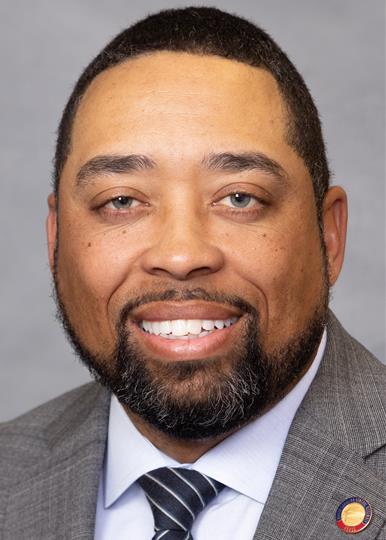
Photo of Ray Jeffers
D North Carolina House · District 2 On the 2026 ballot

Rep. Ray Jeffers

Compare
Total votes
542
all sessions
Attendance
91%
48 missed
Near the chamber average
With party
94%
of cast votes
Lower than 80% of chamber peers
Bipartisan score
3%
crosses aisle rarely
Higher than 77% of chamber peers
Sponsored
214
bills & resolutions
Near the chamber average
Committees
8
assignments
214 bills and resolutions

Sponsored bills

Total
214
Primary
15
Co-sponsor
199
This page
214
matching current filters
Co-sponsor HB 1072
In committee · North Carolina House · Co-sponsor
Affordable Housing Infrastructure Development.

Maddy summaryThis bill creates a new loan program in North Carolina to help nonprofit organizations prepare land for affordable housing by offering below-market interest rate loans. The funds, totaling $50 million for the 2026-2027 fiscal year, can only be used for site-related expenses like land acquisition, utility installation, and environmental testing, but not for building the actual homes. To qualify, borrowers must be experienced nonprofits that provide zero-interest mortgages to buyers and ensure at least 40% of units in mixed-income projects are reserved for low- and moderate-income families. The program is designed to support the development of housing for households earning up to 80% of the local area median income.

In committee Apr 29, 2026 1 co-sponsor
Co-sponsor HB 1078
In committee · North Carolina House · Co-sponsor
Omnibus Life Sciences Appropriations.

Maddy summaryHB 1078 is an omnibus appropriations bill that provides funding to the Department of Commerce and the Department of Health and Human Services in North Carolina. The legislation allocates $10 million to the One North Carolina Small Business Account and $2 million to the North Carolina Biotechnology Center to support life science companies, university research, workforce development, and economic programs. Additionally, the bill transfers the Advisory Council on Rare Diseases from the Department of Commerce to the Department of Health and Human Services and establishes a new Life Science and Biomanufacturing Technologies Reserve Fund. The bill also details the composition, membership, and administrative structure of the rare diseases council, which includes physicians, researchers, patient representatives, and industry experts.

In committee Apr 29, 2026 1 co-sponsor
Co-sponsor HB 1080
In committee · North Carolina House · Co-sponsor
Public Safety Reinvestment Act.

Maddy summaryHB 1080, the Public Safety Reinvestment Act, allocates state funds to address staffing shortages and modernize safety measures across several North Carolina public institutions. The bill directs $30 million to hire additional court clerks in Wake and Mecklenburg counties, provides salary increases for Department of Adult Correction employees and State Highway Patrol members, and offers benefits enhancements for correctional officers in specific retirement systems. It also mandates that public transit vehicles carry emergency trauma kits and requires operators to implement stricter fare enforcement technologies and training. Furthermore, the legislation funds the Division of Juvenile Justice, the State Crime Laboratory, and includes provisions for reporting fare evasion data and safety incidents.

In committee Apr 29, 2026 1 co-sponsor
Co-sponsor HB 1077
In committee · North Carolina House · Co-sponsor
NC Working Families Economic Relief Act.

Maddy summaryHB 1077 creates a grant program for North Carolina community colleges to train students as tax preparers for the Volunteer Income Tax Assistance (VITA) program, allowing them to help low-income individuals, people with disabilities, and limited English speakers file their taxes for free. The bill provides $1.38 million in initial funding and $610,000 in recurring funds to support curriculum development, faculty incentives, and paid work-based learning opportunities where students earn hourly wages during tax season. Additionally, the legislation allocates $840,000 to the United Way of North Carolina to expand its VITA services by increasing the number of locations, hiring dedicated staff, and improving outreach and financial education resources. These measures aim to help an estimated 225,000 eligible North Carolina filers claim the Federal Earned Income Tax Credit, which has an average value of about $2,894 per person. The act takes effect on July 1, 2026, and includes provisions for training and technical assistance to ensure the program runs effectively.

In committee Apr 29, 2026 1 co-sponsor
Co-sponsor HB 1071
In committee · North Carolina House · Co-sponsor
Supplemental Nutrition Assistance Program Funding in Response to H.R. 1.

Maddy summaryThis bill appropriates $85 million in state funds to cover administrative cost losses for the Supplemental Nutrition Assistance Program (SNAP) in North Carolina, which result from a federal law reducing federal funding. The money is split between the state Department of Health and Human Services and the county-level Division of Social Services, with funds distributed to counties based on their specific financial losses. These allocations are strictly limited to the actual amount of lost federal receipts and will become available starting in the 2026-2027 fiscal year.

In committee Apr 29, 2026 1 co-sponsor
Co-sponsor HB 1045
In committee · North Carolina House · Co-sponsor
Fair Wages in Health Care Act/Funds.

Maddy summaryHB 1045, known as the Fair Wages in Health Care Act, establishes minimum hourly wages for five specific direct care occupations in North Carolina: home care aides, direct support professionals, certified nursing assistants, psychiatric aides, and licensed practical nurses. The bill sets wage floors ranging from $18 to $24 per hour depending on the role, with protections against employers using different job titles to avoid paying the required rates. To help healthcare providers meet these new costs, the Department of Health and Human Services must adjust reimbursement rates for publicly funded programs and update contracts with managed care organizations. The law takes effect on October 1, 2027, and applies to all employers in the state, regardless of whether they are public or private entities.

In committee Apr 28, 2026 1 co-sponsor
Primary HB 1057
In committee · North Carolina House · Lead sponsor
Affordable Food Act.

Maddy summaryHB 1057, known as the Affordable Food Act, aims to improve food security in North Carolina by expanding access to nutritious food and supporting local agriculture. The bill authorizes the state to request a federal waiver to create a program that matches SNAP benefits for purchases of fruits, vegetables, and other healthy foods at retailers and farmers markets. It also allocates state funding to administer these incentive programs and covers potential administrative losses due to recent federal changes to SNAP. Additionally, the legislation seeks to protect agricultural land from development and prohibits dynamic pricing in grocery stores to stabilize food costs.

In committee Apr 28, 2026 0 co-sponsors
Co-sponsor HB 1054
In committee · North Carolina House · Co-sponsor
Government Employee Raises and Retiree Cost-of-Living Adjustment.

Maddy summaryThis bill establishes new salary schedules for public school teachers and principals in North Carolina effective for the 2026-2027 fiscal year. It sets specific monthly pay rates for teachers based on years of experience and adds bonuses for those with advanced certifications or degrees, while also adjusting compensation for school support staff like nurses and counselors. Principals will receive annual salaries determined by their school's student enrollment and performance growth scores over the previous three years. Additionally, the legislation enhances sick leave benefits for state employees and provides a cost-of-living adjustment for certain retirees.

In committee Apr 28, 2026 1 co-sponsor
Primary HB 1021
In committee · North Carolina House · Lead sponsor
Facilities of Disabled American Veterans (DAV) Organizations/Funds.

Maddy summaryThis bill allocates $10 million in recurring funds to the North Carolina Department of Military and Veterans Affairs to support Disabled American Veterans (DAV) chapters. The money will be distributed as grants to eligible nonprofit DAV chapters across the state for renovating and expanding their facilities or providing additional resources to disabled veterans. Each chapter can receive up to $1 million per fiscal year, and the department will aim to select applicants from all regions of the state. The legislation also requires annual reports detailing the number of grants awarded, the specific chapters involved, and the amounts given, with the program becoming effective on July 1, 2026.

In committee Apr 22, 2026 0 co-sponsors
Co-sponsor HB 434
Failed · North Carolina House · Co-sponsor
Lower Healthcare Costs.

Maddy summaryHB 434, titled "Lower Healthcare Costs," is a procedural bill focused on updating definitions related to health insurance utilization review in North Carolina. It rewrites statutory definitions (e.g., "medical necessity," "clinical peer," "closely related service") within existing insurance regulations but does not introduce new cost-saving mechanisms or policy changes. The bill directly affects insurers, healthcare providers, and covered individuals by standardizing terminology used in prior authorization processes. As a definition-only update, it has no concrete policy impact on healthcare costs or patient access, and the title does not align with its actual scope.

Failed Apr 6, 2026 1 co-sponsor
Showing 21 to 30 of 214 bills
Previous 1 2 3 4 22 Next