

Maddy summaryHB 193 would allow certain employees and volunteers at nonpublic schools (including private/religious schools) to carry firearms or stun guns on school property if authorized by the school board, trained in gun safety, and following written school policies. It also permits concealed handgun carry on school grounds only when attending religious services or ceremonies at affiliated places of worship (e.g., churches), outside school hours or during designated events. The bill increases penalties for assaulting elected officials or law enforcement officers and requires judges - not prosecutors - to set pretrial release conditions for such offenses. Currently withdrawn from committee after a first reading, this bill has not become law.
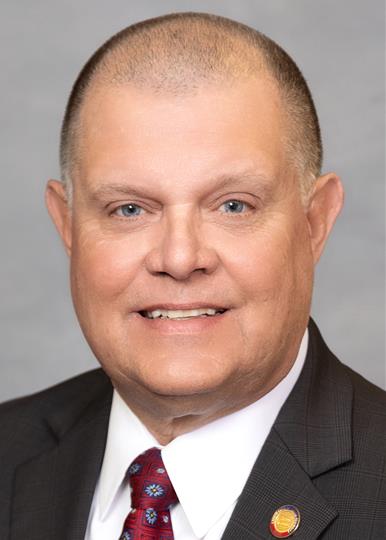
Rep. Charlie Miller
Sponsored bills
Maddy summaryHB 318 requires North Carolina county jails and detention facilities to check the immigration status of individuals charged with specific offenses (including certain felonies, misdemeanors, and impaired driving) and to notify U.S. Immigration and Customs Enforcement (ICE) if a detainer is issued. If ICE issues a detainer, facilities must hold the person for up to 48 hours (or until ICE takes custody) and notify ICE 2 hours before the person would otherwise be released. For pretrial defendants facing similar charges, the bill mandates a two-hour hold to allow ICE to issue a detainer; if none is received, the defendant must be released. The law also shields state officials from liability when following these procedures.
Maddy summaryHB 1003 updates North Carolina's legal definitions related to funeral services and cremation. It clarifies terms like "alkaline hydrolysis" (a water-based process for remains), "authorizing agent," "cremated remains," and requirements for cremation containers and caskets. The bill reorganizes these definitions under a new Article 13F titled "Cremations and Alkaline Hydrolysis" to improve clarity in existing law. This affects funeral service providers, crematories, and the North Carolina Board of Funeral Service by standardizing terminology in regulations. The bill is procedural, focusing on definitional updates rather than new policy changes.
Maddy summaryHB 992 creates a new foreclosure process for timeshare owners in North Carolina who fall behind on assessments. It requires managing entities to provide a 30-day written notice detailing delinquency amounts before denying timeshare use or canceling reservations. The bill allows managing entities to rent out the delinquent owner's timeshare to cover unpaid assessments, applying rental proceeds toward the debt while requiring reasonable efforts to secure rentals. It also establishes a lien on the timeshare for unpaid assessments from the due date. The bill additionally references changes to paternity procedures for children born out of wedlock, though specific details on this provision are not provided in the text.
Maddy summaryHB 612, the "Fostering Care in NC Act," updates North Carolina's laws governing child abuse, neglect, and dependency cases. It expands the definition of "abused juveniles" to include specific offenses like sexual crimes, human trafficking, and certain violent acts, affecting how cases are classified. The bill requires county social services directors to use either a family-centered assessment or a formal investigation when reviewing reports, and to collect military affiliation details of the juvenile's caregiver. It also clarifies that court jurisdiction over juveniles continues until age 18, emancipation, or death. These changes standardize responses to child welfare reports and improve information gathering for safety decisions.
Maddy summaryHB 480 creates a new pathway for doctors, physician assistants, and anesthesiologist assistants to obtain North Carolina medical licenses by transferring licenses from other states ("licensure by endorsement"). To qualify, applicants must have held an active license in another U.S. jurisdiction for at least five years (with two years of practice post-residency for doctors), have a verified full-time job offer in North Carolina, maintain good standing with no recent disciplinary actions, and meet practice hour requirements. The bill increases application fees for endorsement (e.g., $825 for physicians vs. $400 for standard licensure) and requires additional documentation within 180 days to keep the license active. This directly affects out-of-state medical professionals seeking to practice in North Carolina without retaking exams.
Maddy summaryHB 578, the Jason Flatt Act, requires all North Carolina public K-12 schools to implement suicide prevention education and training for school staff. It mandates that licensed educators complete at least one hour of annual suicide prevention training, while staff working with grades 6-12 must receive guidelines for identifying at-risk students and procedures for referrals. Schools must adopt a mental health plan including these elements, with initial staff training of six hours (within six months of hire) and two hours annually thereafter. The law applies to all public schools, charter schools, regional schools, and lab schools starting the 2025-2026 school year.
Maddy summaryHB 50 creates two new options for retired state and local law enforcement officers with at least 30 years of service or 55 years old with 5+ years of service. It allows officers retiring before age 62 to choose between two calculation methods for an annual separation allowance: either 0.85% of their most recent base pay for each year of service, or a fixed amount based on pay at 30 years of service. The allowance stops when officers turn 62 or pass away. This directly affects qualifying law enforcement officers who retire under North Carolina's state retirement system.
Maddy summaryHB 698 transfers the North Carolina Center for Missing Persons from the Department of Public Safety to the State Highway Patrol. This bill consolidates all the Center's existing functions, powers, and duties under the direction of the State Highway Patrol. The Commander of the State Highway Patrol will now oversee the Center's operations, including its role as a central repository for missing persons information and the AMBER Alert System. This change primarily affects the administrative structure responsible for managing missing persons cases and related alerts at the state level.
Maddy summaryHouse Bill 597 designates the osprey (Pandion haliaetus) as the official state raptor of North Carolina. This bill amends Chapter 145 of the General Statutes to formally adopt the osprey as a state symbol.