

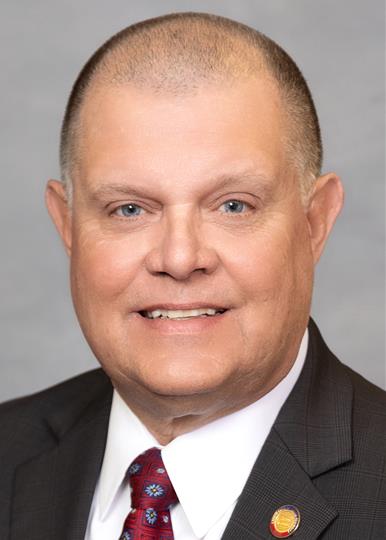
Maddy summaryThis amendment to House Bill 10 allocates $278,994 annually from the state's General Fund to hire two full-time jail inspectors for the 2023-2025 fiscal period. The funds are directed to the Department of Health and Human Services to support the Division of Health Services Regulation in its construction section. These positions become effective on July 1, 2023, and the amendment also updates the bill's title to reflect the addition of these inspector roles.
Rep. Charlie Miller
Sponsored bills
Maddy summaryThis amendment to House Bill 250 modifies North Carolina's rules for obtaining a limited driving privilege for individuals required to use an ignition interlock device. Specifically, it mandates that if a person commits an interlock violation within the 90 days before their initial compliance period ends, their required compliance time must be extended. The change directly affects drivers subject to these safety requirements by ensuring that violations immediately preceding a license restoration attempt result in a longer waiting period. Additionally, the amendment removes the previous text that established the criteria for obtaining a limited driving privilege under these specific circumstances.
Maddy summaryThis bill, known as the SHALOM Act, adds a new section to North Carolina law that officially adopts the International Holocaust Remembrance Alliance's definition of antisemitism. The law requires state agencies and organizations to use this definition as a guide for training, education, and identifying hate crimes or discrimination against Jewish people. It also establishes a framework for tracking and reporting incidents of antisemitism within the state. The legislation includes a specific provision stating that adopting this definition does not violate free speech rights protected by the U.S. and state constitutions.
Maddy summaryThis bill amends existing laws to restrict local governments in Mecklenburg County from acquiring railway property located outside the county without specific permission. The key provision requires that any such acquisition must be approved by a majority vote from the governing boards of every county and municipality where the railway line is situated. This rule applies to cities, counties, and special districts primarily located within Mecklenburg County and takes effect once the legislation becomes law.
Maddy summaryThis bill modifies North Carolina law to change the deadline for prosecutors to request a review of decisions not to file juvenile delinquency petitions. Currently, prosecutors must act within five calendar days, but the amendment extends this timeframe to ten working days unless the district attorney waives the extension. The change directly affects the procedural timeline for prosecutors, complainants, and victims involved in juvenile cases by allowing more time to evaluate whether a petition should be filed. This adjustment aims to provide additional time for prosecutors to assess cases before the review process concludes.
Maddy summaryHB 984 creates a new legal process in North Carolina that allows property owners to request law enforcement agencies to quickly remove people who are occupying their private residential homes without permission. To use this process, an owner must file a sworn complaint stating that the occupants are not tenants, have no legal right to the property, and have been told to leave, while also confirming there is no ongoing lawsuit between the parties. If a police department or sheriff's office verifies the complaint, they are required to remove the unauthorized individuals within 48 hours and may arrest them for trespassing or other offenses. The bill also establishes that property owners must pay for police time if they request officers to stay on site to help change locks or secure the property, and it provides a way for removed individuals to sue for damages if the removal was done incorrectly.
Maddy summaryThis bill proposes a constitutional amendment to change how North Carolina fills vacancies for seven specific state offices, including the Secretary of State, Attorney General, and Superintendent of Public Instruction. If passed by voters, the new rule would require the Governor to appoint a replacement from a list of three candidates recommended by the political party of the original officeholder, provided the party submits the list within 30 days of the vacancy. The amendment also clarifies that if an office term ends on January 1 following the next legislative election, the Governor must appoint someone to finish the term. The measure is scheduled for a vote by the public at the November 5, 2024, statewide general election.
Maddy summaryThis bill designates Jockey's Ridge in Nags Head as a unique coastal geological area of environmental concern. It establishes specific rules for development within the site, requiring permits for sand removal projects that exceed ten cubic yards per year. Any sand removed under these permits must be returned to designated areas within the Jockey's Ridge State Park. Additionally, the legislation prohibits development activities that would significantly block the natural movement of sand, with limited exceptions for essential infrastructure and maintenance.
Maddy summaryThis bill establishes a pilot program in Vance and Granville Counties to help religious institutions better support people with mental health or substance use needs. The program creates a tiered designation system where churches, mosques, synagogues, and temples can earn Basic, Intermediate, or Advanced status by completing specific training, hosting support groups, and providing mental health resources. To receive these designations, participating institutions must update their websites to show their status and ensure their staff and members complete required mental health training. The state agency responsible for mental health services will manage the application process and submit an annual report on the program's progress to the legislature.
Maddy summaryThis bill amends state law to allow The University of North Carolina to enter into agreements with technology vendors to trade in or buy back surplus computer equipment. The legislation specifically authorizes the university to sell back devices even if they were not originally purchased from the vendor and sets conditions for distributing surplus computers to nonprofit organizations that refurbish them for low-income students. To ensure accountability, the bill requires nonprofits to report on their refurbishment efforts and the disposition of any equipment they cannot fix, with annual reports submitted to the university board and the state's education oversight committee. These changes aim to streamline the management of university surplus technology while maintaining oversight on how donated resources are used.