

Maddy summaryHB 222 appropriates $217 million from the State Emergency Response Fund to North Carolina's Office of Recovery and Resiliency (NCORR) for homeowner recovery projects related to Hurricanes Matthew and Florence. The bill requires NCORR to submit detailed monthly reports on fund usage, including expenditures and project progress, and mandates weekly financial reports to the State Auditor for oversight. It also establishes a public online dashboard tracking funds versus actual spending and includes a clawback provision to return unused funds to the Savings Reserve after projects conclude. The law revises NCORR's responsibilities, ending its role in future storm recovery programs.
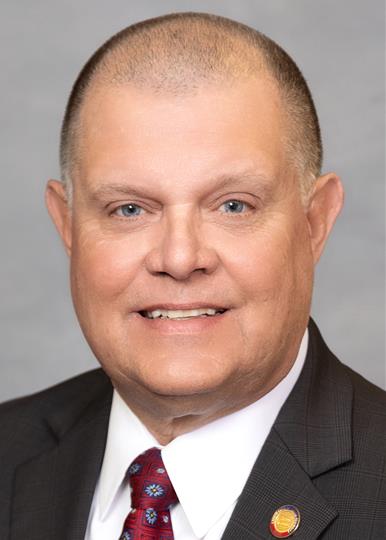
Rep. Charlie Miller
Sponsored bills
Maddy summaryHJR 157 is a procedural resolution inviting Governor Josh Stein to address a joint session of the North Carolina General Assembly on March 12, 2025. It directs a committee of five House members and five Senate members to extend the invitation and specifies that the governor's cabinet, Council of State members, and state judges may attend. This resolution does not create new policy or affect any laws; it solely schedules a ceremonial address. The invitation is effective upon ratification, as noted in the resolution's text.
Maddy summaryHB 164 requires parental or guardian consent before releasing autopsy records for children under 18. It makes all autopsy-related materials - including photos, videos, and reports - confidential, except when disclosure is needed for public health, research, legal compliance, or to address safety concerns. If parents withhold consent, a court may override this through a special proceeding after reviewing factors like public interest and privacy intrusion. The bill also allows public access to autopsy recordings (with supervision) unless parents request confidentiality under this law. It applies to all child deaths under 18 in North Carolina, affecting medical examiners, families, and entities seeking autopsy records.
Maddy summaryHB 31 would amend North Carolina's State Human Resources Act to make every statewide general election day a paid holiday for state employees. This change would add election days to the current list of paid holidays (which includes Martin Luther King Jr.'s Birthday and Veterans Day), while maintaining the limit of 13 paid holidays per year. The bill directly affects state workers, ensuring they receive paid time off on election days without reducing the total number of paid holidays. It does not change election dates or voting procedures, only the employment benefits for state employees on those days. The legislation is currently pending in committee review.
Maddy summaryHB 61 increases penalties for assaulting certain emergency personnel with a firearm in North Carolina. It reclassifies assaults against law enforcement officers, probation/parole officers, National Guard members, detention facility staff, emergency medical technicians, medical responders, firefighters, and law enforcement telecommunicators as a Class B1 felony (instead of Class D) when committed during their duties. The bill specifically targets firearm assaults, making them punishable by more severe prison sentences. This law takes effect December 1, 2025, for offenses occurring on or after that date.
Maddy summaryHB 39 excludes motor vehicles owned by veterans with a 100% disability rating certified by the U.S. Department of Veterans Affairs from North Carolina property tax. It amends state tax law to add these vehicles as a designated exempt class under G.S. 105-275. The exclusion applies to vehicles registered on or after January 1, 2026. This policy directly affects eligible disabled veterans who own motor vehicles, reducing their property tax burden. The bill does not change eligibility criteria or tax rates for other vehicle classes.
Maddy summaryHB 36 requires North Carolina's Department of Veterans and Military Affairs to improve maintenance at all four state veterans cemeteries, directly affecting veterans' families and cemetery operations. The bill mandates addressing specific issues like headstone installation delays, equipment damage to graves, drainage problems, debris, and poor grounds appearance, while allowing military groups to volunteer for upkeep. It also directs the department to review and adjust funeral service policies, including chapel-only options, service duration, attendee limits, and grave visitation rules during services. The department must submit a report on these changes to legislative committees by October 1, 2025.
Maddy summaryHB 12 would require North Carolina and all its local governments to observe Eastern Standard Time year-round, eliminating the biannual clock changes for daylight saving time. This bill directly affects state agencies, local municipalities, and residents by keeping the state on standard time permanently, as permitted under federal law (the Uniform Time Act of 1966). The key provision amends state law to mandate year-round standard time, aligning with a federal provision that allows states to forgo daylight saving time. The bill would take effect on March 8, 2026, if enacted. This is a procedural change to time observance, not a new policy affecting services or regulations.
Maddy summaryThis is a commemorative resolution (not a policy bill) honoring former North Carolina House Representative Joseph "Joe" Robert John, Sr., who served District 40 from 2017-2025 and died January 20, 2025. The resolution expresses the House's appreciation for his public service, extends sympathy to his family, and formally recognizes his contributions to North Carolina's judiciary, criminal justice, and community. It has no policy impact or new legal provisions - its purpose is solely to memorialize his career and legacy. The resolution was adopted unanimously by the House on January 29, 2025.
Maddy summaryThis resolution directs North Carolina's Secretary of State to formally request Congress to call a constitutional convention aimed at imposing term limits on members of the U.S. House of Representatives and the U.S. Senate. The bill specifies that this application will be combined with similar requests from other states to reach the two-thirds threshold required to trigger the convention, while remaining separate from applications for other constitutional changes. It establishes this request as a continuing application that remains active until enough states have submitted identical petitions. Ultimately, the measure does not change any current laws but serves as an official step in the process of potentially amending the U.S. Constitution.