

Maddy summaryHB 569 requires PFAS manufacturers (those who produce PFAS compounds like GenX) to pay public water systems for cleaning up PFAS contamination in drinking water when levels exceed EPA safety limits. It allows the Environmental Quality Secretary to order polluters to cover actual cleanup costs, including technology to reduce PFAS levels, and applies retroactively to expenses since 2017. The bill appropriates $300,000 for implementation and mandates annual reports on fund use, with water systems refunding ratepayers when manufacturers cover costs. This directly affects water systems burdened by PFAS cleanup, PFAS manufacturers deemed responsible, and ratepayers who may see reduced future water rates.
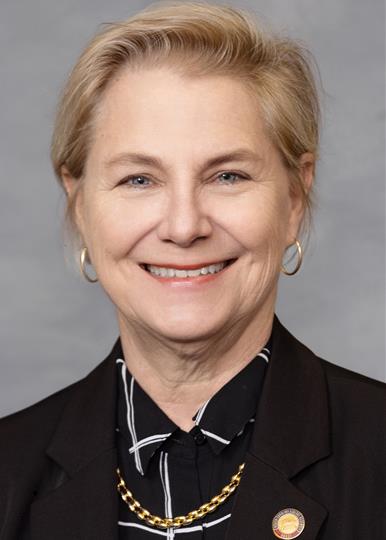
Rep. Deb Butler
Sponsored bills
Maddy summaryHB 485 requires North Carolina's Medicaid agency to request federal approval to extend Medicaid coverage for personal care services to adults living in licensed adult care homes who earn more than the current State-County Special Assistance income limit but stay below 180-200% of the federal poverty level. The bill specifically targets individuals who would qualify for lower-income Medicaid assistance if not for their higher earnings. Before implementing this coverage, the agency must submit a CMS request meeting three conditions: covering the specified income group, ensuring cost savings offset new expenses, and complying with legal requirements. This bill does not immediately change coverage - it only authorizes a federal request, pending CMS approval.
Maddy summaryHouse Bill 597 designates the osprey (Pandion haliaetus) as the official state raptor of North Carolina. This bill amends Chapter 145 of the General Statutes to formally adopt the osprey as a state symbol.
Maddy summaryHB 572 authorizes the Department of Military and Veterans Affairs to establish a statewide pilot program providing Electroencephalogram combined Transcranial Magnetic Stimulation (eTMS) treatment. This program is for veterans, first responders, and their immediate family members experiencing conditions such as substance use disorders, mental illness, sleep disorders, traumatic brain injuries, and PTSD. The Department will select a provider to create a network for in-person and off-site care, aiming for statewide access. Participants in the program will also receive neurophysiological monitoring, counseling, wellness programming, and access to a peer-to-peer support network. The selected provider must collect and report treatment outcomes and expenditures to the Department and legislative committees by September 15, 2026.
Maddy summaryHouse Bill 515, the North Carolina Economic Abuse Prevention Act, creates a new legal framework to protect survivors of domestic violence and children in foster care from "coerced debt." It defines coerced debt as debt incurred through duress, intimidation, or undue influence and provides pathways for individuals to notify creditors of such debt using specific documentation. Upon receiving adequate documentation, creditors must pause collection efforts while reviewing the claim. The bill also establishes that a person who causes another to incur coerced debt is civilly liable to the claimant for the debt amount, attorney's fees, and costs.
Maddy summaryHB 552 establishes the Agricultural Manufacturing Investment Grant Account within North Carolina's One North Carolina Fund, allocating up to $5 million for new economic development incentives. This account provides competitive grants to eligible agricultural manufacturers in the state. The Department of Commerce will administer these grants, prioritizing projects in less developed areas, those using advanced agricultural technologies, or those with significant research and development. To qualify, recipients must commit to investing at least $5 million of private funds, employ a minimum of 25 full-time employees, and meet specific wage requirements. Grants are capped at $100,000 annually per recipient for up to five years.
Maddy summaryJesse's Law (HB 896) mandates specific training for professional personnel involved in child custody proceedings in North Carolina. It requires judges, magistrates, judicial officers, and court personnel, including guardian ad litems and mediators, to complete trauma-informed and culturally appropriate training. This training focuses on the dynamics, signs, and impact of domestic violence and child abuse, including child sexual abuse. Professionals must complete an initial 20 hours of training and 15 hours every five years, based on evidence-based research. The bill aims to improve the ability of these individuals to recognize and respond to abuse and trauma when making child custody decisions.
Maddy summaryHB 94 allows disabled veterans and their unremarried surviving spouses to prequalify for the disabled veteran property tax homestead exclusion. This means individuals can apply to determine their eligibility for the tax benefit before they purchase a permanent residence. Applicants submit a prequalification form with their disability certification, and the county assessor must notify them of their eligibility within 30 days. The bill aims to help taxpayers and lenders account for this tax relief when making home purchase decisions. After prequalification, a separate application for the exclusion is still required once a permanent residence is acquired.
Maddy summaryHouse Bill 795 expands eligibility for guardianship assistance programs for youth in foster care. It allows the Division of Social Services to provide financial support to children who are at least 10 years old when they exit foster care into relative or legal guardianship, provided they meet other criteria like a strong attachment to their guardian. The bill also permits younger siblings of eligible children to receive assistance. Additionally, it allows individuals to continue receiving support until age 21 if they were 16 or older when the agreement began and are pursuing education or employment.
Maddy summaryHB 567, titled "Ensure Access to Biomarker Testing," mandates that North Carolina health benefit plans provide coverage for biomarker testing for the diagnosis, treatment, and monitoring of various diseases or conditions. This coverage is required when the testing is supported by medical and scientific evidence, such as FDA approval or nationally recognized clinical guidelines. The bill also prohibits insurers from denying coverage, raising premiums, or charging higher rates based on an individual's biomarker information. Additionally, it establishes a 24-hour timeline for insurers to complete utilization reviews for urgent healthcare services, aiming to improve access to diagnostic testing and care for North Carolinians.