

Maddy summaryThis bill creates a special license plate for the Sigma Gamma Rho Sorority in North Carolina and updates the fees and fund distributions for several other plates associated with the Divine Nine, a group of historically Black fraternities and sororities. The new plate will display the sorority's symbol, name, and its motto, "Greater Service, Greater Progress," while owners will pay a $20 additional fee on top of the standard registration cost. Money collected from these special plates is split between state funds and specific organizations, with the bill directing quarterly transfers to the educational foundations of Alpha Kappa Alpha, Delta Sigma Theta, Kappa Alpha Psi, Phi Beta Sigma, and Sigma Gamma Rho. Additionally, the legislation organizes the list of all available special plates alphabetically to improve clarity.
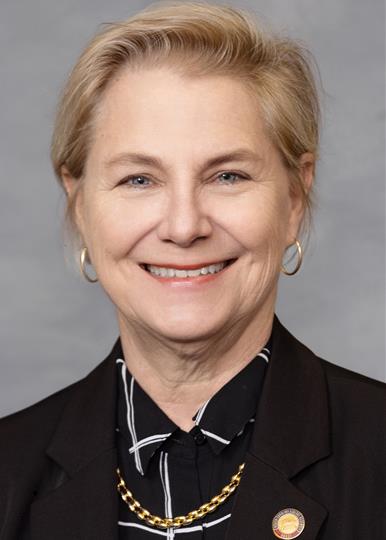
Rep. Deb Butler
Sponsored bills
Maddy summaryHB 693 establishes the "Interstate Massage Compact" to create a multistate licensing pathway for massage therapists across participating states. It directly affects licensed massage therapists seeking to practice in multiple states and the public receiving those services. Key mechanisms include creating an Interstate Commission to administer the compact, enabling therapists to hold a single "multistate license" valid in all member states, requiring background checks and continuing competence, and allowing states to share disciplinary information and hold licensees accountable. The compact aims to improve public access to safe massage therapy while reducing regulatory burdens for therapists, particularly aiding military members and their spouses relocating between states.
Maddy summaryHB 13 prohibits North Carolina merchants from charging customers more for credit or debit card payments than what the merchant pays to process those transactions. It directly affects retailers and service providers in the state, requiring them to disclose any card fees clearly in advertisements if they impose them. The law mandates that merchants cannot add a markup to processing costs charged by payment networks (like Visa or Mastercard), and violations could result in civil penalties up to $5,000 per offense. The bill takes effect October 1, 2025, aiming to prevent unfair surcharges on card payments.
Maddy summaryHB 118 modifies North Carolina's property tax exemption for disabled veterans, replacing a flat $45,000 exclusion with a percentage-based system tied to the veteran's VA disability rating. It directly affects veterans with a 50% or higher service-connected disability rating (or surviving spouses under specific conditions), allowing them to exclude a portion of their home's appraised value from property taxes - equal to their disability percentage. For example, a veteran with a 70% disability rating would exclude 70% of their home's value from taxes. The bill takes effect for taxes due in 2025 and prohibits combining this relief with other property tax exemptions.
Maddy summaryHB 210 establishes minimum standards for the care and maintenance of licensed cemeteries in North Carolina, directly affecting cemetery operators and license holders. The bill requires the Cemetery Commission to set these standards - covering tasks like grass cutting, grave upkeep, and facility repairs - and allows the Commission to impose $50 civil penalties for violations, with a 10-day notice period before penalties apply. It also mandates annual reports from cemetery companies detailing all care and maintenance work performed, using forms provided by the Commission. These provisions aim to ensure consistent upkeep of cemetery properties while holding operators accountable for compliance.
Maddy summaryHB 612, the "Fostering Care in NC Act," updates North Carolina's laws governing child abuse, neglect, and dependency cases. It expands the definition of "abused juveniles" to include specific offenses like sexual crimes, human trafficking, and certain violent acts, affecting how cases are classified. The bill requires county social services directors to use either a family-centered assessment or a formal investigation when reviewing reports, and to collect military affiliation details of the juvenile's caregiver. It also clarifies that court jurisdiction over juveniles continues until age 18, emancipation, or death. These changes standardize responses to child welfare reports and improve information gathering for safety decisions.
Maddy summaryHB 59 would increase the income eligibility limit for North Carolina's elderly or disabled property tax homestead exclusion from $25,000 to $48,000 for taxable years beginning July 1, 2026. This change would directly affect homeowners aged 65 or older, or those who are totally and permanently disabled, who meet other criteria (like being a North Carolina resident and owning their home as a permanent residence). The bill modifies the existing rule that currently limits eligibility to those with incomes under $25,000, raising the threshold to $48,000 while maintaining the exclusion amount as the greater of $25,000 or 50% of the home's appraised value. The change aims to expand access to this property tax relief for qualifying low-to-moderate income homeowners. (Note: The bill was withdrawn in June 2025 and has not become law.)
Maddy summaryHB 480 creates a new pathway for doctors, physician assistants, and anesthesiologist assistants to obtain North Carolina medical licenses by transferring licenses from other states ("licensure by endorsement"). To qualify, applicants must have held an active license in another U.S. jurisdiction for at least five years (with two years of practice post-residency for doctors), have a verified full-time job offer in North Carolina, maintain good standing with no recent disciplinary actions, and meet practice hour requirements. The bill increases application fees for endorsement (e.g., $825 for physicians vs. $400 for standard licensure) and requires additional documentation within 180 days to keep the license active. This directly affects out-of-state medical professionals seeking to practice in North Carolina without retaking exams.
Maddy summaryHB 578, the Jason Flatt Act, requires all North Carolina public K-12 schools to implement suicide prevention education and training for school staff. It mandates that licensed educators complete at least one hour of annual suicide prevention training, while staff working with grades 6-12 must receive guidelines for identifying at-risk students and procedures for referrals. Schools must adopt a mental health plan including these elements, with initial staff training of six hours (within six months of hire) and two hours annually thereafter. The law applies to all public schools, charter schools, regional schools, and lab schools starting the 2025-2026 school year.
Maddy summaryHB 187 updates North Carolina's credit union oversight rules. It requires credit unions to pay semiannual supervision fees (in January and July) and submit annual financial reports to the Credit Union Division. The bill clarifies examination schedules (every 18 months), sets late-report penalties ($75-$750 per day), and specifies how fees and penalties are collected and used. These changes directly affect all North Carolina credit unions operating under Chapter 54 statutes, streamlining their regulatory compliance with the Administrator of Credit Unions. The bill focuses on administrative procedures, not new member benefits or financial programs.