

Maddy summaryHB 186, the "Stars and Stripes Commitment Act," requires all North Carolina public schools (including charter, regional, and laboratory schools) to schedule the daily recitation of the Pledge of Allegiance within one hour of the start of the instructional day. It also mandates that schools display U.S. and North Carolina flags in classrooms when available and provide age-appropriate instruction about the flag and pledge’s meaning. The bill applies to all school governing bodies and state education board meetings, requiring the pledge to open each meeting. Crucially, it explicitly states the policy does not compel anyone to stand, salute, or recite the pledge. The law takes effect for the 2025-2026 school year.
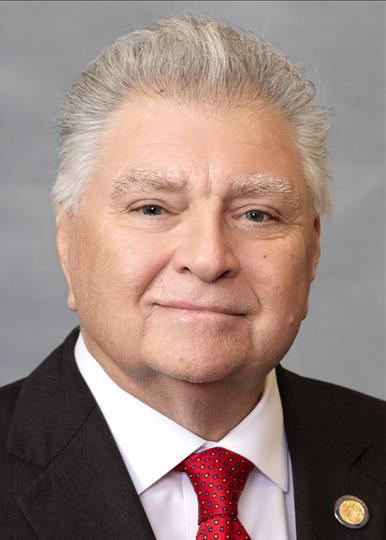
Rep. Phil Shepard
Sponsored bills
Maddy summaryHB 95 increases penalties for threats against certain elected and public officials in North Carolina, making such threats a Class I felony. It directly affects individuals who make threats against legislative, executive, court, local elected, or election officials, requiring a $50,000 secured appearance bond for anyone charged with these offenses. The bill amends existing statutes to clarify that threats need not be received or believed by the targeted official, and it specifically covers threats made in retaliation for an official's duties. The law applies to offenses committed on or after December 1, 2025.
Maddy summaryHB 37 standardizes monthly pension benefits for North Carolina firefighters and rescue squad workers under the state pension fund. It sets a uniform $175 monthly pension for members with 20+ years of service who reach age 55, replaces the previous $180 amount, and maintains $175 for disability benefits and line-of-duty death benefits. The bill also allows members affected by city annexations or department closures to continue contributing $15 monthly until they reach 20 years of service for pension eligibility. These changes apply to current and future members of the pension fund who meet the service requirements. The bill does not alter contribution rates or eligibility for most members but adjusts benefit amounts and extends certain provisions.
Maddy summaryHB 35 designates November of each year as Military Appreciation Month in North Carolina. The bill creates a symbolic recognition within state law, honoring military service members and veterans during this month. It does not establish new programs, funding, or requirements - it simply formally names November for this purpose. The bill affects the state government's official calendar and public recognition efforts, with no direct impact on individuals or organizations.
Maddy summaryHB 411 reduces the early voting period for primary elections in North Carolina from 17 days to 6 days. The bill requires counties to conduct early voting for primaries within a six-day window ending on the last Saturday before the election, affecting voters participating in primary elections. This change applies to all primary elections (including runoffs) and takes effect January 1, 2026. The bill does not alter early voting periods for general elections or municipal elections, which maintain separate rules.
Maddy summaryHB 182 creates two key policy changes: First, it allows judges to issue lifetime no-contact orders against defendants convicted of certain violent offenses (including sex offenses requiring registration), requiring a show-cause hearing to determine if the victim fears future contact. Second, it clarifies that caregivers of children under 16 who commit or allow sexual acts with the child face Class D felony charges, specifically expanding penalties for permitting such abuse. The law directly affects victims of violent crimes (through the no-contact protections) and caregivers of children under 16 (through updated felony charges for sexual abuse). These provisions apply to offenses committed on or after December 1, 2025.
Maddy summaryHB 98, titled the "Patriotism Expression Act" (though misleadingly named), primarily modifies North Carolina's fireworks laws to permit the sale, possession, and use of specific consumer fireworks. It allows consumer fireworks (like sparklers, party poppers, and small novelty devices meeting safety standards under G.S. 58-82A-80) for public use, while maintaining an 18+ age restriction for purchase. The bill specifies that these fireworks must comply with defined safety limits (e.g., no more than 16 milligrams in party poppers, 75 grams per tube for sparklers) and prohibits indoor displays. It directly affects consumers, retailers, and fire safety enforcement, but does not change prohibitions on most fireworks or explosives.
Maddy summaryHB 100 expands North Carolina's property tax exemption for religious organizations by allowing them to temporarily exempt newly acquired undeveloped land adjacent to their currently tax-exempt property. The bill permits this exemption for up to five years if the religious organization certifies it will use the land exclusively for religious purposes or develop it for that purpose within that timeframe. The land cannot exceed twice the size of the organization's existing contiguous exempt property. If the certification requirements aren't met within five years, the land loses its exemption and becomes taxable. The law takes effect for taxes due on or after July 1, 2026.
Maddy summaryHB 103 exempts members of North Carolina-recognized tribes from needing hunting, trapping, or fishing licenses when hunting or fishing on tribal land (requiring ID verification) or off tribal land (requiring ID plus compliance with reporting, hunter education, and federal stamp rules). It directly affects tribal members recognized under Chapter 71A of North Carolina law, both on tribal property and in state waters/lands outside tribal areas. The bill amends licensing rules to remove fee requirements while maintaining other regulatory obligations like wildlife reporting and federal stamp purchases. It becomes effective October 1, 2025.
Maddy summaryHB 99 exempts certified reflexologists from oversight by North Carolina's Board of Massage and Bodywork Therapy. It directly affects nationally certified reflexologists (holding current ARCB certification) and their supervised students, who must obtain certification within 12 months. The bill adds a specific exemption to state licensing law, allowing these practitioners to perform reflexology - a manual technique using pressure on feet/hands - to stimulate neural pathways - without state board regulation. The law takes effect October 1, 2025.