

Maddy summaryHouse Bill 741 authorizes the North Carolina Division of Motor Vehicles to issue "Military Veteran" special registration plates with a personalized background. The bill modifies the plate's design to specify that the name and insignia of the veteran's branch of service will appear on the left side. This change directly affects U.S. Military Veterans in North Carolina who are eligible for this special license plate. These personalized veteran plates will also be exempt from minimum application requirements typically needed for other special plates.
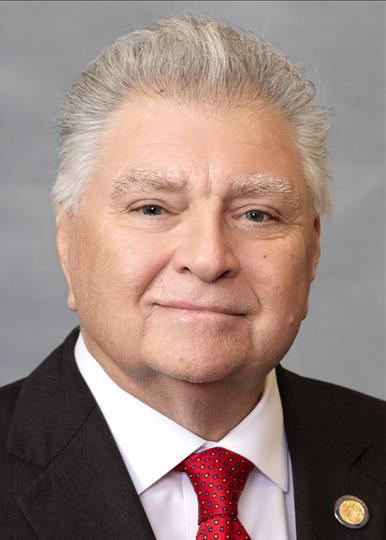
Rep. Phil Shepard
Sponsored bills
Maddy summaryHB 97 adds stomach cancer (gastric cancer) to the list of occupationally related cancers that qualify firefighters for "killed in the line of duty" benefits under North Carolina's Public Safety Employees' Death Benefits Act. This means firefighters who die from stomach cancer directly linked to their firefighting duties will automatically be eligible for death benefits, easing the process for families seeking compensation. The bill appropriates $500,000 annually from 2025-2027 to cover these benefits. It takes effect July 1, 2025, applying to qualifying deaths occurring on or after that date.
Maddy summaryHB 92, titled the "NC Digital Assets Investments Act," authorizes the North Carolina State Treasurer to invest various state funds in qualifying digital assets. This includes funds from the General Fund, Highway Fund, and numerous retirement and special funds. The bill specifies that eligible digital assets must be exchange-traded products with an average market capitalization of at least $750 billion over the preceding 12 months. Additionally, investments in digital assets cannot exceed 10% of a fund's balance, and the State Treasurer must use a defined "secure custody solution" if managing these assets internally.
Maddy summaryHouse Bill 663, known as the Living Donor Protection Act, aims to support individuals who donate organs or bone marrow. The bill prohibits insurance companies from discriminating against individuals solely based on their status as a living organ donor in various insurance policies. It also establishes a state income tax credit of up to $5,000 for unreimbursed expenses, such as lost wages and travel, incurred by living donors. Furthermore, the act provides state employees and state-supported personnel with up to 30 days of paid leave for organ donation and seven days for bone marrow donation.
Maddy summaryHB 822 modifies North Carolina laws governing moped operation, directly affecting moped operators. The bill presumes a moped is designed for one person unless manufacturer documentation indicates otherwise. It restricts mopeds to the right-hand side of the right-hand lane on highways with speed limits over 35 mph, except when preparing for a left turn. Furthermore, it prohibits operating a moped on any highway where the posted speed limit is greater than 35 miles per hour. Violations of these provisions would constitute an infraction, with the changes becoming effective on December 1, 2025.
Maddy summaryHouse Bill 703 allows State veterans cemeteries to sell monuments and memorials directly to honor individuals interred within them. This bill permits the sale of items such as memorial trees, granite or marble markers, and benches, though not headstones. State veterans cemeteries can establish stylistic guidelines for these items and must not charge more than the market rate. The funds generated from these sales will be retained by the selling cemetery and dedicated solely to its maintenance, improvement, and care. This act becomes effective on October 1, 2025.
Maddy summaryHB 211, "The Kelsey Smith Act," authorizes wireless telecommunications carriers to provide a device's location information to law enforcement under specific emergency circumstances. This includes situations where a 911 call was made or there is reasonable suspicion of an emergency involving risk of death or serious physical harm. Wireless carriers are required to submit their emergency contact information to the State Bureau of Investigation, which will maintain a database for public safety answering points. The bill protects carriers from legal action if they provide this information in good faith.
Maddy summaryHB 333 would limit the City of Jacksonville's planning and development authority. Specifically, it prohibits the city from exercising these powers, which are typically granted to municipalities under Chapter 160D of state law, in any area beyond its contiguous corporate limits. This means Jacksonville would no longer regulate development in its extraterritorial jurisdiction (ETJ). While the relinquishment of jurisdiction becomes effective immediately upon the bill's enactment, existing development regulations and enforcement powers would remain in effect for a transitional period, as provided by state law.
Maddy summaryHB 869 requires North Carolina state buildings, parking areas, and license plates to use a new "dynamic symbol of access" (a wheelchair icon with a forward-leaning, movement-focused design) instead of the current international symbol of access, effective January 1, 2026. The bill mandates that state agencies implement the new symbol on signs and updates driver’s license tests to require recognition of both symbols. It also specifies that license plates, removable windshield placards, and parking space signs must display the dynamic symbol by the same deadline. The change applies to all new or replaced signage and vehicle markings after 2026, while affirming the new symbol signifies equivalent accessibility standards as the existing symbol.
Maddy summaryHB 184 allows small North Carolina sawmills (those milling under 1 million board feet annually) to sell ungraded lumber directly to homeowners for residential construction. The bill amends building codes to permit this ungraded "dimension lumber" in one- and two-family homes and certain small structures, provided mills meet specific requirements. These include operators holding state-approved lumber grading training certifications, marking lumber with detailed specifications (species, mill ID, PS20 compliance), and providing purchaser certificates. Code officials must review construction for safety compliance (excluding grade-stamp requirements) and are protected from liability for structural issues related to ungraded lumber use. The law aims to support local sawmills while maintaining safety standards through defined labeling, training, and oversight.