

Maddy summaryThis bill establishes a program to provide free hyperbaric oxygen therapy to North Carolina veterans diagnosed with traumatic brain injury or posttraumatic stress disorder. The legislation appropriates $3 million from the state General Fund to a nonprofit organization to deliver approximately 15,000 treatments to an estimated 350 eligible veterans over the 2026-2027 fiscal year. The program includes structured clinical care and requires the provider to submit a detailed report on outcomes and fund usage by June 2027.
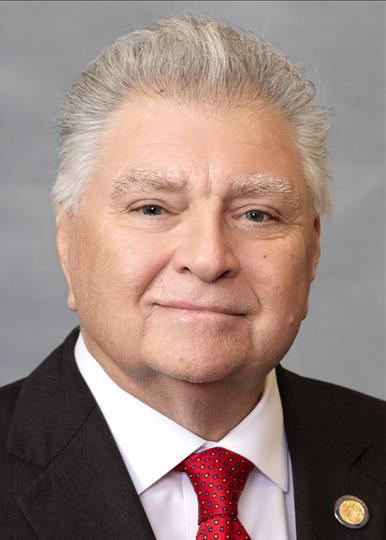
Rep. Phil Shepard
Sponsored bills
Maddy summaryThis bill creates a new loan program in North Carolina to help nonprofit organizations prepare land for affordable housing by offering below-market interest rate loans. The funds, totaling $50 million for the 2026-2027 fiscal year, can only be used for site-related expenses like land acquisition, utility installation, and environmental testing, but not for building the actual homes. To qualify, borrowers must be experienced nonprofits that provide zero-interest mortgages to buyers and ensure at least 40% of units in mixed-income projects are reserved for low- and moderate-income families. The program is designed to support the development of housing for households earning up to 80% of the local area median income.
Maddy summaryThis bill creates a new program in North Carolina that requires individuals convicted of domestic violence to register on a public list if they have at least one prior domestic violence conviction. The State Bureau of Investigation will maintain this registry, which will include the offender's name, date of birth, conviction details, and a photograph, while keeping addresses and social security numbers private. Registration periods last two years for one prior offense, five years for two prior offenses, and ten years for three or more prior offenses, with fees of $150 paid by the offender to cover registry costs. The law takes effect on December 1, 2026, and applies to offenses committed on or after that date, though prior convictions do not need to have occurred by then.
Maddy summaryThe bill title "Defund Planned Parenthood and Cost Transparency" does not match the actual content of HB 192, which is focused on education funding. This bill raises teacher salaries for the 2025-2026 school year using a new salary schedule (e.g., $5,000 for 0 years experience, $6,823 for 25+ years) and reinstates education-based supplements for advanced degrees ($126-$253 monthly). It appropriates $1.597 billion for salary increases and $8 million for supplements, while directing the North Carolina Collaboratory to study a student-based funding system by February 2026. The bill directly affects public school teachers, instructional support staff, and school psychologists. The title appears to be incorrect based on the provided bill text.
Maddy summaryHB 402 requires North Carolina state agencies to assess the financial impact of proposed permanent rules. If a rule would cost affected individuals or businesses $20 million or more over five years, it must be approved by the General Assembly before taking effect. For rules with a $1 million or more annual cost impact, agencies must prepare a fiscal note for review by the Office of State Budget and Management. The bill also mandates a two-thirds vote by agency boards to adopt rules exceeding the $1 million cost threshold. This directly affects state agencies creating regulations and the businesses or residents who would bear the costs of those rules.
Maddy summaryHB 612, the "Fostering Care in NC Act," updates North Carolina's laws governing child abuse, neglect, and dependency cases. It expands the definition of "abused juveniles" to include specific offenses like sexual crimes, human trafficking, and certain violent acts, affecting how cases are classified. The bill requires county social services directors to use either a family-centered assessment or a formal investigation when reviewing reports, and to collect military affiliation details of the juvenile's caregiver. It also clarifies that court jurisdiction over juveniles continues until age 18, emancipation, or death. These changes standardize responses to child welfare reports and improve information gathering for safety decisions.
Maddy summaryHB 91 amends North Carolina statutes to include the U.S. Space Force in the definition of "Armed Forces" for state benefits, ensuring Space Force members and their families qualify for military-related tax exemptions, tuition assistance, and residency rules. The bill also changes the name of Fort Bragg to Fort Liberty to align with the U.S. Department of Defense's renaming of the base. These updates reflect the federal establishment of the Space Force and ensure state law matches current military structure and base designations.
Maddy summaryHB 415 modifies North Carolina high school mathematics graduation requirements, primarily affecting students and the State Board of Education. It requires completion of NC Math 1 and 2, plus two additional math courses aligned with a student's postsecondary plans, and eliminates the end-of-course test for NC Math 3. The bill establishes an "Extended Math" pathway, dividing NC Math 1 and 2 content into four courses for students needing more time and support. Students scoring below proficient on certain math assessments will be enrolled in these extended courses, which are set to begin in the 2025-2026 school year.
Maddy summaryHouse Bill 652 modifies how the North Carolina Department of Transportation (DOT) calculates the baseline unit pricing for transportation goods used in highway maintenance and construction projects. The bill changes the baseline calculation from the 2015-2016 fiscal year to a rolling average of the three previous fiscal years. It maintains the existing provision that no Highway Division can exceed a ten percent variance over these established unit prices. If a division exceeds this variance, the DOT is required to report to several legislative committees detailing the reasons and steps for compliance. This act is set to become effective on July 1, 2025.
Maddy summaryHB 414 aims to give equal credit for community college courses towards high school graduation requirements for dually enrolled students, including those in the Career and College Promise program. It directs the State Boards of Community Colleges and Education to collaborate on developing a system where one community college course grants one full high school credit in core subjects, without requiring corresponding high school end-of-course tests. Until this system is fully established, specific community college courses will temporarily satisfy certain high school credits starting in the 2025-2026 academic year. Additionally, the bill modifies high school math graduation requirements, affecting which math courses require an end-of-course test.