

Maddy summaryThis House Resolution honors the Carolina Hurricanes hockey team for winning the 2026 Stanley Cup and recognizes their contributions to the state of North Carolina. The bill formally acknowledges the team's historic season, including their record-breaking regular performance and playoff victory, while also praising the owner, management, and coaching staff for their leadership. It directs the Principal Clerk to send a certified copy of the resolution to the team, its owner Tom Dundon, and head coach Rod Brind'Amour. This measure serves as a commemorative gesture rather than establishing new laws or funding.
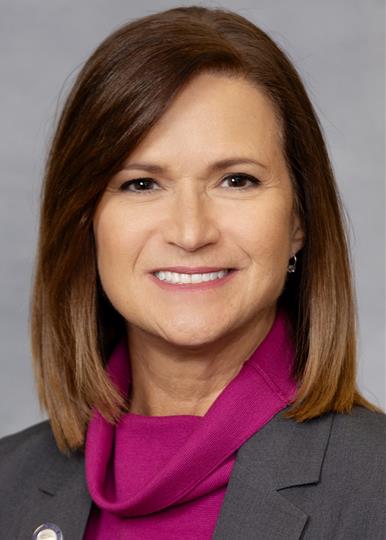
Rep. Celeste Cairns
Sponsored bills
Maddy summaryHB 565 ("Check Yes, Save Lives") allows North Carolina taxpayers to register as organ donors by checking a box on their state income tax return, starting with tax returns for 2026 and later. This directly affects all North Carolina taxpayers who file income tax returns, providing a simple, automatic way to enroll in the organ donation program during annual tax filing. The bill amends tax and organ donation statutes to add income tax return enrollment as a valid method for making an anatomical gift (under Section 130A-412.7(1a)), while keeping existing options like driver's license or wills. It requires coordination between the Department of Revenue and Motor Vehicles to update the Organ Donor Registry, ensuring the tax-based enrollment is properly recorded. The policy change streamlines donor registration without altering the existing organ donation process or eligibility.
Maddy summaryHB 258, the Utility Worker Protection Act, increases penalties for assaulting utility and communications workers by designating such assaults as Class A1 misdemeanors - the highest misdemeanor level - when the worker is visibly identifiable (e.g., wearing company-logoed uniforms) and performing duties. It directly affects workers providing electricity, gas, telecommunications, or internet services, including those employed by public, private, or cooperative entities. The bill adds specific language to North Carolina’s assault statute, requiring prosecutors to apply this enhanced penalty for assaults meeting these criteria, without needing other legal provisions. The law takes effect December 1, 2025, applying to offenses committed on or after that date.
Maddy summaryThis bill establishes a regulatory framework for North Carolina banks and credit unions to offer digital asset services, such as custody, staking, and transaction processing. It requires these financial institutions to notify state regulators before starting custody services and obtain specific approval if they intend to manage customer assets in a fiduciary capacity. The legislation also mandates clear written agreements between institutions and customers, explicitly stating that digital assets held by the bank are not insured deposits or liabilities of the institution. By defining key terms like digital assets and staking, the act aims to provide legal clarity and safety standards for the growing digital asset market within the state.
Maddy summaryThis North Carolina bill requires all private employers with 25 or more employees to use the federal E-Verify system to check the work authorization of every new hire. It mandates that state and local government agencies also comply with these verification rules and allows employers to avoid penalties if they can prove they acted in good faith and did not knowingly accept fraudulent documents. The legislation establishes a 30-day grace period for employers to fix minor compliance errors and increases fines for repeat offenders while protecting workers who report suspected violations from retaliation. Additionally, it grants the state labor commissioner the authority to conduct random or risk-based audits of employers and provides funding to support enforcement efforts.
Maddy summaryHB 1041 removes three specific properties from the City of Morehead City, changing their status from municipal to county jurisdiction. The bill specifies that these properties will no longer be subject to city taxes starting July 1, 2026, while preserving the city's ability to collect any outstanding tax liens. This change takes effect on June 30, 2026, and applies to land owned as of January 1, 2026.
Maddy summaryThis bill grants the Town of Pine Knoll Shores the authority to manage navigable waters within its boundaries by installing navigation markers and creating no-wake zones. To implement these changes, the town must first use GPS coordinates to identify specific locations and provide written notice to federal and state agencies before placing buoys or designating speed limits. The legislation also clarifies that state and federal regulations take precedence over any local rules the town adopts and authorizes local law enforcement to enforce these new ordinances.
Maddy summaryHB 87 (Educational Choice for Children Act) allows North Carolina to participate in a federal tax credit program that encourages donations to private scholarship organizations. The bill requires the State Education Assistance Authority to maintain and publish an annual list of qualifying scholarship groups operating in North Carolina, enabling donors to claim federal tax credits for contributions. These scholarships can cover elementary and secondary school costs, including homeschooling expenses, as permitted under federal law. The law becomes effective after 2026, with the Authority needing to establish necessary rules by July 2026 to comply with federal requirements.
Maddy summaryThis North Carolina joint resolution urges the U.S. Congress to eliminate the United States Department of Education by returning control of education to the states. The bill argues that federal involvement has led to excessive regulations and mandates without improving student reading scores, asserting that states are better equipped to handle education based on local needs. It also states that removing the department would not stop federal funding programs from reaching states but would instead allow taxpayer dollars to be used more efficiently. As a non-binding resolution, it does not directly change laws or allocate funds but serves as a formal statement of support for federal efforts to abolish the department.
Maddy summaryHB 1042 updates North Carolina's property tax exemptions for nonprofit organizations that provide housing for low- or moderate-income individuals. The bill clarifies that land held by nonprofits for future affordable housing projects can remain tax-exempt for up to five years, with unpaid taxes deferred until the project is completed or the land is no longer used for this purpose. Additionally, the legislation establishes a new specific exemption for affordable rental housing, defining it as developments where more than half the units are rented to tenants earning at or below 80% of the area median income. These changes aim to provide clearer tax incentives for nonprofits developing and operating affordable rental properties.