

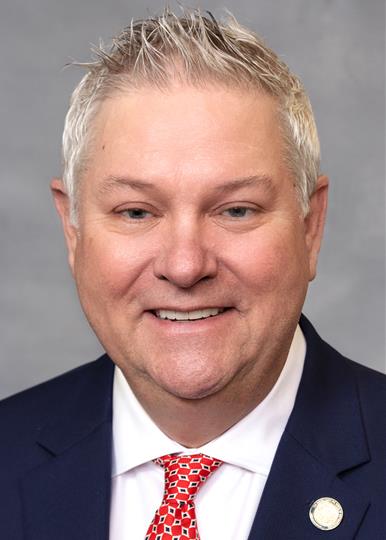
Photo of Chris Humphrey
R North Carolina House · District 12 On the 2026 ballot

Rep. Chris Humphrey

Compare
Total votes
2,410
all sessions
Attendance
92%
195 missed
Near the chamber average
With party
99%
of cast votes
Near the chamber average
Bipartisan score
1%
crosses aisle rarely
Near the chamber average
Sponsored
327
bills & resolutions
Near the chamber average
Committees
9
assignments
327 bills and resolutions

Sponsored bills

Total
327
Primary
31
Co-sponsor
296
This page
327
matching current filters
Co-sponsor HB 121
Passed · North Carolina House · Co-sponsor
School Calendar Flexibility/Statewide/Open Calendar.

Maddy summaryHB 121 provides local boards of education with additional flexibility in adopting their school calendars. It removes the current state-mandated earliest opening date for students (the Monday closest to August 26) and the latest closing date (the Friday closest to June 11). This change allows local boards to determine the specific opening and closing dates for public schools under their authority. The bill directly affects public schools and students in North Carolina and would apply starting with the 2025-2026 school year.

Passed May 7, 2025 1 co-sponsor
Co-sponsor HB 283
Passed · North Carolina House · Co-sponsor
Small Business Investment Grant Program.

Maddy summaryHouse Bill 283 establishes the Small Business Investment Grant (SBIG) Program within the One North Carolina Fund, designed to provide financial assistance to eligible small businesses looking to establish or expand facilities in the state. The bill allocates up to $10 million from the Fund to this new account. Through the SBIG Program, competitive grants are offered to businesses meeting specific criteria, such as having 250 or fewer employees or less than $5 million in annual revenue, investing $10-$30 million, and creating new jobs with competitive wages. Grants are capped at $500,000 annually per recipient, up to $2.5 million total, over a maximum of five years. Additionally, the bill renames the "One North Carolina Small Business Account" to the "Small Business Research and Technology Account," which continues to support federal SBIR/STTR grant incentive and matching programs.

Passed May 7, 2025 1 co-sponsor
Co-sponsor HB 598
died · North Carolina House · Co-sponsor
Live Event Ticketing Protections and Reforms.

Maddy summaryHB 598, titled "Live Event Ticketing Protections and Reforms," aims to create consumer protections for individuals purchasing tickets for live entertainment events, particularly in the secondary market. The bill requires ticket issuers, resellers, and secondary ticket exchanges to clearly display the total ticket price, including all mandatory fees, from the initial listing and prohibits price increases during a single ticketing session. It prevents primary ticket issuers from restricting a purchaser's ability to resell tickets on their chosen platform or from setting minimum/maximum resale prices. Additionally, secondary ticket exchanges would be prohibited from using website addresses that are similar to the name of an event, performer, or venue.

died May 6, 2025 1 co-sponsor
Co-sponsor HB 765
died · North Carolina House · Co-sponsor
Save the American Dream Act.

Maddy summaryHB 765, titled "Save the American Dream Act," introduces new requirements for fiscal notes concerning housing affordability at both state and local levels. The bill mandates that the state's Fiscal Research Division prepare a five-year fiscal note for any proposed state legislation that could impact the cost of constructing, purchasing, owning, or selling a single-family residence. Similarly, it requires county and city governments to prepare a fiscal note for local ordinances that could affect these same costs. These local notes must be made public at least five days before the ordinance is introduced.

died May 6, 2025 1 co-sponsor
Co-sponsor HB 24
died · North Carolina House · Co-sponsor
Restore Down-Zoning Authority.

Maddy summaryHB 24, titled "Restore Down-Zoning Authority," aims to reinstate the power of local governments to initiate "down-zoning." This means local governments would regain the ability to change zoning classifications for properties to allow for less intensive development or use. The bill achieves this by repealing Section 3K.1 of S.L. 2024-57, which had previously restricted this authority. If enacted, it would apply retroactively to December 11, 2024, ensuring that any local ordinances impacted by the repealed section are restored to their status prior to that date.

died May 5, 2025 1 co-sponsor
Primary HB 717
Passed · North Carolina House · Lead sponsor
Amend NC Professional Employer Organization Act.

Maddy summaryHouse Bill 717 proposes changes to the North Carolina Professional Employer Organization (PEO) Act, affecting PEOs operating in the state. It updates definitions for financial terms like "tangible net worth" and "working capital," and clarifies licensing requirements for PEO groups, allowing consolidated financial reporting while mandating inter-group payment guarantees. The bill modifies PEO license application requirements, extending the timeframe for audited financial statements to 120 days and requiring applicants to demonstrate positive working capital and a minimum tangible net worth of $50,000. Additionally, it adjusts surety bond requirements for PEOs with negative working capital and allows the Commissioner to accept parent company financial statements if certain conditions, including a guaranty for obligations, are met.

Passed May 1, 2025 0 co-sponsors
Primary HB 720
Passed · North Carolina House · Lead sponsor
Insurance Guaranty Association Act Revisions.

Maddy summaryThis bill revises North Carolina's Insurance Guaranty Association Act, affecting policyholders and the Association by adjusting how claims are handled when an insurer becomes insolvent. It clarifies that cybersecurity insurance policies are generally covered, but sets a maximum payout of $500,000 for all first and third-party cybersecurity claims arising from a single event. The bill also expands the definition of a "covered claim" to include certain transferred policy obligations, while explicitly excluding claims from very large entities and specific fines or penalties. Additionally, it enhances the Association's authority to investigate, adjust, and contest settlements or judgments made by an insolvent insurer or its insureds prior to liquidation, allowing them to defend claims on their merits.

Passed May 1, 2025 0 co-sponsors
Primary HB 156
Passed · North Carolina House · Lead sponsor
Increase Access for Small Employers/Insurance.

Maddy summaryHB 156 sets minimum standards for stop loss, catastrophic, and reinsurance coverage provided to small employers in North Carolina. It directly affects small employers (defined as those with fewer than 12 eligible employees) and insurers selling these specific insurance products. The bill requires insurers to maintain a minimum annual attachment point of $20,000 per individual (adjusted annually using the Consumer Price Index) and a minimum aggregate attachment point of either 120% of expected claims or $20,000 per year. These standards apply to all new, renewed, or amended insurance contracts issued on or after October 1, 2025.

Passed May 1, 2025 0 co-sponsors
Co-sponsor HB 146
Passed · North Carolina House · Co-sponsor
Remote License Renewal/Active Duty Military.

Maddy summaryHouse Bill 146 amends North Carolina's driver's license renewal process. It allows active duty members of the U.S. Armed Forces, or reserve components serving on active duty and stationed outside North Carolina, to renew their driver's licenses remotely multiple times in a row. Currently, a remote renewal requires the previous renewal to have been done in person, but this bill removes that restriction for eligible military personnel. This change aims to make it easier for these individuals to maintain their licenses while serving away from the state. The act becomes effective October 1, 2025, applying to licenses renewed on or after that date.

Passed May 1, 2025 1 co-sponsor
Co-sponsor HB 163
Passed · North Carolina House · Co-sponsor
Pharmacy Benefits Manager Provisions.

Maddy summaryHB 163 regulates Pharmacy Benefits Managers (PBMs) to ensure fair practices for pharmacies and insured individuals. The bill prohibits PBMs from charging insurers more for a prescription drug than they pay the pharmacy (spread pricing) and requires patient out-of-pocket costs to be based on the net price after any PBM concessions. It establishes minimum reimbursement standards for pharmacies, preventing PBMs from paying less than the national average drug acquisition cost plus a dispensing fee. Additionally, it clarifies that PBMs cannot restrict accredited pharmacies from dispensing specialty drugs and strengthens audit protections for pharmacies.

Passed Apr 30, 2025 1 co-sponsor
Showing 51 to 60 of 327 bills
Previous 1 … 5 6 7 … 33 Next