Maddy summaryHB 57 officially designates the Veterans History Museum of the Carolinas, located in Transylvania County, as the State's Veterans History Museum. This bill amends Chapter 145 of the General Statutes to formalize this adoption.
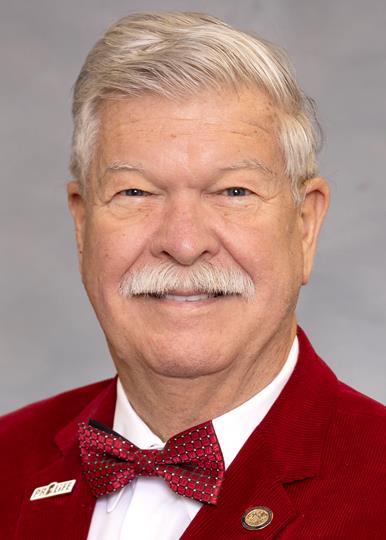
Rep. Mike Clampitt
Sponsored bills
Maddy summaryHB 24, titled "Restore Down-Zoning Authority," aims to reinstate the power of local governments to initiate "down-zoning." This means local governments would regain the ability to change zoning classifications for properties to allow for less intensive development or use. The bill achieves this by repealing Section 3K.1 of S.L. 2024-57, which had previously restricted this authority. If enacted, it would apply retroactively to December 11, 2024, ensuring that any local ordinances impacted by the repealed section are restored to their status prior to that date.
Maddy summaryHB 97 adds stomach cancer (gastric cancer) to the list of occupationally related cancers that qualify firefighters for "killed in the line of duty" benefits under North Carolina's Public Safety Employees' Death Benefits Act. This means firefighters who die from stomach cancer directly linked to their firefighting duties will automatically be eligible for death benefits, easing the process for families seeking compensation. The bill appropriates $500,000 annually from 2025-2027 to cover these benefits. It takes effect July 1, 2025, applying to qualifying deaths occurring on or after that date.
Maddy summaryHouse Bill 516, the "Motorcycle Road Guard Safety Act," creates a system allowing certified individuals to direct traffic for motorcycle groups. To become a motorcycle road guard, a person must be at least 18 years old, possess a valid driver's license, and successfully complete a certification course developed by the Division of Motor Vehicles. Certified road guards must meet specific safety standards and are required to notify and obtain consent from the chief of police in each city where they plan to direct traffic. The Division of Motor Vehicles will adopt rules to implement these new provisions.
Maddy summaryHB 570, the "Responsible Firefighting Foam Management Act," restricts the use of firefighting foams containing PFAS chemicals for training and testing. It prohibits any person, local government, or state agency from discharging Class B firefighting foam with intentionally added PFAS for training or practice purposes. For testing, these foams are also prohibited unless required by law or an authority, and the testing facility has implemented measures to prevent environmental releases. The bill mandates the use of non-fluorinated alternatives for training and is set to become effective on December 1, 2025.
Maddy summaryHouse Bill 244, titled "Depoliticize Government Property Act," restricts the types of flags that can be flown or displayed on property owned or leased by the State of North Carolina or its local government entities. The bill specifies a limited list of permissible flags, including the U.S. flag, the North Carolina flag, flags of local government agencies, military branch flags, the POW/MIA flag, the Honor and Remember flag, and flags of recognized nations during official visits. It also clarifies that local governments cannot prohibit the display of official governmental flags on private or public property with consent. Any violation of the display restrictions on government property would be classified as a Class 3 misdemeanor.

Maddy summaryHouse Bill 432 aims to provide various forms of property tax relief to North Carolina homeowners. It increases the property tax exclusion amounts for qualifying elderly or disabled homeowners and expands the exclusion for disabled veterans, allowing more of their home's value to be exempt from taxation. The bill also establishes a new "Homeowner Advantage Property Tax Relief Program" designed to cap the annual increase in a permanent residence's taxable value, based on inflation and a cumulative limit. To qualify for this program, homeowners must have occupied their residence for at least two years. Additionally, the bill creates an "Elderly Property Tax Homestead Circuit Breaker Program" and exemptions from the forced sale of a homestead.
Maddy summaryHB 69, the Military and Veterans Educational Promise Act, provides two key benefits for military-affiliated individuals and veterans at North Carolina's University of North Carolina (UNC) schools. First, it requires UNC institutions to allow eligible military members (including reservists) and their spouses to defer admission for up to five years (for active duty) or two years (for reserve service) upon enrollment notice. Second, it establishes in-state tuition rates for honorably discharged veterans who served at least 90 days in the military, graduated from a North Carolina high school after 2004, had a North Carolina duty station, or received a Purple Heart. The bill applies to all UNC institutions beginning in the 2025-2026 academic year.
Maddy summaryHB 890 requires North Carolina's Department of Public Instruction to create an Emergency Internet Service Plan (EISP) ensuring public schools can access temporary internet during state emergencies, like natural disasters. The bill establishes a dedicated Emergency Internet Service Fund with $3.9 million in initial funding for equipment and service contracts, which schools cannot be charged to activate. Key provisions include requiring the plan to cover activation conditions, equipment needs, data protection, and third-party partnerships, while ensuring the fund is nonreverting (unused money carries over). This directly affects all public school units by guaranteeing emergency internet access without requiring school-level funding. The plan must be updated annually and reported to the legislature.
Maddy summaryHB 123 makes it a crime for health care providers to willfully destroy, alter, or falsify medical records to conceal medical errors causing patient harm, illegally obtain money, or hide facts related to potential legal claims. It creates specific criminal penalties: a serious felony for hiding errors that caused injury or death, a lesser felony for financial gain, and a misdemeanor for other concealment. The law applies to all health care providers and becomes effective December 1, 2025. It explicitly states this does not affect existing civil remedies available to patients.