

Maddy summaryHB 3 proposes several changes to local election procedures in North Carolina. It requires partisan elections for the Currituck County Board of Education (pending a 2026 referendum) and directly mandates partisan elections for the Pitt County Board of Education. The bill also standardizes municipal election timing, requiring all regular elections in Pamlico County municipalities, Simpson Village, and Monroe City to occur in even-numbered years. Additionally, it modifies vacancy procedures for Cabarrus County's Board of Commissioners. The bill is pending legislative action and requires voter approval in Currituck County for the school board change to take effect.
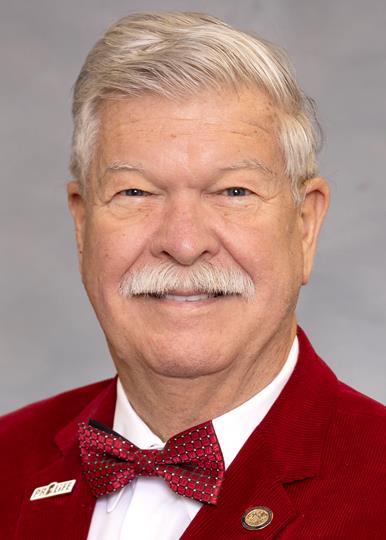
Rep. Mike Clampitt
Sponsored bills
Maddy summaryHB 187 updates North Carolina's credit union oversight rules. It requires credit unions to pay semiannual supervision fees (in January and July) and submit annual financial reports to the Credit Union Division. The bill clarifies examination schedules (every 18 months), sets late-report penalties ($75-$750 per day), and specifies how fees and penalties are collected and used. These changes directly affect all North Carolina credit unions operating under Chapter 54 statutes, streamlining their regulatory compliance with the Administrator of Credit Unions. The bill focuses on administrative procedures, not new member benefits or financial programs.
Maddy summaryHB 74 is a technical corrections bill that extends deadlines for unspent state grants. It prevents certain nonrecurring grants (originally set to revert to the state on December 31, 2024) from reverting, keeping them available for expenditure until used or until the end of the 2025-2026 fiscal year. This directly affects non-state entities (like local governments or nonprofits) that received these grants but hadn’t spent them by the original deadline. The bill makes no new policy changes - only adjusts existing budget rules to avoid unintended loss of funds. It is purely procedural, with no substantive policy shifts.
Maddy summaryHB 674, "The Firearms Liberty Act," proposes several changes to firearms regulations. It would allow for the issuance of lifetime concealed handgun permits, in addition to the current five-year permits, affecting individuals seeking to carry concealed handguns. The bill also specifies that permittees whose concealed carry permits lapse would not need to retake a firearms safety course for renewal under certain conditions. Furthermore, it aims to protect the property rights of individuals subject to domestic violence protective orders by enabling them to store or sell their firearms through qualified licensed dealers. Finally, the bill authorizes the storage and use of defensive devices in biometric safes for schools.
Maddy summaryHouse Joint Resolution 379 is an application from the State of North Carolina to the U.S. Congress. It requests that Congress call a "convention of the states" as outlined in Article V of the U.S. Constitution. The purpose of this convention would be to propose new amendments to the Constitution. These amendments would focus on imposing fiscal restraints on the federal government, limiting its power, and setting term limits for federal officials and members of Congress. This application is considered ongoing until two-thirds of the states submit similar requests.
Maddy summaryHouse Bill 214, known as the "Faithful Article V Commissioner Act," creates rules for North Carolina's participation in a convention for proposing amendments to the U.S. Constitution. It outlines how commissioners and alternates are to be selected by the General Assembly, their qualifications, and their ethical obligations. The bill strictly defines the scope of authority for these commissioners, limiting them to the specific issues outlined in their commission and the convention's call. Commissioners must take an oath to abide by these limits, and exceeding their defined authority is deemed a Class I felony.
Maddy summaryHB 121 provides local boards of education with additional flexibility in adopting their school calendars. It removes the current state-mandated earliest opening date for students (the Monday closest to August 26) and the latest closing date (the Friday closest to June 11). This change allows local boards to determine the specific opening and closing dates for public schools under their authority. The bill directly affects public schools and students in North Carolina and would apply starting with the 2025-2026 school year.
Maddy summaryHouse Bill 4, also known as "Sam's Law," aims to improve seizure preparedness and response in North Carolina schools. The bill requires public school units, charter schools, and other educational institutions to develop individualized Seizure Action Plans for students diagnosed with seizure disorders, in collaboration with their parents. It mandates annual seizure education programs for all K-12 school personnel and requires principals, school counselors, and teachers to complete an annual self-study on seizure disorders. Furthermore, the bill ensures at least one employee in each school is trained to administer seizure medication and requires the posting of seizure first aid information in visible areas. Various educational boards are tasked with adopting policies to implement these requirements, with $50,000 appropriated to the Department of Public Instruction for development costs.
Maddy summaryHouse Bill 618, the "Ivermectin Access Act," directs the State Health Director to issue a statewide standing order that allows licensed pharmacists to dispense ivermectin for human use. Under this order, pharmacists would be authorized to provide ivermectin without requiring a written prescription or consultation from a healthcare professional. The bill also grants immunity from civil or criminal liability to the State Health Director for issuing the order and to any pharmacist who dispenses ivermectin in accordance with it. The State Health Director is required to issue this statewide standing order by October 1, 2025.
Maddy summaryHB 185 establishes the Transylvania Rural Development Authority as an independent body corporate and politic. This authority is tasked with rural development specifically within Transylvania County and operates separately from the county's board of commissioners. It will be governed by a nine-member board, with members who are residents of Transylvania County appointed by the Governor, the President Pro Tempore of the Senate, and the Speaker of the House. The bill outlines the authority's organization, staffing, and conflict-of-interest rules, and limits liability for other governmental entities regarding environmental issues on projects undertaken with the Authority.