

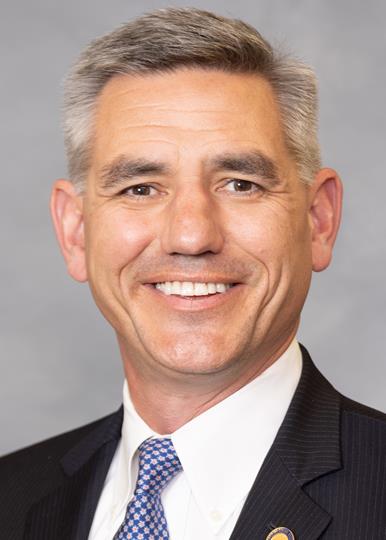
Photo of Brian Turner
D North Carolina House · District 116 On the 2026 ballot

Rep. Brian Turner

Compare
Total votes
3,047
all sessions
Attendance
94%
191 missed
Near the chamber average
With party
96%
of cast votes
Near the chamber average
Bipartisan score
3%
crosses aisle rarely
Near the chamber average
Sponsored
355
bills & resolutions
Near the chamber average
Committees
8
assignments
355 bills and resolutions

Sponsored bills

Total
355
Primary
16
Co-sponsor
339
This page
355
matching current filters
Co-sponsor HB 434
Failed · North Carolina House · Co-sponsor
Lower Healthcare Costs.

Maddy summaryHB 434, titled "Lower Healthcare Costs," is a procedural bill focused on updating definitions related to health insurance utilization review in North Carolina. It rewrites statutory definitions (e.g., "medical necessity," "clinical peer," "closely related service") within existing insurance regulations but does not introduce new cost-saving mechanisms or policy changes. The bill directly affects insurers, healthcare providers, and covered individuals by standardizing terminology used in prior authorization processes. As a definition-only update, it has no concrete policy impact on healthcare costs or patient access, and the title does not align with its actual scope.

Failed Apr 6, 2026 1 co-sponsor
Co-sponsor HB 13
died · North Carolina House · Co-sponsor
Charges for Credit and Charge Cards.

Maddy summaryHB 13 prohibits North Carolina merchants from charging customers more for credit or debit card payments than what the merchant pays to process those transactions. It directly affects retailers and service providers in the state, requiring them to disclose any card fees clearly in advertisements if they impose them. The law mandates that merchants cannot add a markup to processing costs charged by payment networks (like Visa or Mastercard), and violations could result in civil penalties up to $5,000 per offense. The bill takes effect October 1, 2025, aiming to prevent unfair surcharges on card payments.

died Sep 23, 2025 1 co-sponsor
Co-sponsor HB 8
Passed · North Carolina House · Co-sponsor
NC Managing Environmental Waste Act of 2025.

Maddy summaryHB 8 requires all North Carolina state departments, community colleges, and local school systems to prioritize purchasing compostable or recyclable materials for food service and supplies, where economically feasible. It mandates annual reporting on purchases of these materials and recycling collections to the Department of Environmental Quality. The bill also directs UNC's Policy Collaboratory to study food service ware impacts and requires legislative and state park pilot programs to reduce single-use food service ware. These provisions directly affect state agencies and schools responsible for procurement and waste management, aiming to reduce single-use waste through policy changes rather than bans.

Passed Jul 31, 2025 1 co-sponsor
Co-sponsor HB 907
died · North Carolina House · Co-sponsor
NC Recovery and Resiliency Act.

Maddy summaryHB 907 creates a new Disaster Readiness and Response Fund within the Office of the State Treasurer in North Carolina. This fund is designed to be separate from the state's General Fund and other existing reserves, providing a dedicated financial resource for disaster-related activities. The bill does not specify how the money will be used or who will administer it, leaving those details for future legislation. It applies to the state government and establishes a new financial mechanism for potential future disaster preparedness and response efforts.

died Jul 28, 2025 1 co-sponsor
Co-sponsor HB 819
Passed · North Carolina House · Co-sponsor
DIT Agency Bill.

Maddy summaryHB 819 creates North Carolina's Longitudinal Data System, which links student education data (like test scores, graduation records, and course enrollment) with workforce data (such as employment and wages) to track student outcomes. It directly affects public schools, universities, the Department of Public Instruction, and workforce agencies by requiring them to share de-identified student data through this centralized system. Key provisions include strict privacy safeguards (complying with FERPA and HIPAA), mandatory data security plans, a 5-year limit on linking education and workforce data, and annual reporting requirements for the system's oversight body. The bill aims to improve education policy decisions while ensuring data privacy and security for students.

Passed Jun 26, 2025 1 co-sponsor
Co-sponsor HB 612
Signed into law · North Carolina House · Co-sponsor
Fostering Care in NC Act.

Maddy summaryHB 612, the "Fostering Care in NC Act," updates North Carolina's laws governing child abuse, neglect, and dependency cases. It expands the definition of "abused juveniles" to include specific offenses like sexual crimes, human trafficking, and certain violent acts, affecting how cases are classified. The bill requires county social services directors to use either a family-centered assessment or a formal investigation when reviewing reports, and to collect military affiliation details of the juvenile's caregiver. It also clarifies that court jurisdiction over juveniles continues until age 18, emancipation, or death. These changes standardize responses to child welfare reports and improve information gathering for safety decisions.

Signed into law Jun 26, 2025 1 co-sponsor
Co-sponsor HB 251
Signed into law · North Carolina House · Co-sponsor
Various Disaster Recovery Reforms.

Maddy summaryHB 251 prohibits North Carolina state agencies from denying disaster recovery assistance (like grants) based on a person's political affiliation or political speech. It applies to all applicants for state disaster aid, including U.S. citizens, nationals, and qualified aliens, and sets penalties of a Class I felony for violations. The bill also defines "temporary housing" (such as trailers or tents) and adds criminal penalties for stealing such housing during declared emergencies. These changes aim to ensure state disaster aid is distributed fairly and protect emergency housing resources.

Signed into law Jun 26, 2025 1 co-sponsor
Co-sponsor HB 348
died · North Carolina House · Co-sponsor
Annexation of Present-Use Value Land/School Capacity.

Maddy summaryHB 348 extends the period for carrying forward deferred property taxes on agricultural, horticultural, and forest land from three to six years. It creates local grant programs for counties and cities, using the excess tax funds generated by this change, to provide financial support to qualifying farmers for farm sustainability. The bill also requires cities to obtain county commission approval before annexing land classified under present-use value taxation. These provisions directly affect farmers who qualify for present-use value property taxation and local governments managing tax funds and annexation decisions.

died Jun 25, 2025 1 co-sponsor
Co-sponsor HB 429
Passed · North Carolina House · Co-sponsor
Turtle Rescue Team Special Registration Plate.

Maddy summaryHB 429 would have authorized a special license plate for North Carolina vehicle owners supporting the NC State University College of Veterinary Medicine's Turtle Rescue Team. The bill specified a $30 annual fee per plate, with $20 directly funding the Turtle Rescue Team's work rehabilitating turtles, while $10 went to a state fund. However, the bill explicitly states this plate program expired on July 1, 2016, meaning it is no longer active or available for purchase. The legislation primarily affected vehicle owners who chose to buy this specific plate, with the fees supporting the Turtle Rescue Team's wildlife rehabilitation services.

Passed Jun 16, 2025 1 co-sponsor
Co-sponsor HB 821
died · North Carolina House · Co-sponsor
Drivers License Expiration Moratorium.

Maddy summaryHB 821, titled "Drivers License Expiration Moratorium," establishes a temporary pause on the expiration of certain Class C driver's licenses. The bill allows these licenses to remain valid for up to two years after their expiration date, aiming to address a backlog of drivers unable to renew in person. This provision does not apply to licenses that are currently canceled, revoked, or suspended, nor to Real ID compliant licenses valid for eight years or more. The act is effective upon becoming law for licenses expiring on or after that date, and it will expire on December 31, 2027.

died May 19, 2025 1 co-sponsor
Showing 51 to 60 of 355 bills
Previous 1 … 5 6 7 … 36 Next