

Maddy summaryThis bill proposes constitutional changes to North Carolina property tax laws, with a primary focus on allowing the state to use area median income as a standard for granting tax relief. It also modifies the existing homestead circuit breaker to adjust income eligibility limits and expands funding for property reappraisals. Because the core amendment requires voter approval, the bill currently sets up a referendum to be voted on by the public in November 2026. If approved, the change would enable the General Assembly to create property tax exemptions based on local income levels across the state. Additionally, the legislation updates rules for nonprofit housing exemptions and directs grant money to county commissioners to support more frequent property valuations.
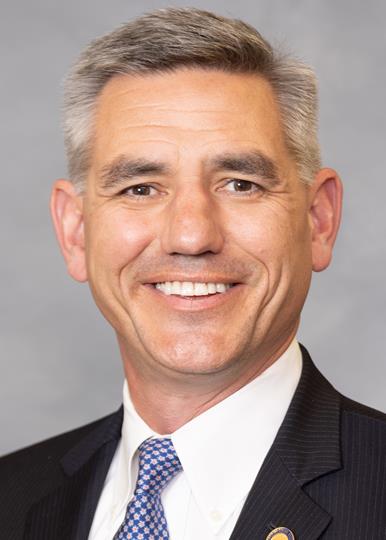
Rep. Brian Turner
Sponsored bills
Maddy summaryHB 1066, the Child Care Stabilization and Affordability Act, aims to address North Carolina's child care shortages by redirecting funds from the Opportunity Scholarship Program to support child care services. The bill reduces scholarship funding for private school vouchers, with the savings used to expand child care subsidies, stabilize existing programs, and improve early childhood educator pay and benefits. It also streamlines administrative rules for child care providers and clarifies regulations for religious programs. These changes directly affect families seeking child care subsidies, private school scholarship recipients, and child care providers across the state.
Maddy summaryThis bill creates a new loan program in North Carolina to help nonprofit organizations prepare land for affordable housing by offering below-market interest rate loans. The funds, totaling $50 million for the 2026-2027 fiscal year, can only be used for site-related expenses like land acquisition, utility installation, and environmental testing, but not for building the actual homes. To qualify, borrowers must be experienced nonprofits that provide zero-interest mortgages to buyers and ensure at least 40% of units in mixed-income projects are reserved for low- and moderate-income families. The program is designed to support the development of housing for households earning up to 80% of the local area median income.
Maddy summaryThis bill modifies North Carolina's sales tax rules to exempt most prepared foods from taxation starting October 1, 2026. It defines "prepared food" as items sold hot or mixed together by a retailer, while explicitly excluding raw ingredients, simple sliced foods, and products from large-scale food manufacturers. The change would remove the sales tax burden for many ready-to-eat meals and combinations sold in stores, but it preserves the tax on specific items like bakery goods from small artisan bakeries, soft drinks, and candy.
Maddy summaryThis bill establishes a 24-hour toll-free helpline and online portal within the North Carolina Department of Justice to assist individuals harmed by federal troop deployments, federal law enforcement actions, or immigration enforcement in the state. The Attorney General is required to maintain a secure database of complaints, investigate reported violations, and publish annual public reports detailing the number of reports, arrest statistics, and observed patterns of misconduct while keeping individual identities confidential. To ensure accessibility, the helpline must offer voicemail, translation services, and disability accommodations, along with resources connecting victims to legal, social, and school support programs. The legislation also mandates that the Attorney General hold at least one public hearing each year to present aggregate data and findings from the annual reports. Implementation of the helpline must begin within 60 days of the bill's effective date, with an initial report due one year after launch, and the program is funded with $3 million starting in the 2026-2027 fiscal year.
Maddy summaryThis North Carolina bill proposes exempting menstrual products from state sales tax. It defines the exempted items to include tampons, panty liners, menstrual cups, and sanitary napkins. The legislation amends existing tax codes to remove these items from taxable retail sales and use tax. The tax exemption will take effect on October 1, 2026, applying to purchases made on or after that date.
Maddy summaryHB 1080, the Public Safety Reinvestment Act, allocates state funds to address staffing shortages and modernize safety measures across several North Carolina public institutions. The bill directs $30 million to hire additional court clerks in Wake and Mecklenburg counties, provides salary increases for Department of Adult Correction employees and State Highway Patrol members, and offers benefits enhancements for correctional officers in specific retirement systems. It also mandates that public transit vehicles carry emergency trauma kits and requires operators to implement stricter fare enforcement technologies and training. Furthermore, the legislation funds the Division of Juvenile Justice, the State Crime Laboratory, and includes provisions for reporting fare evasion data and safety incidents.
Maddy summaryHB 1077 creates a grant program for North Carolina community colleges to train students as tax preparers for the Volunteer Income Tax Assistance (VITA) program, allowing them to help low-income individuals, people with disabilities, and limited English speakers file their taxes for free. The bill provides $1.38 million in initial funding and $610,000 in recurring funds to support curriculum development, faculty incentives, and paid work-based learning opportunities where students earn hourly wages during tax season. Additionally, the legislation allocates $840,000 to the United Way of North Carolina to expand its VITA services by increasing the number of locations, hiring dedicated staff, and improving outreach and financial education resources. These measures aim to help an estimated 225,000 eligible North Carolina filers claim the Federal Earned Income Tax Credit, which has an average value of about $2,894 per person. The act takes effect on July 1, 2026, and includes provisions for training and technical assistance to ensure the program runs effectively.
Maddy summaryThis bill modifies North Carolina's divorce laws to allow victims of domestic violence to file for divorce without waiting the usual one-year separation period. To qualify for this expedited process, the applicant must provide proof of abuse through a domestic violence protection order, a criminal conviction against their spouse, or a judge's ruling based on evidence such as police records or medical documentation. Additionally, the legislation allocates $50,000 in state funds to a specific nonprofit organization to support victims of domestic violence. The changes apply to divorce cases filed after the law takes effect and do not impact cases already pending in court.
Maddy summaryThis bill expands access to North Carolina's Innovations waiver for families with children who have significant medical needs by adding 6,635 new slots and funding them with $240 million starting in 2026. It also modifies the Opportunity Scholarship Program to prioritize students from lower-income households by capping eligibility at 200% of the federal free lunch income threshold and adjusting grant amounts based on family income levels. To support these changes, the legislation reduces the overall scholarship fund by $240 million while simultaneously directing substantial recurring funding to the program's reserve for the next 15 years.