

Maddy summaryHB 960 would temporarily increase North Carolina's unemployment insurance weekly benefits to $600 during declared disasters, directly affecting unemployed workers in areas impacted by disaster declarations under state emergency management law. It requires the state to set aside specific funds in the unemployment insurance fund for these enhanced benefits and mandates certification that sufficient funds are available before implementation. The benefit increase applies only for the duration of an official disaster declaration and ends when the declaration expires. The bill takes effect July 1, 2025.
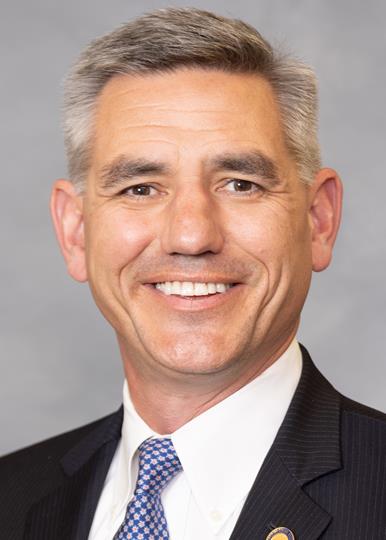
Rep. Brian Turner
Sponsored bills
Maddy summaryHB 1006 proposes amending North Carolina's state constitution to require that all legislative bills address only one subject, with exceptions for general appropriations bills, tax bills, and technical corrections. If approved by voters in the 2026 election, this change would require lawmakers to draft bills with a single, clearly defined topic in their titles. The amendment must be ratified by a majority of voters in the November 2026 general election before taking effect. This is a procedural change affecting how bills are structured, not the content of legislation itself.
Maddy summaryHB 1002, the Rate Payer Protection Act, prohibits North Carolina utilities from passing grid and energy costs specifically tied to large data centers (100+ megawatt demand) to electricity ratepayers. Instead, it creates a 14-member Special Commission to plan data center infrastructure, reviewing grid capacity, recommending locations based on factors like fiber and water access, and advising on energy expansion needs. The Commission must report findings to state leaders by June 2027 and expires on that date. This directly affects ratepayers (who avoid these costs) and utilities (which must exclude data center-related expenses from rate calculations).
Maddy summaryHB 983 prohibits corporal punishment in all North Carolina public schools, directly affecting students and school staff. The bill replaces existing permissive rules with a full ban, requiring schools to maintain detailed records of any past use (though none currently occur), report demographic data on disciplinary actions annually, and allow parents to opt their children out of corporal punishment. It clarifies that physical restraint under federal law or reasonable force isn't considered corporal punishment. The law takes effect for the 2025-2026 school year.
Maddy summaryHB 994 allocates $20.3 million in nonrecurring funds and $1 million in recurring funds to support Western North Carolina recovery from Hurricane Helene and expand economic development services. The bill directs $10 million specifically for long-term housing recovery for residents in Western NC whose homes were damaged by Hurricane Helene, $5 million to Community Development Corporations (CDCs) statewide to enhance economic development services, and $300,000 to fund three women’s business centers in Western NC, the Triad, and the Piedmont. An additional $5 million supports the Institute Capital (I-CAP) for statewide economic activities, while the recurring $1 million aids ongoing housing recovery efforts and matches federal disaster funds. The bill directly affects Western NC residents impacted by Hurricane Helene, local CDCs, and small business support organizations through targeted financial assistance.
Maddy summaryHB 980 removes barriers to employment by ending North Carolina's practice of suspending driver's licenses for unpaid traffic-related fines, fees, or court appearances. It automatically reinstates licenses suspended under these rules without requiring action from the person, waives associated fees, and requires the DMV to notify affected individuals. The bill also mandates data collection on suspended licenses (disaggregated by race, gender, and zip code) and forgives fines for past "Driving While License Revoked" convictions tied to these suspensions. This directly affects North Carolinians whose licenses were suspended solely for unpaid traffic debts or non-appearance, restoring their ability to drive for work or daily needs.
Maddy summaryHB 397 allows schools in North Carolina to use epinephrine nasal spray as an emergency treatment option alongside traditional auto-injectors for students experiencing anaphylaxis. The bill amends school health policies to include nasal spray devices in the definition of "epinephrine auto-injector delivery systems," requiring all schools to maintain at least two emergency epinephrine supplies (now including nasal spray) in secure but accessible locations. Schools must train staff to recognize anaphylaxis symptoms, store devices properly, and follow emergency action plans developed with school nurses. This applies to public schools, charter schools, and regional schools starting in the 2025-2026 school year. The policy directly affects school staff, students with severe allergies, and school health protocols.
Maddy summaryHB 842 clarifies that North Carolina public schools may conduct vision, hearing, dental, and developmental screenings for students without requiring parental consent, but must notify parents at the start of each school year about all screenings offered and provide results for their child. This bill directly affects parents of students in public schools across North Carolina, particularly for kindergarten through third grade as noted in the bill text. Key provisions require schools to provide written notice of screenings and results to parents (instead of seeking consent for each screening), while maintaining existing requirements for other health services that do require consent. The law updates school health screening procedures under North Carolina General Statutes § 115C-76.46.
Maddy summaryHB 852, "Safe Dogs, Safe Owners," creates uniform statewide leash laws and requires dog owners to pay for injuries caused when their dog runs unleashed in public and harms a person or domestic animal. The bill defines a dog as "at large" when not under reasonable physical control (e.g., off-leash without sufficient control to prevent an attack) and makes owners strictly liable for resulting damages. It also prohibits allowing dogs over six months old to run unleashed at night without an owner or authorized person present, with violations punishable as a Class 3 misdemeanor and liability for damages. The law takes effect December 1, 2025, replacing inconsistent local ordinances.
Maddy summaryHB 881 bans the manufacture, use, and distribution of PFAS (per- and poly-fluoroalkyl substances) in North Carolina, directly affecting businesses that currently use these chemicals in products like firefighting foam, non-stick coatings, or food packaging. The law requires companies discharging wastewater to disclose PFAS and 1,4-dioxane levels and remove them if feasible, while public water systems must notify customers about PFAS detected in drinking water by June 2025. It establishes civil penalties of up to $25,000 for violations, with stricter fines for repeat offenses. The bill focuses on preventing contamination and protecting public health through these concrete regulatory changes.