

Maddy summaryHB 79, "North Carolina Work and Save," creates a voluntary retirement savings program for North Carolina workers without access to employer-sponsored plans. It allows covered employers (small businesses not already offering tax-qualified retirement plans) to set up payroll deduction IRAs (traditional or Roth) for employees, enabling automatic retirement savings. The program is administered by a 12-member Board under the Department of Commerce, with funds held in a trust managed by private entities. It directly affects approximately 1.7 million North Carolina workers in small businesses, focusing on moderate- and lower-income households to improve retirement security. Participation is voluntary for both employers and employees, with no state funding required for employer participation.
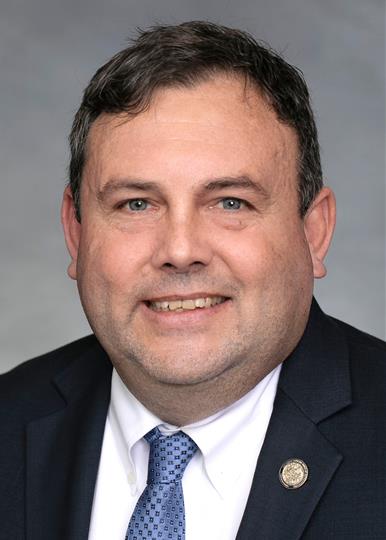
Rep. Eric Ager
Sponsored bills
Maddy summaryHB 348 extends the period for carrying forward deferred property taxes on agricultural, horticultural, and forest land from three to six years. It creates local grant programs for counties and cities, using the excess tax funds generated by this change, to provide financial support to qualifying farmers for farm sustainability. The bill also requires cities to obtain county commission approval before annexing land classified under present-use value taxation. These provisions directly affect farmers who qualify for present-use value property taxation and local governments managing tax funds and annexation decisions.
Maddy summaryHB 578, the Jason Flatt Act, requires all North Carolina public K-12 schools to implement suicide prevention education and training for school staff. It mandates that licensed educators complete at least one hour of annual suicide prevention training, while staff working with grades 6-12 must receive guidelines for identifying at-risk students and procedures for referrals. Schools must adopt a mental health plan including these elements, with initial staff training of six hours (within six months of hire) and two hours annually thereafter. The law applies to all public schools, charter schools, regional schools, and lab schools starting the 2025-2026 school year.
Maddy summaryHB 126 requires state and local agencies to seek input from agricultural advisory boards before condemning or rezoning farmland within voluntary agricultural districts. It mandates that agencies request public hearings on such proposals, giving boards 45 days to review and submit recommendations. Agencies cannot proceed with condemnation or rezoning actions while the board is processing the request, extending the timeline to 120 days after the board submits its findings. The bill directly affects landowners in these districts and agencies making land use decisions, effective October 1, 2025.
Maddy summaryHB 615 helps military families enroll children in North Carolina public schools before establishing local residency. It allows students to register remotely (e.g., online) if a parent is on active duty and either transferring to a North Carolina military base or separating within 12 months, requiring only a copy of the military order or separation document. Families have one year from the parent's duty start or separation date (or until the end of the school year) to provide proof of residency, with high school juniors/seniors getting until graduation. The law takes effect for the 2025-2026 school year.
Maddy summaryThis resolution (HR 777) expresses the North Carolina House of Representatives' support for the longstanding friendship and economic ties between North Carolina and France. It highlights historical connections (like French Huguenot settlements and General Lafayette's role), notes France as a major investor in NC ($429M since 2013) and employer (15,500 jobs), and urges closer U.S.-France trade cooperation. The resolution is purely symbolic, with no new policies or funding, and serves to affirm existing bilateral relations through ceremonial recognition.
Maddy summaryHB 187 updates North Carolina's credit union oversight rules. It requires credit unions to pay semiannual supervision fees (in January and July) and submit annual financial reports to the Credit Union Division. The bill clarifies examination schedules (every 18 months), sets late-report penalties ($75-$750 per day), and specifies how fees and penalties are collected and used. These changes directly affect all North Carolina credit unions operating under Chapter 54 statutes, streamlining their regulatory compliance with the Administrator of Credit Unions. The bill focuses on administrative procedures, not new member benefits or financial programs.
Maddy summaryHB 543 requires all applicants for athlete agent registration in North Carolina to undergo a criminal history background check as a condition of obtaining or renewing their license. This directly affects individuals seeking to work as athlete agents within the state, including new applicants and those renewing existing registrations. The bill mandates that applicants pay a $250 fee for the check (as specified in Section 2 of the bill), consent to fingerprinting, and allows the State Bureau of Investigation to conduct the check using state and federal records. All background information remains confidential and is not considered a public record under North Carolina law.
Maddy summaryHB 569 requires PFAS manufacturers (those who produce PFAS compounds like GenX) to pay public water systems for cleaning up PFAS contamination in drinking water when levels exceed EPA safety limits. It allows the Environmental Quality Secretary to order polluters to cover actual cleanup costs, including technology to reduce PFAS levels, and applies retroactively to expenses since 2017. The bill appropriates $300,000 for implementation and mandates annual reports on fund use, with water systems refunding ratepayers when manufacturers cover costs. This directly affects water systems burdened by PFAS cleanup, PFAS manufacturers deemed responsible, and ratepayers who may see reduced future water rates.
Maddy summaryThis bill designates May 17th of each year as "Lafayette Day" in the State of North Carolina. It amends the General Statutes to officially recognize this day in honor of Marquis de Lafayette's contributions to American independence and his visit to North Carolina.