

Maddy summaryHB 374 allocates $3.95 million to fund a financial assistance program for small local governments through the North Carolina Association of Regional Councils of Governments (NCARCOG). It directs NCARCOG to hire 32 additional finance professionals to help small towns and public authorities with financial compliance, prioritizing those with limited resources on the State Treasurer’s assistance list. The bill also provides $3.9 million for NCARCOG to develop a disaster response plan, including training for local financial administration, assistance with federal disaster funds, and infrastructure repair support. These funds, effective July 1, 2025, aim to improve financial management and disaster resilience for smaller communities across North Carolina.
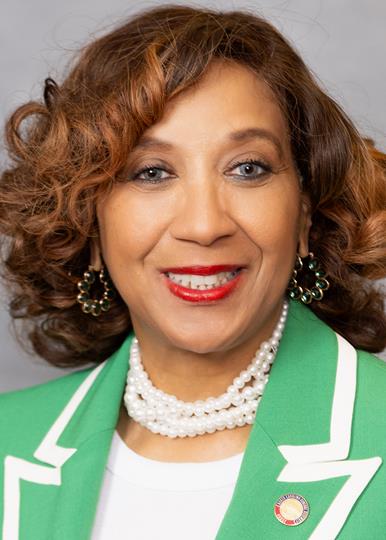
Rep. Carolyn Logan
Sponsored bills
Maddy summaryHB 366 revives North Carolina's pistol permit law and expands it to require permits for purchasing long guns (like shotguns and rifles), in addition to pistols. It directly affects anyone buying firearms within the state, requiring a sheriff-issued permit after a background check and verification of good moral character. The permit, valid for five years, must be presented during purchases and includes security features to prevent counterfeiting. Exemptions apply to antique firearms and historic edged weapons, but the law applies to all other pistol and long gun transactions starting December 1, 2025.
Maddy summaryHB 371 requires North Carolina's Division of Motor Vehicles to provide driver's license handbooks and written tests in Khmer and any language spoken by at least 2% of the state's population. This directly affects applicants who speak these languages by offering materials in their preferred language during the licensing process. The key provision mandates the DMV to add these language options to its standard services, moving beyond English-only requirements. The law takes effect on January 1, 2026.
Maddy summaryHB 353, the Fair Minimum Wage Act, raises North Carolina's state minimum wage in staged increases, starting at $10 per hour on January 1, 2026, and reaching $18 per hour by January 1, 2030. After 2030, the wage will automatically adjust annually based on inflation using the Consumer Price Index. The bill directly affects hourly workers and employers across North Carolina, requiring higher pay for all covered employees. It also adds provisions allowing workers to recover unpaid wages plus interest, attorney fees, and court costs if employers fail to pay correctly.
Maddy summaryHB 351 establishes North Carolina's Recovery-Friendly Workplace Program, which helps employers support employees in addiction recovery. Employers (both public and private) can become "participants" or earn "certified" status by completing training, adopting inclusive policies (like flexible leave and confidential treatment access), and implementing evidence-based practices. The program, funded with $300,000 from the Opioid Settlement Fund, provides employers with advisors, model policies, and annual reviews to maintain certification. It directly affects all North Carolina employers covered by workers' compensation and their employees seeking recovery support. The program becomes effective July 1, 2025.
Maddy summaryHB 339, the Economic Security Act, raises North Carolina's minimum wage to $22 per hour effective January 2026, with annual inflation adjustments based on the Consumer Price Index. It mandates equal pay for equal work, requires paid sick leave and family medical leave for all employees, and strengthens workplace safety protections. The bill also restores inflation-adjusted unemployment benefits, ends wage theft, removes criminal history questions from job applications ("banning the box"), and expands tax credits for childcare and low-income workers. Additionally, it creates a presumption that essential workers infected with COVID-19 contracted it on the job and appropriates funds for cost-of-living adjustments for public retirees.
Maddy summaryHB 350 requires North Carolina firearm owners to report lost or stolen firearms to local law enforcement or the State Bureau of Investigation within 24 hours of discovery. Owners must provide specific details like the firearm’s make, model, serial number, and circumstances of the loss or theft. Law enforcement must then enter key details into the National Crime Information Center database. Violations are punishable as a Class 3 misdemeanor for a first offense, escalating to a Class I felony for repeat violations. The law takes effect December 1, 2025.
Maddy summaryHB 341 increases property tax relief for disabled veterans in North Carolina by expanding the homestead exclusion on their primary residence. The bill sets exclusion amounts based on disability rating: $100,000 for 70%+ disability, $75,000 for 50-69%, $50,000 for 30-49%, and $25,000 for 10-29%. Surviving spouses qualify for the greater of the veteran’s exclusion amount or $45,000, provided the veteran’s death resulted from a service-connected condition. This policy directly affects qualifying disabled veterans and their surviving spouses who own and occupy their primary residence, effective for taxes due in 2025.
Maddy summaryHB 344, the Litter Reduction Act of 2025, requires a deposit on most beverage containers (like soda, water, and alcohol in glass, plastic, or metal) sold in North Carolina, with refunds available at certified redemption centers. It directly affects beverage distributors, retailers (excluding small businesses selling under 250,000 containers yearly), and consumers who purchase these products. The bill establishes a system where consumers pay a deposit at purchase and can return empty containers to redemption centers for a refund, aiming to reduce roadside litter from beverage containers. Key provisions include defining "beverage container," requiring redemption centers to accept containers, and setting recycling standards to avoid downcycling or waste-to-energy processing.
Maddy summaryHB 343 appropriates $380,000 for 2025-26 and $397,000 for 2026-27 to create four full-time ombudsman positions within North Carolina’s Long-Term Care Ombudsman Program. This directly affects residents of nursing homes, adult care homes, and family care homes by enhancing advocacy for their rights and care quality. The bill’s key provision funds staff to move the state’s program toward national standards for resolving facility issues without formal complaints. It becomes effective July 1, 2025, with no advocacy language - only a concrete funding mechanism for expanded protections.