

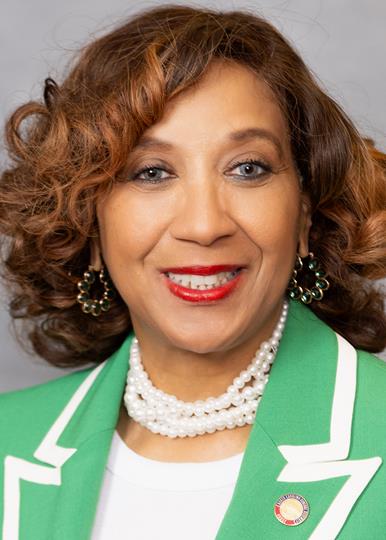
Photo of Carolyn Logan
D North Carolina House · District 101 On the 2026 ballot

Rep. Carolyn Logan

Compare
Total votes
1,056
all sessions
Attendance
97%
36 missed
Near the chamber average
With party
92%
of cast votes
Lower than 90% of chamber peers
Bipartisan score
4%
crosses aisle rarely
Higher than 87% of chamber peers
Sponsored
1,127
bills & resolutions
Higher than 95% of chamber peers
Committees
8
assignments
1,127 bills and resolutions

Sponsored bills

Total
1,127
Primary
85
Co-sponsor
1,042
This page
1,127
matching current filters
Co-sponsor HB 199
Passed · North Carolina House · Co-sponsor
Authorize Municipal Deannexation.

Maddy summaryHB 199 establishes a regulatory framework for nonconsensual towing businesses that attach devices (boots) or tow vehicles without the owner's consent on private property. The bill creates a Towing and Recovery Commission within the Department of Public Safety to issue permits, set maximum fees for booting/towing/storage (considering vehicle type and regional costs), and require standardized billing forms. The Commission must maintain a public database of businesses, handle complaints, and submit annual reports starting in 2027. This law directly affects nonconsensual towing businesses, property owners who may face unauthorized towing, and the public by introducing oversight and fee transparency.

Passed Aug 6, 2026 1 co-sponsor
Co-sponsor HB 832
Failed · North Carolina House · Co-sponsor
Education Omnibus.

Maddy summaryHB 832 revises North Carolina's school safety grant program to expand eligible uses of funds for training aimed at improving student well-being and safety. It allows public school units to fund evidence-based programs including suicide prevention training (CALM), trauma-focused therapies (like cognitive behavioral therapy), violence prevention, and peer mentoring facilitation. The bill specifically permits up to $350,000 in annual funding for these expanded services, directly affecting school staff, counselors, and students in North Carolina public schools. This change modifies existing grant rules without creating new funding or altering overall program structure.

Failed Aug 6, 2026 1 co-sponsor
Co-sponsor HB 328
Passed · North Carolina House · Co-sponsor
Regulate Hemp-Derived Consumables.

Maddy summaryHB 328 bans delta-8, delta-9, and other hemp-derived consumables (including CBD products and vapor devices) on all North Carolina public school grounds, buildings, and school-sponsored events. It requires schools to adopt written policies prohibiting these products, including posting signs, notifying students/parents, and enforcing the ban, with definitions explicitly covering "delta-8," "delta-9," and vaping products. The policy applies to all students, staff, and visitors, though it allows hemp/tobacco use in supervised instructional or research settings without ingestion. The bill takes effect for the 2025-2026 school year and aligns with existing tobacco product restrictions.

Passed Jul 30, 2026 1 co-sponsor
Co-sponsor HB 133
Signed into law · North Carolina House · Co-sponsor
NC Farmland and Military Protection Act.

Maddy summaryHB 133, the NC Farmland and Military Protection Act, bans U.S.-designated adversarial foreign governments from buying, leasing, or holding interests in agricultural land or land within 75 miles of major military installations like Fort Bragg and Camp Lejeune. It directly affects foreign governments identified by the U.S. State Department as adversaries under arms regulations, preventing them from acquiring land critical to food production or near military sites. The law excludes agricultural research leases under 250 acres and makes any violating land transfer legally void. This focuses on restricting foreign control of strategic land without altering existing domestic land transactions.

Signed into law Jul 8, 2026 1 co-sponsor
Co-sponsor HB 1173
Signed into law · North Carolina House · Co-sponsor
Jaleeyah's Law.

Maddy summaryThis bill, known as Jaleeyah's Law, strengthens North Carolina's anti-gang laws by updating definitions of criminal gangs and increasing penalties for soliciting minors to participate in gang activity. It creates new offenses for encouraging people under 18 to join gangs and for gang members possessing firearms, with stricter penalties for those under 18. The legislation also allocates funding to hire additional prosecutors and investigators specifically focused on criminal gang cases. These changes will take effect in 2026 and aim to provide clearer legal tools for prosecuting gang-related crimes.

Signed into law Jul 7, 2026 1 co-sponsor
Co-sponsor HB 1040
Signed into law · North Carolina House · Co-sponsor
Pitt-Greenville Airport Authority Changes.

Maddy summaryHB 1040 updates the financial and operational rules for the Pitt County-City of Greenville Airport Authority by clarifying how the county and city fund airport operations and expansions. The bill allows the two governments to share costs for running the airport and building new facilities, using money from airport fees, land sales, or voter-approved taxes and bonds. It also confirms the authority's power to manage the property, enforce safety zoning rules, and issue debt for improvements if voters agree. This legislation primarily affects the local county and city officials who oversee the airport's budget and development plans.

Signed into law Jul 2, 2026 1 co-sponsor
Co-sponsor HB 198
Failed · North Carolina House · Co-sponsor
ABC Omnibus of 2026.

Maddy summaryHB 198 requires alcohol law enforcement officers to notify the permit holder (not just the employee) within five business days when a violation occurs on a licensed establishment's premises. This applies to both citations issued to employees and reports from other law enforcement agencies about violations of alcohol or related laws. The notice must be sent via email or certified mail and must identify the specific violation and the involved employee. The bill directly affects bars, restaurants, and other businesses holding alcohol permits in North Carolina by mandating clearer, faster communication about violations. It does not change enforcement powers but standardizes how permit holders receive violation notices.

Failed Jun 30, 2026 1 co-sponsor
Co-sponsor HB 258
Signed into law · North Carolina House · Co-sponsor
Worker Safety Act of 2026.

Maddy summaryHB 258, the Utility Worker Protection Act, increases penalties for assaulting utility and communications workers by designating such assaults as Class A1 misdemeanors - the highest misdemeanor level - when the worker is visibly identifiable (e.g., wearing company-logoed uniforms) and performing duties. It directly affects workers providing electricity, gas, telecommunications, or internet services, including those employed by public, private, or cooperative entities. The bill adds specific language to North Carolina’s assault statute, requiring prosecutors to apply this enhanced penalty for assaults meeting these criteria, without needing other legal provisions. The law takes effect December 1, 2025, applying to offenses committed on or after that date.

Signed into law Jun 22, 2026 1 co-sponsor
Co-sponsor HB 1123
Signed into law · North Carolina House · Co-sponsor
UNC Omnibus and Capital Contracting Law Changes.

Maddy summaryThis bill authorizes the University of North Carolina system to finance specific capital improvement projects, such as dormitory renovations and new construction, using non-state funds like gifts, grants, and hospital receipts. It allows the university to issue special obligation bonds to cover these costs and includes a mechanism for the Director of the Budget to adjust project funding if necessary. Additionally, the legislation standardizes the residency determination process for admission to the North Carolina School of Science and Mathematics and revises tuition grant rules for graduates of that school and the UNC School of the Arts. These changes aim to support university infrastructure development and ensure equitable access to specialized science and arts programs for North Carolina residents.

Signed into law Jun 19, 2026 1 co-sponsor
Co-sponsor HB 1203
In committee · North Carolina House · Co-sponsor
Family Support for Those Who Serve Act.

Maddy summaryThis bill expands tuition waivers at North Carolina community colleges to children of public safety workers who are injured or disabled in the line of duty. It allows children aged 17 to 24 of law enforcement officers, experienced correctional officers, and firefighters to attend classes for free if their parent is permanently and totally disabled due to a traumatic work-related injury. The waiver covers the cost of tuition for the time needed to complete the student's chosen educational program, provided they meet standard admission requirements. The law takes effect with the 2026-2027 academic year.

In committee Jun 10, 2026 1 co-sponsor
Showing 1 to 10 of 1,127 bills
1 2 3 113 Next