

Maddy summaryThis North Carolina bill requires all private employers with 25 or more employees to use the federal E-Verify system to check the work authorization of every new hire. It mandates that state and local government agencies also comply with these verification rules and allows employers to avoid penalties if they can prove they acted in good faith and did not knowingly accept fraudulent documents. The legislation establishes a 30-day grace period for employers to fix minor compliance errors and increases fines for repeat offenders while protecting workers who report suspected violations from retaliation. Additionally, it grants the state labor commissioner the authority to conduct random or risk-based audits of employers and provides funding to support enforcement efforts.
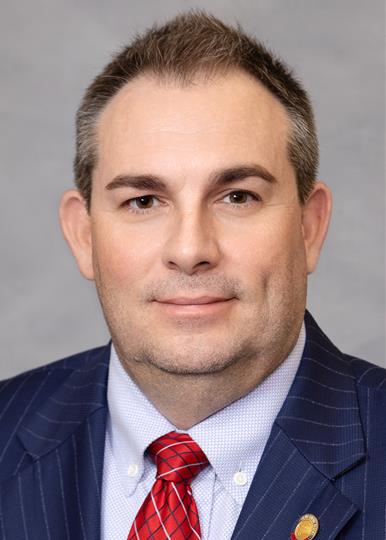
Rep. John Bell
Sponsored bills
Maddy summaryThis bill removes three specific parcels of land from the Village of Walnut Creek's jurisdiction, meaning these properties will no longer be subject to municipal taxes starting in 2026. It also limits the village's authority to exercise city-level powers only within its current, contiguous boundaries, though existing development rules in the excluded areas will remain in place temporarily. Additionally, the law validates any property transactions the village completed before this change takes effect, ensuring those past actions are considered legal.
Maddy summaryHB 496 requires North Carolina public schools to prioritize access for youth groups designated as "patriotic societies" under federal law, specifically naming the Boy Scouts of America and Girl Scouts of the USA as examples. The bill mandates that schools permit these groups to give brief (10-minute) presentations about membership and civic education during non-instructional school time, without counting toward required instructional hours. It applies to all public school types (including charter and regional schools) and requires schools to develop policies ensuring this access, while clarifying that it does not require equal access for non-patriotic groups. The policy aims to encourage civic education by facilitating student engagement with these organizations.
Maddy summaryThis bill, known as the Mike Clampitt 1st Responder Tax Fairness Act, aims to expand tax exemptions for volunteer fire departments and rescue squads in North Carolina. Specifically, it allows these independent groups, which have two or fewer paid employees and are already exempt from state income tax, to avoid paying a highway use tax on specific emergency vehicles like fire trucks, forest firefighting units, and other emergency service vehicles. The change applies to vehicles when a certificate of title is issued on or after July 1, 2026, ensuring these organizations can acquire necessary equipment without incurring this particular tax. By broadening the existing exemption, the legislation directly benefits volunteer responders who operate outside of local government units.
Maddy summaryThis bill creates a new loan program in North Carolina to help nonprofit organizations prepare land for affordable housing by offering below-market interest rate loans. The funds, totaling $50 million for the 2026-2027 fiscal year, can only be used for site-related expenses like land acquisition, utility installation, and environmental testing, but not for building the actual homes. To qualify, borrowers must be experienced nonprofits that provide zero-interest mortgages to buyers and ensure at least 40% of units in mixed-income projects are reserved for low- and moderate-income families. The program is designed to support the development of housing for households earning up to 80% of the local area median income.
Maddy summaryHB 434, titled "Lower Healthcare Costs," is a procedural bill focused on updating definitions related to health insurance utilization review in North Carolina. It rewrites statutory definitions (e.g., "medical necessity," "clinical peer," "closely related service") within existing insurance regulations but does not introduce new cost-saving mechanisms or policy changes. The bill directly affects insurers, healthcare providers, and covered individuals by standardizing terminology used in prior authorization processes. As a definition-only update, it has no concrete policy impact on healthcare costs or patient access, and the title does not align with its actual scope.
Maddy summaryHB 389 establishes a two-year pilot program to create free child care workforce academies across North Carolina, directly affecting individuals seeking careers in child care with no prior experience. The program provides free training, credentialing support (including health screenings and background checks), and stipends ($150 upon completion, $500 after one year of employment) to help participants become lead teachers in licensed child care centers. It allocates $738,000 annually from the General Fund for 2025-2027 to cover tuition and stipends, requiring local partnerships to contribute 25% match. The pilot will launch in Johnston and Wayne counties plus 10 additional regions, with progress reports due by 2026 to evaluate expansion potential. (Note: The bill title "Continuing Budget Operations Part III" appears inconsistent with the actual content; the text focuses on child care workforce training.)
Maddy summaryHB 1015 is a procedural bill that appoints specific individuals to various state boards and commissions based on recommendations from the House Speaker and Senate President. It details appointments such as Reid Williams to the Johnston Community College Board and Joseph Budd to the North Carolina Wildlife Resources Commission, with terms expiring between 2026 and 2030. The bill also corrects minor errors in prior appointment records (e.g., fixing names and terms in earlier legislation). This bill does not create new policies or funding - it solely fills existing positions on state boards.
Maddy summaryHB 402 requires North Carolina state agencies to assess the financial impact of proposed permanent rules. If a rule would cost affected individuals or businesses $20 million or more over five years, it must be approved by the General Assembly before taking effect. For rules with a $1 million or more annual cost impact, agencies must prepare a fiscal note for review by the Office of State Budget and Management. The bill also mandates a two-thirds vote by agency boards to adopt rules exceeding the $1 million cost threshold. This directly affects state agencies creating regulations and the businesses or residents who would bear the costs of those rules.
Maddy summaryHB 318 requires North Carolina county jails and detention facilities to check the immigration status of individuals charged with specific offenses (including certain felonies, misdemeanors, and impaired driving) and to notify U.S. Immigration and Customs Enforcement (ICE) if a detainer is issued. If ICE issues a detainer, facilities must hold the person for up to 48 hours (or until ICE takes custody) and notify ICE 2 hours before the person would otherwise be released. For pretrial defendants facing similar charges, the bill mandates a two-hour hold to allow ICE to issue a detainer; if none is received, the defendant must be released. The law also shields state officials from liability when following these procedures.