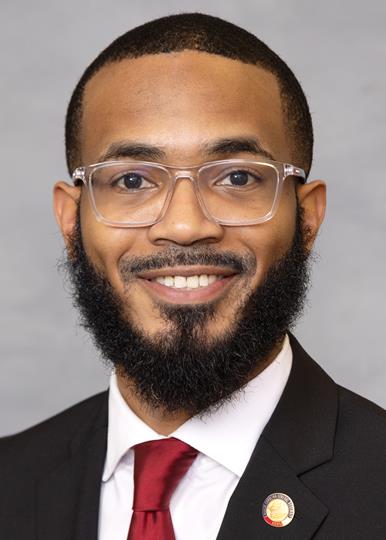
HB 464 requires every public school in North Carolina - including traditional, charter, regional, and laboratory schools - to have at least one full-time, permanent school nurse starting in the 2025-2026 school year. The bill appropriates $95 million from the state General Fund for the 2025-2026 school year to fund these additional nursing positions, with funds designated to supplement - not replace - existing school nurse funding. It amends multiple statutes to mandate this staffing requirement across all public school units. The law becomes effective July 1, 2025, with implementation beginning for the 2025-2026 school year.
SB 183 appropriates $30,000 annually from North Carolina's General Fund to fund a part-time Veteran Services Officer (VSO) position in Jones County for the 2025-2027 fiscal biennium. This bill directly affects Jones County veterans by providing dedicated local support through a VSO who assists with benefits and services. The key provision is the recurring annual funding to cover the salary and operational costs of this specific role within the Department of Military and Veterans Affairs. The bill becomes effective July 1, 2025, and does not alter existing veteran service policies.
HB 285 appropriates $52.5 million from North Carolina's Highway Fund to the Southeast Regional Airport Authority for Laurinburg-Maxton Airport improvements. The funds are allocated specifically: $28 million for a runway extension, $15 million for general airport capital projects, and $9.5 million for water and sewer infrastructure. The bill requires quarterly spending reports to legislative committees and takes effect July 1, 2025.
HB 651 reduces parent cost-sharing for subsidized child care in North Carolina by lowering the copayment rate from 10% to 7% of gross family income. This change directly affects families enrolled in state-subsidized child care programs who pay a portion of their care costs. The bill appropriates $25 million annually from the General Fund for the 2025-2027 fiscal biennium to fund this reduction, effective July 1, 2025. It also specifies adjusted copayment rates for blended-rate and part-time care scenarios.
SB 387 revises tax benefits for properties cleaned up under North Carolina's Brownfields Property Reuse Act. It establishes a 5-year tax exclusion schedule for qualifying improvements on brownfields sites: 90% exclusion in year one, decreasing to 10% in year five. This directly affects property owners who have entered brownfields agreements with the Department of Environmental Quality (DEQ) for contaminated land cleanup. The bill also adds new fees: a $2,000 application fee, a cost-recovery fee for DEQ services (paid in two installments), and penalties for non-compliance, all funding the Brownfields Implementation Account. The changes take effect for taxes in 2025 and later.
HB 149 creates a pilot program allowing eligible North Carolina school districts (those with at least 5,000 students and tax authority) to submit a Financial and Hiring Flexibility Plan (FHFP) to the State Board of Education. The plan permits districts to use state funds more flexibly and hire up to 50% unlicensed teachers (who must complete specific training in disability education, behavior management, and safety) while meeting defined academic goals by 2030-2031, such as 100% student career planning and 90% teacher retention. The State Board reviews plans annually and can terminate them if districts fail to meet goals, violate fiscal rules, or have low-performing schools. This program aims to give districts operational flexibility to improve student outcomes, subject to state oversight and performance metrics.
HB 671 establishes a four-year pilot program (2025-2026 through 2028-2029) that provides grants to North Carolina public high schools (grades 9-12) to form or support competitive speech and debate teams. Schools can receive up to $10,000 per team annually, covering coach stipends (capped at $2,500 for lead coaches and $1,500 for assistants) and competition expenses like travel and league fees. Participating schools must join the Tarheel Forensic League and National Speech and Debate Association, and the program allows students from schools without teams to join the nearest team (with students covering their own transportation). Funded by $500,000 yearly from the General Fund, the Department of Public Instruction will administer the program and report annually on grant usage and student academic outcomes.
HB 574 establishes a Workforce Development Pilot Project in North Carolina. This bill provides funds to the Office of State Budget and Management to be allocated to the North Carolina Workforce Development Coalition (NCWDC). The NCWDC will then provide grants to eligible North Carolina-based employers, with 20 to 1,500 employees, to support employer-sponsored training programs. These grants aim to increase job creation, reduce employee turnover, improve wages, and upgrade worker skills, especially in industries with identified training gaps. Employers can receive up to 50% of eligible training costs or $2,000 per trainee, with a maximum of $40,000 annually per employer.
SB 726 allocates $9.5 million in one-time Highway Fund money for the planning and design of the Westmoreland Road Interchange at Interstate 77 Exit 27 in Cornelius. This bill directly affects residents and commuters in Cornelius by funding the initial design phase of the interchange project. The funds are designated for the 2025-2026 fiscal year and become effective July 1, 2025. The bill does not cover construction costs, only the planning and design work for the interchange.
HB 393 appropriates $250,000 from the General Fund to The Arts Council, Inc. for the 2025-2026 fiscal year to support Winston-Salem's annual 1Love Festival. The festival, a three-day event celebrating diversity through music, arts, and entertainment, will receive this directed grant for operations. The funding is nonrecurring and becomes effective July 1, 2025. This bill directly affects The Arts Council, Inc. and the community hosting the festival.