

Maddy summaryThis concurrent resolution approves the New Jersey Infrastructure Bank's Fiscal Year 2025 Financial Plan, as required by state law. The bank uses this plan to finance environmental infrastructure projects like clean water systems, drinking water supply, stormwater management, and pollution control. The approval allows the bank to proceed with funding projects on the state's approved eligibility list for the 2025 fiscal year. This is a procedural step, not a new policy, enabling the bank's existing operations.
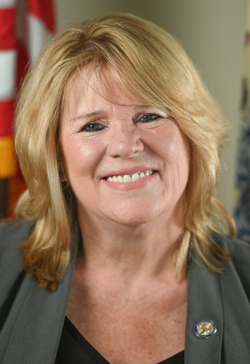
Asm. Carol Murphy
Sponsored bills
Maddy summaryThis bill revises eligibility for reimbursement from New Jersey's Emergency Medical Technician (EMT) Training Fund. It allows training agencies (like private organizations or schools) to receive reimbursement for volunteer EMTs' certification costs regardless of whether the ambulance or rescue squad they serve charges for services. To maintain eligibility, volunteer EMTs must complete at least one service call per month during their initial three-year certification period. If they stop meeting this requirement, the squad can seek repayment from the EMT for fund costs related to their training. The bill prioritizes reimbursement for initial EMT certification and refresher courses.
Maddy summaryThis bill appropriates $500,000 from existing state funds to provide a specific grant for farmland preservation in Washington Township, Warren County. The funds come from $200,000 in constitutionally dedicated corporation business tax (CBT) revenues and $300,000 from the 2009 Farmland Preservation Fund. The grant is for municipal planning purposes to support farmland preservation efforts, as authorized under New Jersey law. Washington Township is the direct recipient, with this allocation specified in the bill. The funds are sourced from established, dedicated programs for open space and farmland conservation.
Maddy summaryThis bill establishes two new benefit programs under New Jersey's Work First New Jersey (WFNJ) cash assistance program. It provides eligible participants with a $14 monthly benefit for menstrual hygiene products (tampons, pads, or cups) for individuals aged 18-50, and a $30 monthly benefit per child under 36 months for diaper products. Benefits are added to participants' existing WFNJ electronic cards on the same schedule as regular benefits, with unspent funds carrying over monthly. The $2.5 million appropriation funds these programs, which directly affect low-income WFNJ recipients and their dependent children.
Maddy summarySCR 110 is a legislative approval of the New Jersey Infrastructure Bank’s proposed Fiscal Year 2025 Financial Plan. The bill formally approves the bank’s plan to finance eligible environmental projects, including clean water systems, drinking water infrastructure, stormwater management, and pollution control initiatives. This approval is required by law (under statutes P.L.1985, c.334 and P.L.1997, c.224) after the bank submitted its plan by the May 15, 2024 deadline. The resolution does not create new policies or funding but authorizes the bank to implement its existing financing strategy for approved projects.
Maddy summaryThis bill revises New Jersey's film and digital media content production tax credit program to expand eligibility for tax credits. It specifically modifies the definitions of "qualified film production expenses" and "qualified digital media content production expenses" to include wages paid to employees who are exempt from New Jersey income tax due to reciprocity agreements with other states, such as Pennsylvania residents. The bill also updates the definition of "full-time or full-time equivalent employee" to include these workers. These changes apply retroactively to January 1, 2024, allowing taxpayers who received tax credit certificates before this date to surrender them for new certificates under the revised terms. The changes directly affect film and digital media production companies operating in New Jersey that employ workers from states with income tax reciprocity agreements.
Maddy summaryThis bill restricts the Child Care Facilities Improvement Program grants - funded by federal Coronavirus Relief Funds - to licensed child care centers only, removing eligibility for registered family child care homes. The program provides grants of $50,000 to $200,000 for facility improvements to centers licensed by the Department of Children and Families before June 4, 2021. The change ensures federal funds are used exclusively for licensed centers, while the state plans a separate state-funded program for family child care providers to simplify administrative processes. This adjustment aligns with the sponsor’s goal of reducing compliance burdens for family child care providers through dedicated state resources.
Maddy summaryThis bill updates New Jersey's requirements for inspecting residential rental properties for lead-based paint hazards. It mandates that municipalities inspect rental units at tenant turnover or every three years (with lead-safe certifications now valid for three years), while repealing an outdated provision requiring the Department of Community Affairs to conduct these inspections. The bill also modifies inspection methods based on local child blood lead level data and requires municipalities to report lead hazard findings to the Department of Community Affairs. These changes aim to streamline lead hazard inspections while maintaining protections for tenants, particularly children, from lead paint exposure.
Maddy summaryThis New Jersey bill (A4081) imposes civil penalties on employers who threaten or disclose an employee's immigration status to prevent them from reporting violations of state labor laws. It directly affects employers and immigrant workers, particularly in cases where employers withhold wages, benefits, or comply with tax laws and then pressure workers about their immigration status. The bill adds tiered penalties: $1,000 for a first violation, $5,000 for a second, and $10,000 for subsequent violations per affected employee. These penalties apply in addition to existing penalties under laws like the New Jersey State Wage and Hour Law, targeting employers who misuse immigration status to conceal other violations.
Maddy summaryThis bill appropriates $1.723 million from existing funds - $896,678 from constitutionally dedicated corporation business tax revenues (via the Preserve New Jersey Farmland Preservation Fund) and $826,321 from the 2009 Farmland Preservation Fund - to the State Agriculture Development Committee. The funds will provide grants covering up to 50% of the cost for nonprofit organizations to acquire development easements or fee simple titles on farmland, with agricultural deed restrictions, to preserve working farms. The bill specifically allocates funds to five farmland projects across Hunterdon, Sussex, and Warren counties. These grants are funded through reallocated monies previously designated for farmland preservation, not new tax revenue.