

Maddy summaryS 2792 appropriates $500,000 from two state funds - $200,000 from constitutionally dedicated business tax revenues and $300,000 from the 2009 Farmland Preservation Fund - to the State Agriculture Development Committee. This funding provides a $500,000 grant to Washington Township in Warren County for municipal planning to preserve farmland. The grant is a direct allocation under existing farmland preservation programs, with Washington Township also potentially eligible for additional competitive grants from other funds. The bill specifically directs this $500,000 to Washington Township without requiring a separate application.
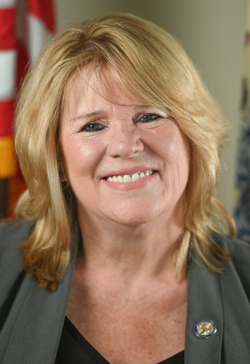
Asm. Carol Murphy
Sponsored bills
Maddy summaryThis New Jersey bill revises property tax lien foreclosure procedures to align with a recent Supreme Court ruling requiring property owners to retain equity beyond unpaid taxes. It allows property owners to protect remaining property equity by requesting a judicial sale (like mortgage foreclosures) or online auction through the county sheriff within 45 days of receiving foreclosure notice. If owners don't make this request, lien holders (municipalities or private investors) can take full property title without conducting a sale. Lien holders must clearly inform property owners about this option in bold text with foreclosure notices. The bill ensures any surplus funds from a sale would go to the property owner after lien holders are paid.
Maddy summaryThis bill authorizes the New Jersey Infrastructure Bank to provide up to $2.73 billion in loans to local governments and public water utilities for environmental infrastructure projects during fiscal year 2025. It specifically funds 156 clean water projects (totaling $1.9 billion) and 72 drinking water projects (totaling $715 million) through designated eligibility lists. Loans can cover a portion of construction costs with repayment terms up to 30 years, and interest rates tied to the bank's bond rates. The bill also authorizes an additional $1.5 billion for short-term loans through the Interim Environmental Financing Program for priority projects.
Maddy summaryThe bill authorizes the New Jersey Infrastructure Bank to provide up to $53,883,706 in low-interest loans for 14 specific transportation infrastructure projects in Fiscal Year 2025. These projects include bridge replacements, road improvements, and pedestrian safety initiatives in cities and counties across New Jersey, such as Bayonne's E. 25th Street Pedestrian Bridge Replacement and Atlantic County's Rte. 629 Pedestrian & Traffic Signal Improvement Project. The loans will be provided to local government units (municipalities and counties) and can be repaid over up to 31 years, with interest rates tied to the bank's bond rates. The program expires on July 1, 2025, and is limited to the specific projects outlined in the legislation.
Maddy summaryS 3384 appropriates funds to New Jersey's Department of Environmental Protection (DEP) to provide zero-interest loans and principal forgiveness for environmental infrastructure projects. The bill authorizes the DEP to make loans to local governments and public water utilities for clean water and drinking water projects, with specific funding limits including $20 million for combined sewer overflow projects and $10 million for water quality restoration. Funds will come from state revolving funds, federal grants from the Infrastructure Investment and Jobs Act, and unexpended balances from previous programs, with projects requiring repayment within 30-45 years. The bill's funding authorization expires on July 1, 2025.
Maddy summaryThis bill amends New Jersey's film and digital media tax credit program to include wages and salaries paid to workers not subject to New Jersey's gross income tax due to reciprocity agreements with other states. It expands the definitions of "qualified film production expenses" and "qualified digital media content production expenses" to cover these payments, including compensation paid to workers from states like Pennsylvania with which New Jersey has reciprocal tax agreements. The bill also updates the definition of "full-time or full-time equivalent employee" to include workers whose wages aren't subject to New Jersey tax due to reciprocity agreements. The changes apply retroactively to January 1, 2024, allowing taxpayers who haven't used their tax credit certificates to receive revised certificates under the new rules.
Maddy summaryThis bill requires New Jersey school districts to screen all students in kindergarten through third grade three times annually using assessments that measure reading skills like phonological awareness and decoding to identify those not reading at grade level or at risk of falling behind. The New Jersey Department of Education must establish a working group on student literacy, contract with at least two approved assessment providers, and make these assessments available to schools. School districts must notify parents within 15 days of a reading concern, provide evidence-based interventions, and annually report screening data to the state.
Maddy summaryThis bill appropriates $65 million from the General Fund to the New Jersey Economic Development Authority (EDA) to purchase specific properties from New Jersey Transit (NJT). The EDA must buy these properties at appraised "highest and best use" value and can develop, lease, or sell them for commercial or residential use to maximize economic potential. NJT retains a 33% share of proceeds from any future sale or lease of these properties. The EDA must notify the Joint Budget Oversight Committee before purchasing or developing the properties, requiring a joint presentation with NJT about the transaction terms.
Maddy summaryThis Assembly Resolution (AR 138) symbolically designates June 2024 as LGBTQIA+ Pride Month in New Jersey. It urges public officials and citizens to commemorate the month with appropriate activities, recognizing the contributions and struggles of LGBTQIA+ individuals (including lesbian, gay, bisexual, transgender, queer/questioning, intersex, asexual, and non-binary people). The resolution does not create new laws or policies but formally acknowledges the community's achievements and ongoing advocacy. It follows similar designations by federal and state governments, emphasizing visibility and equality.
Maddy summaryThis bill designates the interchange between State Highway Route 42 and Interstate Highway Route 295 in New Jersey as the "Ensign John R. Elliott Memorial Interchange" to honor a U.S. Naval Academy graduate killed in a 2000 traffic accident. It requires the state transportation commissioner to install signs bearing this name but explicitly prohibits using public funds for the signage. Instead, the state must secure private donations or grants from nonprofits, charities, or other private entities to cover all costs related to the signs. The bill takes immediate effect and affects only the specific highway junction, with no broader policy changes.