

Maddy summaryThis bill establishes specific work hour rules for minors (ages 14-15) employed as professional athletes by sports leagues or teams. It allows these young athletes to work after 11 p.m. on nights continuing a workday that started before 11 p.m., but only with a written parental/guardian permit specifying allowed hours. The bill prohibits work before 6 a.m. or after 3 a.m. on days preceding a school day, and requires the permit to detail permitted work times. It amends New Jersey's existing minor labor laws to create this exception for professional sports employment.
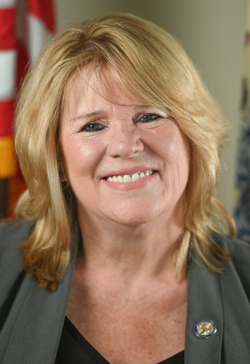
Asm. Carol Murphy
Sponsored bills
Maddy summaryThis bill gives sexual assault victims in New Jersey the right to be notified about specific developments in their criminal case. It requires law enforcement to inform victims if: - A DNA profile of the attacker was collected from evidence, - That DNA was entered into a state or federal database, - A match was found between the attacker’s DNA and a database profile (unless it would interfere with an active investigation), or - Evidence was processed by a forensic lab and compared to a database. Victims can request written or electronic updates on evidence status and designate another person to receive these notifications. The bill does not affect case outcomes if notifications are missed.
Maddy summaryThis bill appropriates $10,067,905 from constitutionally dedicated corporation business tax revenues to New Jersey's Department of Environmental Protection (DEP) for grants to nonprofit organizations. The funds will support 11 land acquisition projects ($5.7 million), four park development projects ($3.58 million), and two stewardship activities ($309,000) across multiple counties. These grants will help nonprofits acquire or develop lands for recreation and conservation purposes, with $479,000 allocated for DEP administrative costs. The bill specifies that funds come from dedicated tax revenues established by the Preserve New Jersey Act and will support specific projects approved by the DEP.
Maddy summaryThis bill (A4705) increases the annual assessment rate on health maintenance organizations' (HMOs) net written premiums in New Jersey from 5% to 6%. It directly affects all HMOs operating in New Jersey that hold a certificate of authority to operate in the state. The additional 1% assessment, effective for fiscal year 2025 and beyond, will generate approximately $83 million annually for the Health Care Subsidy Fund. This fund uses the revenue to provide charity care payments to hospitals, following the existing distribution formula established under prior law. The bill requires HMOs to pay the assessment quarterly but prohibits them from passing these costs to enrollees through higher premiums or fees.
Maddy summaryThis bill appropriates funds to New Jersey's Department of Environmental Protection (DEP) to provide zero-interest loans or principal forgiveness for clean water and drinking water infrastructure projects. It authorizes funding for 156 specific clean water projects and 72 drinking water projects across the state, totaling approximately $2.6 billion in estimated loan amounts. The funding is intended to help municipalities and public water utilities finance infrastructure improvements that reduce pollution, improve water quality, and address environmental challenges. The bill includes specific provisions for varying levels of principal forgiveness based on project type and community need, with a focus on making these projects more affordable for local governments.
Maddy summaryThe Next New Jersey Program Act establishes a tax credit program administered by the New Jersey Economic Development Authority to attract artificial intelligence (AI) investments to the state. Eligible businesses must make a minimum $100 million capital investment and create at least 100 new full-time jobs in AI-related activities, where at least 50% of employees or revenue comes from AI operations. The tax credit amount equals the lesser of 0.1% of capital investment multiplied by new jobs, 25% of capital investment, or $250 million. This program allocates up to $500 million in tax credits originally designated for the New Jersey Aspire Program and Emerge Program specifically for qualifying AI businesses.
Maddy summaryThis bill appropriates $65 million from the General Fund to the New Jersey Economic Development Authority (EDA) to purchase specific properties from the New Jersey Transit Corporation (NJT). The EDA must buy these properties at appraised "highest and best use" value and will maintain a 33% participation interest in future sales or leases of the properties, with NJT receiving those proceeds. Before purchasing or developing the properties, the EDA must notify the Joint Budget Oversight Committee for review. The bill directly affects the EDA, NJT, and future developers who may acquire or lease these properties for development projects.
Maddy summaryThis resolution urges generative AI and content-sharing platforms to voluntarily commit to preventing and removing harmful "deepfake" and "cheapfake" content. It directly affects major AI and social media companies by asking them to proactively address artificially created media that manipulates reality (like fake videos or audio of people saying/doin things they never did). The key mechanism requires platforms to make voluntary commitments to remove such content, with copies of the resolution sent to company CEOs. The resolution defines harmful content as AI-generated media that appears authentic but depicts false speech or conduct, noting its use in blackmail, misinformation, and reputational harm. It emphasizes that this is a non-binding request, aligning with similar efforts in other states and federal initiatives.
Maddy summaryThis bill establishes legal protections for patients and healthcare providers accessing or providing reproductive and gender-affirming health care services in New Jersey. It creates a new crime for interfering with these services (including physical obstruction, intimidation, or damaging property), with penalties ranging from a disorderly persons offense to a fourth-degree crime. The bill also prevents New Jersey from extraditing people for legally protected health care activities, prohibits licensing boards from penalizing providers for services that are legal in New Jersey but illegal in other states, and protects patient privacy related to these services. It specifically ensures that a fertilized egg, embryo, or fetus has no independent legal rights under New Jersey law.
Maddy summaryThe New Jersey Works Act provides tax credits to businesses that fund pre-employment training programs with educational institutions or nonprofits. Businesses can receive a tax credit equal to 100% of the financial assistance they provide for approved programs that offer at least 12 weeks of paid training at minimum wage to low- and moderate-income individuals. These programs must include training in basic skills, communication, critical thinking, and job readiness. The bill appropriates $3 million from the General Fund to implement the program and requires a two-year evaluation of its effectiveness, excluding construction businesses from participation.