

Maddy summaryThis bill appropriates $60 million from constitutionally dedicated corporation business tax (CBT) revenues - funds voters approved in 2014 for open space and conservation - to the New Jersey Department of Environmental Protection (DEP). The funds will directly support state park, forest, and historic site development projects under the Preserve New Jersey Act, including repairs to bridges, buildings, and recreational facilities, as well as habitat improvements and camping access. Specific allocations cover projects like $10 million for health/safety upgrades, $13.5 million for recreational development, and $7 million for historic structure repairs. The funding comes from existing CBT revenue streams, not new taxes, and requires no additional legislative approval for DEP project spending.
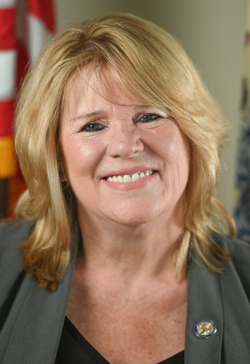
Asm. Carol Murphy
Sponsored bills
Maddy summaryThis bill reduces the maximum amount municipalities and counties can redirect from stormwater, water, and sewer utility funds to general budgets from 5% to 3% of the utility's annual operating costs. It applies to all stormwater, water, and sewer utilities established under state law, including those operated by municipalities or counties. The bill also requires local governments to provide written notice to the Division of Local Government Services whenever they redirect these funds, including the exact amount transferred. These changes apply to both utility surplus revenue and undesignated funds held by water/sewer authorities.
Maddy summaryThis bill amends New Jersey law to explicitly include virtual currency and non-fungible tokens (NFTs) in the definition of "gift" for public officials. It prohibits state and local government employees, elected representatives, and other defined public officials from accepting these digital assets as gifts. The change updates existing gift restrictions to cover new forms of digital value, ensuring virtual currency and NFTs are treated the same as traditional gifts under state ethics laws. This is a definitional update with no new penalties or enforcement mechanisms beyond current gift-prohibition rules.
Maddy summaryThis bill requires New Jersey's Attorney General to create an internet-based tracking system for rape kits (also called sexual assault forensic evidence kits). The system will allow victims, law enforcement officers, healthcare providers, and labs to monitor a kit's journey from collection at a medical facility through testing and final disposal. It mandates the Attorney General to issue guidelines for this tracking system, ensuring transparency in the chain of custody. The law, which became effective in January 2025, directly affects victims of sexual assault, healthcare facilities, law enforcement, and forensic labs handling these kits.
Maddy summaryThis bill would require background checks for all household members (adults 18+ living in the same residence) of individuals applying for a permit to purchase a handgun or a firearms purchaser identification card in New Jersey. Under the bill, applicants would be disqualified from obtaining these permits if they reside with a household member who has a disqualifying history, such as certain criminal convictions, mental health issues, or substance use disorders. This expands the current law, which only required background checks for the applicant themselves, to include all adult household members sharing the residence. The policy change would affect all firearm purchasers in New Jersey who live with other adults in their household.
Maddy summaryACR 114 is a concurrent resolution urging New Jersey's Department of Environmental Protection (DEP) and Economic Development Authority (EDA) to establish a plastics recycling marketplace. It directs the DEP to use funds from the State Recycling Fund for research on developing this marketplace and asks the EDA to provide funding and support for its creation. The resolution aims to increase recycling of single-use plastics - such as bottles, bags, and food containers - which currently have low recycling rates in New Jersey (6-13%) and contribute to environmental harm like microplastic pollution. This effort does not create new law but requests specific actions from state agencies to reduce plastic waste entering landfills and waterways.
Maddy summaryThis bill reinstates automatic cost-of-living adjustments (COLAs) for retirement benefits of certain retired police and firefighters in New Jersey's Police and Firemen's Retirement System (PFRS). It applies specifically to members who have been retired and receiving benefits for at least 10 years, excluding those hired after the bill's effective date, those in deferred retirement, and those with 20-24 years of service. The COLAs are tied to the Consumer Price Index for Urban Wage Earners, with benefits up to $75,000 receiving full adjustment, while higher benefits are capped at a 1% annual increase. The $75,000 threshold will adjust annually based on inflation, and the bill requires the Legislature to appropriate funds to cover both state and local costs for these adjustments.
Maddy summaryThis bill sets specific working hour limits for minors (ages 14-15) employed as professional athletes by national sports associations, leagues, or teams in New Jersey. It permits such minors to work after 11 p.m. only if the shift continues a workday starting before 11 p.m., with a written parental or guardian permission letter specifying allowed hours. The bill prohibits employment after 3 a.m. or before 6 a.m. on days preceding a regular school day. These rules apply only to professional athletic employment, not other minor work types covered under existing labor laws. The changes take immediate effect upon enactment.
Maddy summaryThis bill (A908) requires New Jersey's Attorney General to create a statewide Internet-based tracking system for rape kits (sexual assault forensic evidence kits). It directly affects victims of sexual assault, healthcare facilities that collect kits, law enforcement agencies, and laboratories that process them. The system must track kits through every step - from collection at a hospital to final disposition - allowing authorized users to monitor the chain of custody. The Attorney General must issue guidelines to implement the system, which takes effect seven months after enactment. The bill focuses on improving transparency and accountability in handling rape kits, not on changing legal standards for sexual assault cases.
Maddy summaryThis bill, the "Equitable Outcomes in Child Support Collection Act," stops New Jersey from collecting past child support arrears for children in the care of the Division of Child Protection and Permanency (DCPP). It voids all current and past court judgments, liens, and warrants related to unpaid child support obligations for maintenance costs incurred while a child was in DCPP custody. The law aligns with a 2022 federal policy change that discourages states from pursuing such collections due to high costs, low collection rates, and negative impacts on families. This directly affects legally responsible parents (typically parents) who previously faced penalties for unpaid child support in DCPP cases.