

Maddy summaryThis New Jersey bill (A 5304) increases penalties for prostitution offenses and creates two new crimes: "leader of a prostitution network" and "participant in a prostitution network." It directly affects individuals who organize or manage prostitution operations (leaders) or actively take part in them (participants), not clients or sex workers themselves. Key provisions include mandatory minimum prison terms of 5 years or one-third to one-half of the sentence for these new offenses, while upgrading penalties for child prostitution and adding 6-month driving suspensions for repeat offenders using vehicles in prostitution. The law amends existing statutes to clarify definitions and strengthen criminal consequences for network-related activities.
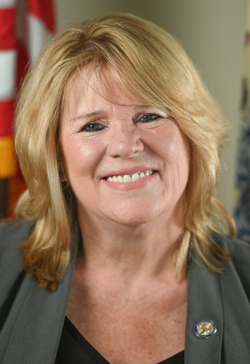
Asm. Carol Murphy
Sponsored bills
Maddy summaryThis bill provides a $144.2 million supplemental appropriation to New Jersey's public four-year universities for the 2025 fiscal year. It adds to the existing $220.5 million in Outcomes-Based Allocation funding, distributing specific amounts to 13 institutions like Rutgers campuses, NJIT, Rowan, and Montclair State. The funding is tied to performance metrics including degrees awarded, diversity outcomes, STEM/healthcare degrees, and student financial need. This is a direct budgetary adjustment to support institutional funding based on predefined educational outcomes, not a new policy.
Maddy summary# Public Advocate Restoration Act of 2018 - Summary This bill would restore the Department of the Public Advocate as a principal department in New Jersey's Executive Branch. The document details a comprehensive restoration of the department, which was first established in 1974, abolished in 1994, restored in 2005, and then abolished again in 2010. ## Key Provisions The restored Department of the Public Advocate would consist of seven divisions and one office: 1. **Division of Administration** - Would prepare the department's budget, fulfill personnel requirements, and conduct relevant research. 2. **Division of Citizen Relations** - Would receive and investigate complaints about agency actions, and would include: - Corrections Ombudsperson (previously in the Department of the Treasury) - Dispute Settlement Office (previously in the Office of the Public Defender) 3. **Division of Mental Health Advocacy** - Would advocate for mental health rights. 4. **Division of Advocacy for the Developmentally Disabled** - Would promote and ensure adequate care for persons with developmental disabilities. 5. **Division of Rate Counsel** - Would represent public interest in utility and service rate proceedings. 6. **Division of Public Interest Advocacy** - Would represent public interest in administrative and court proceedings. 7. **Division of Elder Advocacy** - Would represent interests of elderly adults (including the New Jersey Long-Term Care Ombudsman, previously in the Department of the Treasury). 8. **Office of the Child Advocate** - Would be established within the department but remain independent of supervision and control by the department. ## Leadership Structure - The department would be headed by a Public Advocate, appointed by the Governor to serve during the Governor's term of office. - The Public Advocate would have the authority to appoint division directors, office directors, and ombudspersons. - An Assistant Public Advocate would be appointed to serve during the absence or disability of the Public Advocate. ## Key Philosophy The bill emphasizes that the primary duty of all staff members is to the individual client, with the same protections as private legal representation. It also establishes strong attorney-client and work product privileges for the department. ## Significance This bill would restore a critical government department focused on advocating for vulnerable populations including the indigent, elderly, children, and those with mental health and developmental disabilities. It aims to consolidate previously diffuse advocacy functions into a single, more effective department. The bill is based on P.L.2005, c.155, which was the previous restoration of the Department of the Public Advocate before it was abolished again in 2010.
Maddy summaryThis bill (A3879) requires all emergency departments in New Jersey general hospitals and licensed satellite emergency departments to post visible signs and distribute pamphlets about the Victims of Crime Compensation Office (VCCO). The Commissioner of Health, working with the Attorney General, must create clear, easy-to-understand materials listing VCCO services, contact details, and how to file a claim. These materials must be provided to individuals treated in emergency rooms following a crime. The law directly affects crime victims seeking compensation assistance after an emergency room visit. It takes effect four months after enactment.
Maddy summaryThis bill establishes a certification process for shampoo technicians in New Jersey, who provide basic hair washing services (like shampooing and conditioning) in licensed salons but do not pursue a full cosmetology license. To become certified, individuals must complete a 40-hour training program approved by the State Board of Cosmetology and Hairstyling (either through a licensed school or a licensed shop) and pass a practical exam. The State Board issues a biennial certification requiring reasonable fees for initial certification, renewal, and reactivation after expiration (with reactivation after 10+ years requiring retaking the exam). The bill also prohibits examiners affiliated with a school from grading students from that same school and sets standards for training providers and examiners.
Maddy summaryThis bill updates New Jersey's fire safety requirements for residential properties. It eliminates the requirement for portable fire extinguishers in certain structures while mandating smoke-sensitive alarm devices on each level of residential buildings and outside sleeping areas. The bill also establishes new licensing requirements for fire inspectors, including educational programs, prerequisite criteria, and state exams. Additionally, it clarifies that new property owners must obtain a certificate showing no outstanding fire safety violations and are liable for any unpaid fees or penalties. The bill also updates procedures for serving notices and collecting penalties related to fire safety violations.
Maddy summary# Summary This bill renames the Juvenile Justice Commission as the Youth Justice Commission and updates all statutory references from the "New Jersey Code of Juvenile Justice" to the "New Jersey Code of Youth Justice." The sponsor's intent is to better reflect the commission's mission to assist and rehabilitate court-involved youth and provide programs, support, and opportunities designed to help youth grow, thrive, and become independent, productive, and law-abiding citizens. The bill also includes numerous amendments to the laws governing the commission, including provisions related to mental health screening in juvenile detention facilities, room restriction policies, data collection requirements, education programs, and staffing standards.
Maddy summaryThis bill establishes the Community Hazard Assistance Mitigation Program (CHAMP) at the New Jersey Infrastructure Bank to fund projects that reduce risks from natural disasters, such as floods and storms. The program provides loans and financial assistance to State agencies, local governments, and nonprofit organizations for hazard mitigation and resilience projects that align with the STORM Act (Safeguarding Tomorrow through Ongoing Risk Mitigation Act). It includes provisions allowing local governments to provide loans to private property owners for hazard mitigation, with a graduated loan forgiveness program based on household income levels. The bill also makes technical changes to the bank's authority, extending the date by which the bank may not incur additional indebtedness to June 30, 2053.
Maddy summaryThis bill eliminates the requirement for parents to pay past-due child support owed to New Jersey's Division of Child Protection and Permanency (DCPP) for children in its care. It specifically voids all existing child support arrears (over $3 million in 2023), related court judgments, liens, and warrants for these cases, making them unenforceable. The change aligns with a 2022 federal policy allowing states to reduce child support collection efforts for children in foster care, addressing that 90% of involved parents are indigent and collection costs often exceed amounts recovered. This directly affects parents legally responsible for children in DCPP custody, removing financial barriers to family reunification.
Maddy summaryThis bill requires New Jersey telecom, cable, and internet providers to let customers pause or cancel service contracts without early termination fees when they move into a qualifying long-term care facility. It directly affects residents admitted to nursing homes, assisted living facilities, dementia care homes, or residential health care facilities for at least 90 days, as verified by a physician’s order or care plan. Providers must pause billing for a minimum 90 days upon admission, then cancel the contract if the resident remains in the facility beyond that period. The law mandates no fees for this pause/cancellation, though customers must provide physician documentation and typically give 45 days’ notice (or 48 hours in urgent cases).