

Maddy summaryThe "Climate Superfund Act" would hold fossil fuel companies liable for climate change damages by requiring them to pay compensatory payments based on their historical greenhouse gas emissions. It targets companies that extracted or refined fossil fuels and are responsible for over one billion metric tons of emissions between 1995 and the bill's effective date. The bill establishes a program through New Jersey's Department of Environmental Protection to collect these payments and distribute funds for climate adaptation projects, such as flood protection, infrastructure upgrades, and health programs. Companies would pay their proportional share of damages over nine years, with options for installment payments, and the collected funds would specifically support projects that help communities prepare for climate impacts.
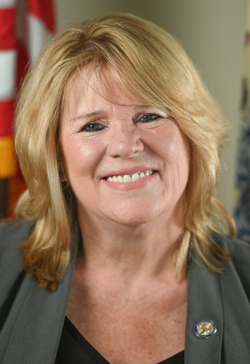
Asm. Carol Murphy
Sponsored bills
Maddy summaryThis bill authorizes the State Treasurer to sell the former Riverfront State Prison property (16.5 acres) in Camden as surplus state property. The New Jersey Economic Development Authority (NJEDA) will purchase the "NJEDA Site" for up to $5 million or the appraised value, while the City of Camden receives the "City Site" for $1 - on the condition that Camden later sells its "Southwest Site" parcel to the NJEDA. The sale bypasses prior approval requirements from the State House Commission or Legislature, repealing a 2013 law that previously attempted to facilitate this sale but failed to transfer title. The property is split into defined parcels for redevelopment, with the City Site requiring preservation for public parks or recreation.
Maddy summaryNew Jersey's A3700 establishes a voluntary, three-year pilot program to provide Medicaid coverage for remote maternal health services to eligible pregnant beneficiaries. The program covers remote patient monitoring (like tracking blood pressure or glucose), remote non-stress tests, and tele-ultrasound, using FDA-approved, HIPAA-compliant technology. It targets pregnant Medicaid beneficiaries who: (1) have high-risk pregnancies due to medical conditions, age, or lifestyle factors; (2) live in areas with few obstetric providers; or (3) face socioeconomic barriers like transportation issues. Participation requires a health care provider referral and is contingent on federal approval of Medicaid waivers. The program aims to expand access to maternal care in underserved communities.
Maddy summaryThis bill (A 5303) requires New Jersey's Attorney General to review and update the statewide policy for investigating human trafficking. It directs the AG to specifically consider: (1) using audio/video recordings in undercover operations to protect investigations and victims, (2) strict rules for sharing such recordings, (3) involving county prosecutors early in investigations, and (4) other relevant areas. The review responds to a 2024 Commission report on human trafficking in the massage industry. This policy update will affect law enforcement agencies conducting human trafficking investigations statewide.
Maddy summaryThis bill requires human trafficking awareness signs to be displayed in four languages - English, Spanish, Chinese, and Korean - instead of the current two (English and Spanish). It applies to businesses and facilities already mandated to display such signs, including strip clubs, massage businesses, airports, bars, hotels, and emergency rooms. The signs must meet specific size and font requirements (8.5x11 inches, 16-point font) and include the national human trafficking hotline information. The change follows a 2024 State Commission of Investigation report recommending expanded language accessibility for vulnerable communities. The law takes effect immediately.
Maddy summaryThis bill allows pharmacists in New Jersey to transfer Schedule II prescription medications for attention-deficit/hyperactivity disorder (ADHD) between pharmacies, rather than requiring patients to obtain a new prescription from their doctor. Currently, Schedule II prescriptions (like ADHD medications) cannot be transferred between pharmacies, forcing patients to seek new prescriptions when their preferred pharmacy is out of stock. The bill specifically permits these transfers for ADHD prescriptions only, while requiring compliance with federal regulations. This change aims to provide greater convenience for patients who need ADHD medication but cannot fill their prescription at their usual pharmacy.
Maddy summaryThis bill requires mental health services in New Jersey to be provided in a culturally affirming and linguistically appropriate manner for individuals who are deaf or hard of hearing. It mandates that services be delivered in the client's primary method of communication, as determined by the client's preference or a communication assessment, and that mental health professionals be certified as fluent in that method. The bill establishes a deaf services coordinator position within the Department of Human Services to oversee implementation, develop certification standards for professionals, and ensure access to services statewide, including through telemedicine in underserved areas. It also requires the development of a statewide system of care with specific standards for communication accessibility and cultural competence in mental health services.
Maddy summaryThis symbolic resolution (AR 178) condemns the U.S. House of Representatives for passing a budget resolution that would cut $1.5 trillion from the federal budget over ten years, specifically targeting healthcare (Medicaid/Medicare), education, and SNAP benefits. It urges the U.S. Senate to reject the House resolution, citing potential severe impacts on New Jersey residents who rely on these programs: approximately 1.8 million low- and moderate-income people use NJ FamilyCare (Medicaid/CHIP), and 830,000 receive SNAP food assistance. The resolution states that funding cuts could reduce federal Medicaid support by up to $5.2 billion and threaten SNAP benefits through eligibility restrictions or benefit limits. As a procedural resolution, it does not change laws but expresses New Jersey's opposition to the proposed cuts.
Maddy summaryThis bill increases penalties for retail theft offenses based on the value of stolen goods, with shoplifting over $500 becoming a third-degree crime. It creates a new offense for "fostering the sale of stolen property" (including online sales) and upgrades penalties for "leader of organized retail theft enterprise" to a first-degree crime. The bill establishes a retail theft unit within the Attorney General's office to investigate and prosecute organized retail theft, and includes new requirements for gift card retailers to prevent fraud through packaging standards and third-party reseller record-keeping. It also creates extended prison terms for repeat retail theft offenders and increases penalties for tax evasion related to retail theft.
Maddy summaryThis bill upgrades the offense of purchasing sexual services (prostitution as a patron) from a disorderly persons offense to a crime of the fourth degree for first offenses, with higher penalties for repeat violations. It requires convicted patrons to participate in a mandatory education program about human trafficking and pay a $500 fee. All fines and fees collected from these offenses are directed to the "Human Trafficking Survivor's Assistance Fund," which provides services to trafficking victims and supports educational programs about human trafficking. The fund was established by prior legislation to assist survivors and combat human trafficking through prevention and awareness efforts.