

Maddy summaryThis bill allocates $60 million from constitutionally dedicated corporation business tax (CBT) revenues - funds already set aside by voter-approved constitutional amendment - to the New Jersey Department of Environmental Protection (DEP) for specific improvements at state parks, forests, and conservation lands. The funds will directly support projects like repairing bridges and buildings, developing camping facilities, enhancing habitat access, and maintaining historic structures across state-managed recreation areas. It uses existing tax revenues (not new taxes) that were constitutionally earmarked for open space preservation under the Preserve New Jersey Act. The DEP can implement these projects without requiring separate budget committee approvals, as specified in the bill.
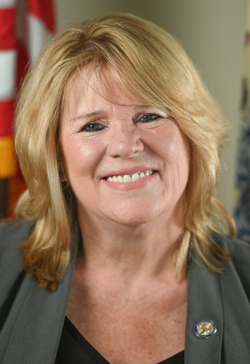
Asm. Carol Murphy
Sponsored bills
Maddy summaryThis bill requires telecom, cable, and internet providers in New Jersey to let customers cancel service contracts without early fees when moving to a long-term care facility for at least 90 days. It applies to individuals receiving a physician's referral or care plan for relocation to licensed facilities like nursing homes, assisted living, or dementia care homes. Customers must typically provide 45 days' notice (or 48 hours if a physician orders immediate relocation), and providers may request a physician's letter as proof. The bill does not relieve customers of equipment return fees or payments for equipment they already purchased.
Maddy summaryThis bill (A5140) increases penalties for businesses, public facilities, and transportation providers who deny access to service dogs and their handlers. Currently, violators face civil fines ($250-$1,000 for repeat offenses), but this bill makes first violations criminal offenses (petty disorderly persons, up to 30 days jail or $500 fine) and subsequent violations criminal (disorderly persons, up to 1 year jail or $1,000 fine). It applies to public facilities, New Jersey Transit (NJT), and transportation network companies (like ride-sharing services). Penalties collected fund law enforcement training on service dog rights, and the Attorney General must launch a public awareness campaign. The bill takes effect immediately.
Maddy summaryThis bill requires campus police officers at New Jersey colleges and universities to wear body cameras that record audio and video during official duties. It specifies that cameras must be activated during public encounters and interactions, with exceptions for undercover work, non-emergency civilian requests, or specific situations like school environments. The bill also establishes minimum recording retention periods (180 days minimum, longer for incidents involving complaints or use of force) and prohibits using recordings for commercial purposes. Campus police officers are the primary group directly affected, as this legislation specifically expands the body camera requirement to include them under state law.
Maddy summaryThis bill prohibits the use of license plate flipping devices that allow drivers to manually or electronically change their vehicle's registration plate to display a different number. It increases penalties for displaying fictitious license plate numbers: up to $750 or 60 days in jail for standard violations, up to $1,000 or 60 days in residential districts or school zones, and up to $1,500 or 90 days if committed during or to aid in a crime. The law directly affects drivers who use these devices to evade tolls, avoid traffic camera identification, or engage in other prohibited activities. The bill amends New Jersey's vehicle registration laws to clarify the definition of license plate flipping devices and strengthen enforcement against this practice.
Maddy summaryThis bill requires NJ FamilyCare to reimburse for multiple medical visits with different specialty providers at a federally qualified health center (FQHC) on the same day. It directly affects NJ FamilyCare enrollees who need same-day specialist care at FQHCs, which serve medically underserved communities. The key provision mandates that the referring provider must document medical necessity for each visit, and each encounter must involve a different specialty provider. The bill explicitly states it cannot override federal Medicaid rules or existing state reimbursement policies. It aims to align NJ FamilyCare payment practices with current regulatory exceptions for multiple same-day visits under specific documented circumstances.
Maddy summaryThis bill amends New Jersey's law governing employment programs for people with disabilities, renaming the "Sheltered Workshop Act" to the "Extended Employment Act." It changes eligibility requirements by redefining disabilities from "severe" to "significant" and removes the need for participants to complete workshop programs or prove they can't compete in the regular labor market. The bill eliminates oversight by the New Jersey Commission for the Blind and Visually Impaired, revises funding mechanisms to adjust annually based on inflation, and repeals outdated provisions about product labeling and sales from these programs. The changes aim to modernize the program to better serve people with disabilities who may not have qualified under previous rules. The bill directly affects nonprofit extended employment providers and people with disabilities enrolled in these programs.
Maddy summaryThe Freedom to Read Act establishes requirements for library materials in New Jersey public school libraries and public libraries, requiring school boards and library governing bodies to adopt policies that ensure access to diverse and inclusive materials. The bill defines "diverse and inclusive material" as content reflecting protected classes under New Jersey's Law Against Discrimination, materials produced by authors regardless of their protected class status, and materials containing authors' views on contemporary issues, while excluding age-inappropriate content. It creates procedures for challenging library materials, including review committees and requiring that challenged materials remain available until a final decision is made. The bill also provides legal protections for school library media specialists and librarians, granting them immunity from liability for good-faith actions and a civil cause of action against those who harass them for complying with the law.
Maddy summaryThis bill (A4626) requires construction permit applicants in New Jersey to disclose the anticipated funding sources and amounts for their projects. It directly affects developers and contractors applying for construction permits by mandating this financial transparency in their initial applications. The bill also requires applicants to certify or update this funding information before receiving a certificate of occupancy. The Commissioner of Community Affairs must develop implementing rules within 180 days of the bill's enactment.
Maddy summaryThis bill amends New Jersey's invasion of privacy law to clarify that consent to being photographed, filmed, or recorded in a sexual manner does not automatically cover consent for disclosing the image. It requires that any consent for sharing such images must be explicit, specific to the purpose given, and not implied by prior consent for taking the image. The law treats the act of capturing the image and the act of disclosing it as separate offenses, each needing distinct permission. This directly affects individuals whose intimate images are taken without consent and then shared without their explicit agreement for that sharing.