

Maddy summaryThis New Jersey bill establishes the "Privacy Protection Act" to limit how government agencies and healthcare facilities collect and share certain personal information. It prohibits them from requesting details like immigration status, citizenship, social security numbers, or tax IDs unless necessary for specific public services, benefits, or healthcare delivery (with healthcare exceptions for patient safety). The bill requires written consent in the person's preferred language for sharing any collected data, detailing exactly what will be shared, why, and confirming consent is voluntary without retaliation. It also bans selling or sharing vehicle license plate data except under court orders, subpoenas, or with explicit written consent, and mandates government entities to update privacy policies within one year.
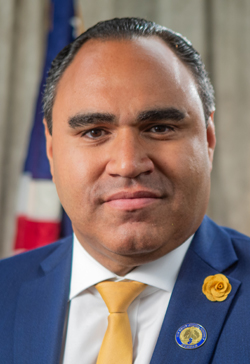
Asm. Gabe Rodriguez
Sponsored bills
Maddy summaryNew Jersey's S 3114, the "Law Enforcement Officer Protection Act," requires police officers and other law enforcement personnel to reveal their faces and show official identification before detaining or arresting someone during public interactions. Officers must wear non-concealing uniforms, display a photo ID card, show a numbered badge, or verbally state their name and agency. Exceptions include undercover work, medical masks (with physician approval), smoke protection during emergencies, or when safety or an investigation is at risk. The law applies to all state, county, and municipal officers and takes effect immediately.
Maddy summaryThis bill requires new flooring installations in schools, community centers, and licensed child care centers to be certified mercury-free by the manufacturer. It applies to all facilities using identified mercury-risk flooring materials, including existing buildings where such flooring was installed before current occupancy. Key provisions mandate certification for permits, require air quality testing if mercury is detected, and obligate owners to implement mitigation or remove unsafe flooring within six months if tests exceed safety thresholds. Violations by manufacturers issuing false certifications carry civil penalties of $10,000 for first offenses.
Maddy summaryThis bill requires New Jersey law enforcement officers to reveal their facial identity during public interactions (except during undercover operations, medical mask use with physician approval, or smoke exposure during emergencies) and to present valid identification before detaining or arresting someone. Officers must show a uniform with agency insignia, a photo ID card, a numbered badge, or verbally state their name and agency. It applies to all state, county, municipal, and federal officers performing public duties, with exemptions for safety risks, ongoing investigations, or stealth operations. The law aims to increase transparency during police encounters while allowing necessary operational flexibility.
Maddy summaryThis bill restricts the use of artificial intelligence-generated communications in New Jersey election campaigns by political committees and other groups. It prohibits AI-created political messages from being published within 90 days before an election, requires clear labeling when AI is used in any campaign communication, and bans deceptive AI media that falsely portrays an opposing candidate in a fraudulent or defamatory manner. Violations of these rules would be classified as a fourth-degree crime, punishable by up to 18 months in prison or a fine of up to $10,000. The Election Law Enforcement Commission is authorized to create implementing regulations for the law.
Maddy summaryThis bill would stop hospitals in New Jersey from charging patients a facility fee for services provided at their outpatient facilities. It directly affects patients receiving care at hospital outpatient departments and hospitals themselves. The law defines a facility fee as a charge meant to cover hospital operational expenses that is separate from a doctor's professional fee, and prohibits hospitals from billing or seeking payment for this fee for outpatient services. The bill takes effect immediately upon passage.
Maddy summaryThis bill allows certain local government officers and employees in New Jersey to receive cash payments for unused sick leave under specific conditions. It applies to political subdivisions and agencies that have adopted Title 11A of the New Jersey Statutes, but excludes local school boards. Key provisions limit payments to a maximum of three weeks of unused sick leave per year, ensure employees retain at least 100 working days of sick leave annually, and cap the payment rate at 60 percent of their daily pay. Local governments must decide whether to offer these payments at their discretion, without requiring collective bargaining agreement approval, and cannot use emergency funds to cover the costs.
Maddy summaryThis bill, titled the Fair Pricing and Transparency Act, would require grocery stores in New Jersey to disclose when they use automated systems to set personalized prices for food items. It directly affects retailers who use electronic shelf labels or other digital pricing technology that can adjust prices based on consumer data such as browsing history, purchase patterns, or inferred characteristics like income or location. The law defines specific terms including "dynamic pricing" and "personalized pricing" to clarify what practices are covered, and it establishes detailed definitions for consumer data and protected characteristics to ensure clarity in enforcement. Retailers using these systems would need to inform customers about the pricing methodology, though the bill does not ban the practice itself. The legislation aims to increase transparency in how grocery prices are determined while allowing businesses to continue using algorithmic pricing tools.
Maddy summaryThis New Jersey bill expands protected bereavement leave under the Family Leave Act to cover specific personal losses: death of a child (including stillbirth), miscarriage (including chemical pregnancy), termination of pregnancy for medical reasons, and failed fertility treatments. It directly affects employees who experience these events, granting them up to 21 days of job-protected leave for situations not covered by other leave types, or 7 days if other leave applies. The bill amends existing laws (P.L.1989, c.261 and P.L.1948, c.110) to define "bereavement" broadly, including losses related to adoption plans, gestational carriers, and fertility treatments. It ensures eligible employees can take time off without losing their jobs or benefits during these difficult circumstances.
Maddy summaryThis bill (A 1315) establishes standardized credit transfer policies between New Jersey's public colleges and universities. It requires all public institutions to create a statewide transfer agreement ensuring general education credits and associate degrees transfer seamlessly to four-year programs, and a reverse transfer agreement allowing students enrolled at four-year schools to earn associate degrees from community colleges for credits completed there. The bill creates a new "New Jersey Transfer Ombudsperson" within the Higher Education office to resolve disputes over credit transfers and monitor compliance. It directly affects public colleges, students transferring between institutions, and community colleges offering associate degrees. The bill is pending before the Assembly Higher Education Committee.