

Maddy summaryThis New Jersey bill prohibits companies from advertising generative artificial intelligence as capable of practicing regulated professions or occupations such as law, medicine, or accounting. The law applies to any person or entity developing or deploying AI systems in the state that generate text, audio, or visual outputs with minimal human oversight. Violations would be treated as consumer fraud offenses, subjecting violators to fines up to $10,000 for first offenses and $20,000 for subsequent ones, along with potential cease and desist orders. The legislation aims to prevent misleading public representations about AI capabilities while maintaining oversight of licensed professions.
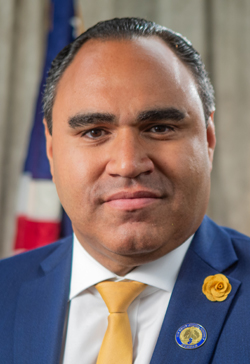
Asm. Gabe Rodriguez
Sponsored bills
Maddy summaryThis bill, known as the SLUMLORD Act, aims to strengthen habitability protections for residential tenants in New Jersey by increasing oversight of landlords. It defines 'habitability' to include conditions that ensure living spaces are safe, healthy, and fit for human use, while also establishing who qualifies as a 'beneficial owner' of a rental business. The legislation requires landlords to designate a 'principal agent' to handle tenant complaints and mandates that rental units comply with state construction and safety codes. To support these enforcement efforts, the bill appropriates $5 million for the Department of Community Affairs.
Maddy summaryThis bill requires county and municipal clerks in New Jersey to post an unofficial list of candidates who have submitted nominating petitions for primary elections. The clerks must publish this list on their official websites within five hours after the petition filing deadline expires. This change directly affects election officials and voters, ensuring that information about who is running is available shortly after the filing period closes. The law does not change the rules for who can run or how votes are counted, but it adds a specific timeline for making candidate names public online.
Maddy summaryThis New Jersey bill creates a pilot program to test mobile voting in municipal elections, allowing voters to cast ballots electronically via a secure system. The program requires the Secretary of State to hire a vendor to build a platform that uses strong security measures like encryption and biometric verification while ensuring accessibility for people with disabilities. Participating municipalities must notify eligible voters about the option and have backup plans in place if the technology fails. The pilot will run for eight years, with officials required to submit detailed reports on its effectiveness to the Secretary of State, the Governor, and the Legislature.
Maddy summaryThis bill establishes a statewide system of mobile crisis response teams to assist adults with disabilities who are experiencing behavioral health emergencies. The legislation requires these teams to provide face-to-face support for up to 72 hours at the individual's home or current location, with the option to transport them to temporary stabilization units for up to seven days if needed. Key provisions include the creation of individualized crisis stabilization plans and the authorization of mobile crisis response agencies to deliver these services around the clock. The act aims to de-escalate crises and stabilize individuals without relying solely on traditional emergency services.
Maddy summaryThis bill establishes the "New Jersey Holistic Representation Model" statewide within the Office of the Public Defender to expand a pilot program that previously operated in three counties. The law requires each regional office to form teams for eligible clients that pair a public defender attorney with a non-attorney client services specialist. These specialists are tasked with connecting individuals to resources for mental health, substance abuse, housing, employment, and other life challenges while attorneys focus on legal defense. The act also mandates the creation of databases to track community resources and requires all team members to maintain client confidentiality.
Maddy summaryThis bill requires New Jersey's child abuse reporting hotline (maintained by the Division of Child Protection and Permanency) to provide callers with information about available resources for victims and their families. The hotline must now include details about community services such as counseling, parenting classes, substance abuse treatment, in-home support, foster care, and residential care. It directly affects families reporting or experiencing child abuse by connecting them to immediate support options. The policy change amends existing law to ensure victims and families are informed about these resources during hotline interactions.
Maddy summaryBill A 2205 requires New Jersey's Commissioner of Health (working with the Attorney General) to create clear, easily understandable signs for emergency rooms. These signs must display VCCO services/benefits, contact details, and how to file a compensation claim. The bill mandates posting these signs in all general hospital emergency departments and satellite emergency departments, with electronic displays permitted. It aims to make VCCO information more accessible to individuals who may qualify for victim compensation after crimes. The bill takes effect four months after enactment.
Maddy summaryThis bill allows New Jersey municipalities to extend their early voting period for May municipal elections from three days to ten days. It applies only to nonpartisan municipalities that have already adopted early voting and would require local governments to pass an ordinance to implement the change. The extension would shift the start date of early voting from four days before the election to eleven days before, while maintaining the same end date.
Maddy summaryThis bill codifies New Jersey's Attorney General's "Strengthening Trust Between Law Enforcement and Immigrant Communities" directive into law. It directly affects all New Jersey state, county, and municipal law enforcement agencies and officers by prohibiting them from: (1) stopping or detaining people based solely on immigration status, (2) asking about immigration status except during specific criminal investigations, and (3) sharing personal information with federal immigration authorities for immigration enforcement purposes. The law clarifies that officers' primary duty is enforcing state criminal laws, not federal immigration law, and emphasizes that this does not prevent enforcing state criminal laws. The goal is to build trust in immigrant communities and ensure law enforcement resources focus on public safety rather than immigration enforcement.