

Maddy summaryThis concurrent resolution (ACR 115) urges the U.S. Congress to pass the "Universal School Meals Program Act of 2023." If enacted, that federal bill would provide free breakfast, lunch, dinner, and snacks to all public school students, regardless of family income, and eliminate school meal debt while reimbursing schools for past unpaid meals. It directly affects all school children in the U.S., particularly those from food-insecure households, by ensuring consistent access to meals without financial barriers. The resolution highlights that 12 million children faced food insecurity at the pandemic's peak and aims to make universal school meals a permanent federal policy.
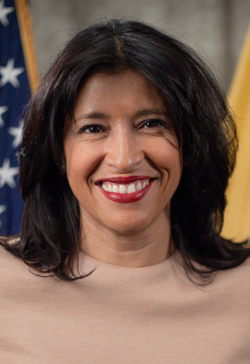
Asm. Alixon Collazos-Gill
Sponsored bills
Maddy summaryThis bill creates a new separate criminal offense for burglary of a residential dwelling (a home or place for overnight stays), distinct from general burglary. It defines "residential dwelling" as any building primarily used as a home or adapted for overnight accommodation. The crime is classified as a third-degree offense unless the burglar causes bodily injury, uses a weapon, or enters while someone is present, in which case it becomes a second-degree offense. Penalties remain unchanged: third-degree burglary carries up to five years in prison and a $15,000 fine, while second-degree carries up to ten years and a $150,000 fine. The bill aims to improve tracking of residential burglaries by establishing this specific category.
Maddy summaryThis bill prohibits prosecutors from negotiating plea agreements that reduce the sentence for burglary when a firearm was used during the offense. Currently, burglary involving a firearm is a second-degree crime, but the bill ensures defendants cannot receive a lighter sentence through plea deals - requiring them to face the standard sentencing for second-degree burglary as defined by law. The law defines "firearm" broadly to include items like air guns, spring guns, and other devices capable of causing injury. This directly affects individuals charged with burglary who used a firearm, eliminating the option of plea bargains for reduced penalties in these specific cases.
Maddy summaryThis bill amends New Jersey's burglary statute (N.J.S.2C:5-5) to explicitly include keyless locking mechanisms under the definition of "burglar's tools." It makes it a crime to manufacture, possess, or publish plans for tools designed to bypass keyless locks with the intent to commit burglary. Manufacturing such tools or publishing plans is a fourth-degree crime (up to 18 months in jail or $10,000 fine), while mere possession is a disorderly persons offense (up to 6 months or $1,000 fine). The law directly affects individuals who create or distribute devices specifically intended to illegally access premises through keyless systems.
Maddy summaryThis bill (A4752) prohibits businesses in New Jersey from charging different prices for substantially similar products or services based on gender, targeting the "pink tax" where items marketed to women cost more than identical products for men. It defines "substantially similar" products as having no significant differences in materials, function, or design (color or packaging alone doesn't justify price differences). Businesses like tailors, salons, and dry cleaners must clearly display written pricing in 14-point bold type and post a visible 24-point sign stating gender-based price discrimination is illegal. Violations could result in fines up to $20,000 per offense under New Jersey's consumer fraud law.
Maddy summaryThis bill adds the right to use assisted reproductive technology (ART), including in vitro fertilization (IVF), to New Jersey's constitutional protections for reproductive choice. It explicitly expands existing rights - previously covering contraception, sterilization, and pregnancy decisions - to include choosing whether to use ART. The law states that any state, county, or local law limiting this right is invalid and unenforceable. It directly affects all New Jersey residents seeking or providing ART services, reinforcing access amid legal challenges in other states like Alabama. The bill takes effect immediately upon enactment.
Maddy summaryThis bill requires longer prison sentences for individuals convicted twice before of receiving stolen property. It applies specifically to people with two or more prior separate convictions for this crime, regardless of when they occurred. The prosecutor must request an extended sentence if the current offense happened within 10 years of either the defendant's last release from prison or their most recent prior conviction. The court must hold a hearing before imposing this sentence, allowing the defendant to challenge the evidence. This changes sentencing by mandating extended terms for repeat offenders of this specific property crime.
Maddy summaryThis resolution designates September 14 of each year as "Latino Business Day" in New Jersey to recognize the economic contributions of Latino-owned businesses. It requests the Governor issue an annual proclamation encouraging public officials and citizens to observe the day with activities highlighting these businesses' impact. The resolution cites that Latino-owned businesses contribute over $800 billion annually to the U.S. economy and have grown significantly faster than other business types. It directly affects New Jersey residents by creating an annual observance to raise awareness of Latino entrepreneurship's role in the state's economy. As a symbolic resolution, it does not create new laws or funding but aims to promote recognition of this business community.
Maddy summaryThe "Peer-to-Peer Car Sharing Act" establishes regulations for platforms that connect vehicle owners with drivers for short-term vehicle sharing. It requires these platforms to assume liability for bodily injury or property damage during sharing periods, maintaining insurance coverage that meets or exceeds minimum standards for private vehicles. The bill mandates specific disclosures to both vehicle owners and drivers about fees, insurance limitations, and safety requirements, and requires platforms to verify safety recalls before vehicles are made available for sharing. It also establishes recordkeeping requirements for sharing transactions and clarifies insurance responsibilities between platforms, vehicle owners, and drivers.
Maddy summaryNew Jersey Senate Bill S 2607 requires private bus companies operating regular routes to give advance notice and hold public meetings before making significant service cuts. Specifically, operators must provide 4 months' written notice to the state Motor Vehicle Commission and NJ Transit, 3 months' notice to riders, and host a public meeting near the busiest stop within 15 days of notifying riders. The bill also mandates that companies notify local officials, including mayors and county commissioners, before holding these meetings. Private operators who fail to comply face civil penalties of up to $10,000 per violation. This bill directly affects private bus operators and their riders in New Jersey communities experiencing service changes.