

Maddy summaryThis bill designates a specific section of State Highway Route 35 in Laurence Harbor as the "James Francisco and Walter Schmidt Memorial Roadway" to honor two local men who served and died in the Vietnam War. The legislation requires the Commissioner of Transportation to erect signs marking the roadway, but it explicitly prohibits the use of state funds for this purpose. Instead, the bill authorizes the Department of Transportation to seek financial support from private sources, such as non-profit or charitable organizations, to cover the costs of producing, installing, and maintaining the memorial signs. The act takes effect immediately upon passage.
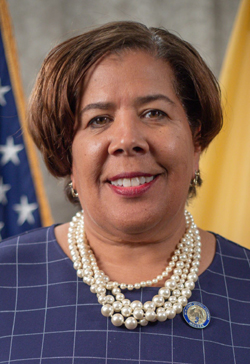
Asm. Linda Carter
Sponsored bills
Maddy summaryThis bill allows prosecutors to request pretrial detention for defendants who violate protective orders issued under the Victim's Assistance and Survivor Protection Act. It amends existing New Jersey law by adding contempt of such protective orders as a specific ground for holding a defendant in jail before their trial. The legislation establishes a legal presumption that defendants accused of serious crimes should be detained if a judge finds probable cause that they pose a risk to public safety or will not appear in court. While detained, defendants retain the right to legal representation and a hearing to contest the detention, though standard trial evidence rules do not apply during this process.
Maddy summaryThis bill requires New Jersey law enforcement to notify the State Parole Board when a parolee violates a domestic violence restraining order. It directly affects parolees under supervision who breach such orders, as well as law enforcement officers and the Parole Board. The key mechanism mandates officers to check the domestic violence central registry (which now includes parole status) and immediately alert the Parole Board if a parolee is charged with violating a domestic violence order. This ensures the Parole Board is informed to address potential violations of parole conditions. The bill amends existing statutes to streamline this notification process for safety and accountability.
Maddy summaryAJR 150 designates September 21 of each year as "New Jersey Pedestrian Crosswalk Safety Day" to honor Bruce Morlack, a Burlington crossing guard who died protecting students. The resolution requests the Governor issue an annual proclamation encouraging residents, schools, and communities to observe the day with safety-focused activities. It does not create new laws or funding but commemorates Morlack's legacy and promotes pedestrian safety awareness. This ceremonial resolution affects all New Jersey residents and public officials through its annual observance.
Maddy summaryThis bill requires state agencies to assess substance and alcohol use disorder treatment providers for conflicts of interest before approving state funding, licensure, or certification. Providers must submit detailed financial information, board member details, and lists of stakeholders with financial ties. If a conflict is identified that could affect care quality, the provider has 90 days to resolve it or risk losing funding/approval. After resolution, providers must undergo two additional conflict assessments within the next year. The law applies to all licensed or certifying state entities and defines conflicts as situations where outside financial interests might influence treatment decisions.
Maddy summaryThis bill expands the role of the New Jersey Health Care Quality Institute to improve access to mental health care for children by creating a new data dashboard and coordinating system improvements. The legislation transfers $3 million from the Department of Children and Families to the Department of Human Services to fund this initiative, which includes hiring a stakeholder group to map out the current process families face when seeking care. The Health Care Quality Institute will conduct research across the state to identify barriers, analyze funding structures, and develop a visual guide that outlines the steps required to access services. Additionally, the Institute will serve as the central entity to implement recommendations from this research and ensure better coordination among schools, state agencies, and insurers. The bill also requires the Institute to submit a comprehensive report within 13 months detailing eligibility rules, coverage details, and policy suggestions to address disparities in pediatric mental health outcomes.
Maddy summaryThis New Jersey bill requires insurance carriers to maintain an up-to-date directory of mental health providers and mandates that they approve exceptions when no qualified in-network options are available. It also compels the Department of Banking and Insurance to monitor mental health coverage for minors and submit annual reports detailing how insurers set medical necessity standards and apply non-quantitative treatment limitations. These provisions aim to increase transparency by forcing insurers to publicly explain their decision-making processes regarding mental health and substance use disorder benefits.
Maddy summaryThis bill establishes a new role for youth mental health care professionals within New Jersey's family court system to support cases involving individuals under 21. These professionals, who must be licensed social workers, psychologists, or psychiatrists with specific experience in youth trauma, will assist judges by identifying mental health needs, recommending interventions, and connecting families with appropriate services. The legislation grants these professionals access to confidential records held by the court and other agencies to better evaluate each case while providing them with immunity from liability when acting in good faith. Additionally, the bill amends existing statutes to clarify which entities are authorized to view sensitive juvenile records, ensuring that the new professionals can legally access necessary information to perform their duties.
Maddy summaryThis bill creates a $4.5 million grant program to reimburse New Jersey school districts for costs incurred when expanding their procurement of locally grown food for students. It directly affects eligible school districts participating in federal meal programs (like National School Lunch and School Breakfast Programs), requiring them to submit plans for new or expanded local food sourcing beyond current baseline levels. The program reimburses documented costs for minimally processed local foods (like fruits, vegetables, or grains grown in New Jersey), excluding fluid dairy milk. School districts must implement new policies to increase local food access during school meals or summer programs to qualify for reimbursement.
Maddy summaryNew Jersey's Bill A 3496 requires state agencies to make a good faith effort to increase contracts (procured without advertisement) awarded to certified minority-owned and women-owned businesses by 30 percent within five years. This applies to agencies using delegated purchasing authority for contracts under specific dollar thresholds (e.g., $150,000-$250,000). The State Treasurer must develop guidelines for agencies and submit six-month progress reports to the Governor and Legislature, while agencies must report their actions to the Treasurer every 30 days. The bill directly affects state agencies managing procurement and certified minority/women-owned businesses seeking government contracts.