

Maddy summaryThis bill requires all New Jersey public school districts to teach water safety as part of the health education curriculum for students in grades K-12, starting with the 2018-2019 school year. It mandates instruction on four specific topics: proper use of flotation devices, awareness of water conditions, dangers of rip currents and how to respond, and the importance of swimming in lifeguard-monitored areas. The law directly affects every student in New Jersey public schools, integrating water safety into existing health education standards. It aims to address drowning as a leading cause of accidental death by providing practical safety knowledge. The bill takes effect immediately upon enactment.
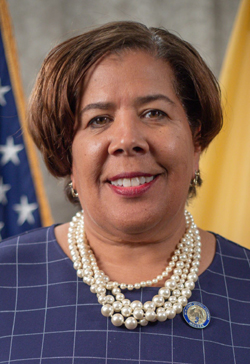
Asm. Linda Carter
Sponsored bills
Maddy summaryThis New Jersey bill (A 2091) protects students enrolled in private career programs by prohibiting deceptive practices by "covered schools" (nonpublic postsecondary institutions offering career training). It bans false claims about job placement, earnings, or program requirements, requires schools to disclose program costs and completion time upfront, and restricts schools from secretly profiting through preferred lender arrangements. The law directly affects students in these private career programs and holds schools accountable for transparency in advertising and financial disclosures. It does not apply to public colleges or universities.
Maddy summaryAJR 55 designates August each year as "Black Business Month" in New Jersey to promote the success of Black-owned businesses. The resolution requests the Governor issue an annual proclamation encouraging schools, cultural institutions, and community organizations to observe the month with supportive activities. It highlights that Black-owned businesses are essential to New Jersey's economy, face disproportionate challenges (like higher pandemic closures), and represent a growing sector with potential to improve economic equity. The bill does not create new funding or regulations but formally recognizes and encourages statewide attention to Black business owners.
Maddy summaryThis bill creates the "New Jersey Reparations Task Force" to research and develop proposals addressing generational harms from New Jersey's role in slavery and systemic racial discrimination. The task force will examine historical and current disparities affecting Black communities, including voter disenfranchisement, youth incarceration rates, housing discrimination, wealth gaps, and school segregation. It will produce a report with policy recommendations for state-based reparations based on documented harms. The bill directly affects Black residents of New Jersey who face these systemic inequities, as outlined in the legislative findings.
Maddy summaryThis bill requires all New Jersey law enforcement officers to complete mandatory training on identifying machine gun conversion devices and related components used to modify standard firearms. It directly affects every officer employed by state or local law enforcement agencies, as this training becomes a condition for continued employment or appointment. The bill amends existing law by adding specific content to required continuing education, focusing on recognizing devices that convert semiautomatic guns to fire multiple shots per trigger pull. The training must be approved by the Police Training Commission and documented by officers and their agencies.
Maddy summaryNew Jersey's A 2137 bill allows property owners, agents, or responsible persons to contract directly with private inspection agencies for construction code compliance inspections instead of relying solely on municipal enforcing agencies. The bill requires at least 24 hours' written notice for inspections, mandates inspections be completed within three business days, and permits private agencies to charge separate fees for their services. It also specifies that inspections must occur between 9 a.m. and 5 p.m. on business days unless an emergency requires otherwise, while maintaining existing rules for re-inspections and stop-work orders. This change affects all construction projects requiring code compliance across New Jersey, including new builds, renovations, and modifications to existing structures.
Maddy summaryThis New Jersey bill (A 946), now law as P.L.2025, c.177, requires mental health services to be provided in the communication method preferred by each deaf or hard of hearing individual - such as sign language or oral communication - based on their assessment. It mandates that mental health professionals be fluent in that method, trained in cultural needs, and able to collaborate with interpreters. The law also requires a state resource guide listing specialized mental health services and ensures individuals can help shape their own care plans. It directly affects all deaf or hard of hearing residents seeking mental health support in New Jersey, addressing long-standing barriers in access and care quality.
Maddy summaryThis bill requires New Jersey's Department of Environmental Protection (DEP) to create a rebate program within one year for residents purchasing microfiber washing machine filters. The program offers up to $100 per filter (capped at the filter's cost) to encourage adoption of devices that capture plastic microfibers from laundry wastewater before they enter waterways. It appropriates $2.5 million from the General Fund to fund these rebates, with the DEP required to report annually on program effectiveness, rebate numbers, and funding use. The policy directly affects New Jersey residents who buy eligible filters, aiming to reduce microfiber pollution - a source of plastic contamination in waterways.
Maddy summaryThis bill establishes a formal process for public universities in New Jersey to merge or consolidate with other public universities or certain private degree-granting institutions. It requires participating institutions to first obtain governing board resolutions and submit a joint application to the Secretary of Higher Education for preliminary approval within 30 days. The Secretary then reviews the merger plan (including impacts on students, faculty, and communities) and issues final approval or disapproval, after which the Legislature has 90 days to disapprove via concurrent resolution. If the Legislature takes no action, the merger proceeds. The process applies to most public institutions but excludes Rutgers and pre-existing merger agreements.
Maddy summaryThis bill (NJ A2749) requires health insurance plans and Medicaid (NJ FamilyCare) to cover preventive behavioral health services for children under 18, including screenings and early intervention without requiring a formal mental health diagnosis. It mandates insurers to accept "at-risk diagnosis" billing - using Social Determinants of Health Z-codes instead of standard mental health codes - to pay for preventive care like therapy or screenings for children showing potential behavioral health needs. The coverage must be provided at the same level as other medical services, applying to all health plans sold in New Jersey, state employee health programs, and Medicaid managed care organizations. The bill was withdrawn after being approved as P.L.2025, c.369.