

Maddy summaryThis bill requires all New Jersey firefighters and emergency medical technicians (EMTs) to complete specific training about the risks and safe management of electric vehicle (EV) fires. Firefighters must finish the training within 36 months of the law's effective date, while EMTs must complete it before initial certification or within 36 months if already certified. The training covers EV fire risks and safe response procedures, developed by the Division of Fire Safety (for firefighters) and the Commissioner of Health (for EMTs). It directly affects all current and future firefighters engaged in fire suppression/rescue and EMTs certified in basic life support. The law mandates implementation through new rules and regulations by the responsible agencies.
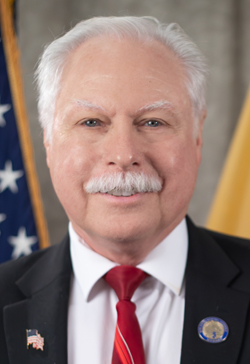
Asm. Robert Karabinchak
Sponsored bills
Maddy summaryThis bill allows public high school students observing Ramadan to substitute required physical education classes with an instructional course or study hall during the marking period containing Ramadan. Students must provide written notice to their principal before schedule creation, and the substitute must award the same graduation credits as physical education. It also permits student-athletes to be excused from sports, intramural, or cheerleading programs during Ramadan by submitting written notice to their coach, with coaches prohibited from penalizing such absences. The bill takes effect immediately for the first full academic year after enactment.
Maddy summaryThis bill requires the New Jersey Department of Transportation to create a single, universal application form for all its grant programs. The department must develop this form within three months, publish it on its website, and mandate that all future grant requests be submitted through this new system. Before the form goes live, the department must notify the public and provide at least 30 days of education on the new process. The law directly affects counties, municipalities, and other entities that currently apply for state transportation funding.
Maddy summaryAJR 150 designates September 21 of each year as "New Jersey Pedestrian Crosswalk Safety Day" to honor Bruce Morlack, a Burlington crossing guard who died protecting students. The resolution requests the Governor issue an annual proclamation encouraging residents, schools, and communities to observe the day with safety-focused activities. It does not create new laws or funding but commemorates Morlack's legacy and promotes pedestrian safety awareness. This ceremonial resolution affects all New Jersey residents and public officials through its annual observance.
Maddy summaryThis bill creates a $4.5 million grant program to reimburse New Jersey school districts for costs incurred when expanding their procurement of locally grown food for students. It directly affects eligible school districts participating in federal meal programs (like National School Lunch and School Breakfast Programs), requiring them to submit plans for new or expanded local food sourcing beyond current baseline levels. The program reimburses documented costs for minimally processed local foods (like fruits, vegetables, or grains grown in New Jersey), excluding fluid dairy milk. School districts must implement new policies to increase local food access during school meals or summer programs to qualify for reimbursement.
Maddy summaryThis bill prohibits businesses in New Jersey from charging extra fees to customers who pay with a debit card. It directly affects sellers of goods and services, requiring them to accept debit cards without adding a surcharge. The law also mandates that if a business does charge a fee for credit card use, they must clearly inform customers that no such fee applies to cash or debit card payments. Violations of this rule are classified as unlawful practices under state consumer fraud laws.
Maddy summaryThis bill prevents New Jersey municipalities from requiring special plan approvals to add up to five van-accessible parking spaces to existing commercial parking lots. It applies specifically to improvements in business districts and ensures that adding these wider spaces, which are designed for vehicles with wheelchair lifts, does not trigger additional permitting hurdles. By removing the need for minor site plan or construction code approvals for these specific upgrades, the legislation aims to streamline the process for businesses wanting to improve accessibility. The changes take effect immediately upon passage, allowing property owners to implement these modifications without facing the usual bureaucratic delays.
Maddy summaryThis bill requires New Jersey's Motor Vehicle Commission (MVC) to display a person's full legal name - including Roman numerals - on specific driver's licenses, permits, and identification cards. It directly affects residents whose legal names (as recorded on birth certificates) include Roman numerals (e.g., "John Smith III"). The MVC must display these names upon receiving standard documentation proving identity, age, and residence, as already required for license issuance. The policy applies to all standard licenses, REAL ID cards, and commercial driver's licenses, ensuring official documents reflect legally recognized names.
Maddy summaryThis bill creates a five-year pilot program to test fully autonomous vehicles in New Jersey, requiring companies and institutions (called "autonomous vehicle testers") to obtain approval from the Motor Vehicle Commission before operating these vehicles. Participants must register vehicles, carry at least $5 million in liability insurance, and ensure operators are licensed, sober, and capable of taking manual control at any time. A task force of safety officials, industry experts, and consumer advocates will oversee the program, address safety concerns like collisions or cyberattacks, and provide quarterly reports. Testing will occur in controlled facilities and designated public road sections, with strict safety protocols to protect the public while allowing evaluation of autonomous technology.
Maddy summaryThis bill establishes two regional passenger advisory committees for NJ Transit: one for North Jersey and one for South Jersey. Each committee, composed of 15 appointed members who regularly use transit in their region, must provide input on fare increases, service cuts, or expansions before the transit board votes. Members must reside in specific counties and either be regular riders or have significant transit experience. The committees will review board agenda items and submit written feedback prior to meetings, ensuring customer perspectives are formally considered in key transit decisions.