

Maddy summaryThis bill exempts plastic materials processed at designated "advanced plastic processing facilities" from New Jersey's solid waste disposal and recycling laws. These facilities must transform plastic into non-fuel products (like chemicals or monomers) using methods such as pyrolysis, not into fuel. The exemption excludes PETE (code 1) and HDPE (code 2) plastics. Processors using these facilities avoid state recycling/disposal rules but remain subject to air/water pollution and land-use laws.
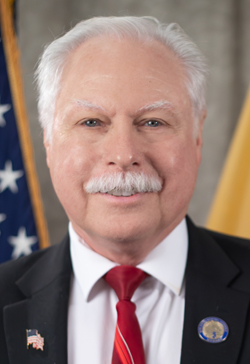
Asm. Robert Karabinchak
Sponsored bills
Maddy summaryThis bill authorizes New Jersey to issue special license plates featuring the U.S. Coast Guard seal for active or honorably separated Coast Guard members, their spouses, parents, or principal business owners. Applicants pay a $50 one-time fee and a $10 annual fee, with all fees deposited into a dedicated "Coast Guard License Plate Fund" that annually appropriates money to the Coast Guard. The plates must display the Coast Guard emblem, and the design is developed jointly with the Coast Guard, covering administrative costs through the fund. The program is procedural, focusing on recognition and funding for the Coast Guard through license plate fees, not broader policy changes.
Maddy summaryThis bill (A3915) prohibits New Jersey's public pension and annuity funds from investing in tobacco manufacturers or wholesale distributors. It requires the state to sell all existing investments in such companies within 36 months of the law's effective date. The state must also submit annual reports to the legislature detailing divestment progress and the financial impact on pension funds. These provisions apply specifically to funds managed by the Division of Investment under the Department of the Treasury.
Maddy summaryThis bill bans businesses in New Jersey from owning, controlling, installing, managing, selling, or offering for sale cryptocurrency ATMs. These are defined as physical, internet-connected kiosks that let users buy, sell, or exchange digital currency using cash, debit, or credit cards. The law directly affects businesses operating such kiosks, prohibiting them under the state's consumer fraud act with penalties up to $20,000 per violation. It targets a surge in fraud - citing FTC data showing $110 million in losses linked to these machines in 2023 - aimed at protecting consumers, especially older adults who face higher risks.
Maddy summaryThis bill (A 1530) requires railroad operators of "dangerous hazardous trains" (those carrying 200,000+ gallons of petroleum or 20,000+ gallons of specific hazardous substances like anhydrous ammonia) to maintain a minimum of two crew members and clearly display the railroad company name. Exceptions apply for mechanical assistance, tourist trains, yard moves, or small operations with ≤15 employees operating at ≤15 mph. It directly affects railroad companies transporting large volumes of hazardous materials, aiming to improve safety through crew staffing and identification. The bill was withdrawn on January 13, 2026, as it was approved as P.L.2025, c.300.
Maddy summaryNew Jersey bill A-1037 allows utility lines for approved solar energy facilities to cross municipally-owned preserved open space (like parks or conservation areas funded by Green Acres programs) under strict conditions. It requires lines to be underground, not interfere with land use, and be approved by the local government after developers prove no alternative routes exist. Solar developers must also compensate landowners and provide documentation showing compliance with the bill’s requirements. This directly affects solar project developers, local municipalities managing preserved land, and the Board of Public Utilities overseeing solar approvals. The bill aims to support solar infrastructure development while protecting designated conservation areas.
Maddy summaryThis bill requires New Jersey's Department of Environmental Protection (DEP) to create an "Interim Alternative ZEV Compliance Program" within one year of enactment. It directly affects vehicle manufacturers selling new cars in New Jersey by offering a flexible alternative to strict zero-emission vehicle sales quotas for model years 2027-2031. Under this program, manufacturers can comply by offering dealers a portfolio of required zero-emission vehicles based on consumer demand, without mandating specific vehicle purchases. The rules also provide manufacturers with legal protection against penalties for noncompliance with traditional sales targets during this transition period.
Maddy summaryNew Jersey's A3405 requires the Department of Transportation to adopt a complete streets policy for all new and rebuilt highway and public transit projects, ensuring safe access for all users including people with disabilities. It specifically mandates that projects consider the needs of individuals diagnosed with autism spectrum disorder and those with intellectual or developmental disabilities to enable independent travel. The policy requires the DOT to develop universal design concepts and implementation guidance for these accessibility features in all planning, construction, and maintenance activities.
Maddy summaryThis bill allows New Jersey municipalities to require developers to contribute to the cost of off-tract mass transit improvements (like bus stops or rail access) that are necessitated by new construction, similar to existing rules for streets and utilities. It directly affects developers building in municipalities that adopt such regulations, requiring them to pay a fair, pro-rata share based on municipal plans. Key provisions include mandating consultation with mass transit agencies when creating these regulations and giving developers one year to challenge the payment amount legally. The change updates current law, which previously only permitted contributions for street, water, sewer, and drainage improvements.
Maddy summaryThis bill establishes a permanent New Jersey-India Commission to strengthen economic, cultural, and educational ties between New Jersey and India. It continues a commission initially created by Governor Murphy's 2024 executive order, requiring the Governor to appoint 35-45 members (including recommendations from legislative leaders for eight seats) to promote trade, investment, and cultural exchanges. The commission must submit biennial reports to the Governor and Legislature detailing its activities and recommendations. The commission directly affects New Jersey's 400,000+ Indian-American community and businesses seeking to expand partnerships with India, aiming to support job growth and economic development.