

Maddy summaryThis bill requires New Jersey counties and municipalities to build and maintain sidewalks within a two-mile radius of elementary public schools and a 2.5-mile radius of secondary public schools, specifically on streets used by students that are deemed hazardous under existing safety criteria. It allows local governments to fund these sidewalks using permit fees, donations, grants, or other available funds. The law applies to all public schools (including those partially funded by state/local sources) and takes effect immediately. It directly affects school districts, local infrastructure planning, and students walking to school along designated routes.
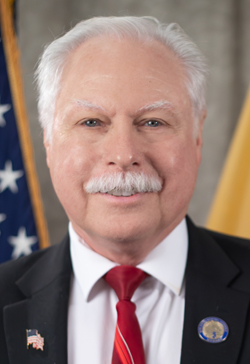
Asm. Robert Karabinchak
Sponsored bills
Maddy summaryThis bill establishes a two-year Statewide Animal Advocate Program within New Jersey's Administrative Office of the Courts (AOC). It allows courts to appoint a special advocate in criminal cases involving animal welfare (such as cruelty or dog fighting charges) to represent the animal's best interests, rather than the owner or state. The advocate monitors cases, reviews records from vets and officers, shares information with attorneys, and recommends animal placement to the court. The program expires after two years, requiring a report on implementation and recommendations for continuation.
Maddy summaryThis bill requires New Jersey's Board of Public Utilities (BPU) to study the feasibility of developing advanced reactors statewide within 18 months. The study must examine suitable locations (including retired power sites), regulatory requirements, economic viability, safety, environmental impacts, and public input through three stakeholder sessions. It directs the BPU to recommend a potential program for deploying small modular reactors and publish findings online. The study expires 30 days after the report is submitted to the Governor and Legislature.
Maddy summaryThis bill allows eligible New Jersey educators (K-12 teachers, counselors, principals) and paraprofessionals (school aides) to deduct up to $250 of unreimbursed classroom supply expenses from their gross income tax. It covers costs like books, computers, software, and classroom materials, but excludes nonathletic supplies for health or physical education classes. To qualify, individuals must work at least 900 hours annually in a New Jersey public or private elementary/secondary school. The deduction applies to taxable years starting after the bill's enactment date.
Maddy summaryThis New Jersey bill (A 946), now law as P.L.2025, c.177, requires mental health services to be provided in the communication method preferred by each deaf or hard of hearing individual - such as sign language or oral communication - based on their assessment. It mandates that mental health professionals be fluent in that method, trained in cultural needs, and able to collaborate with interpreters. The law also requires a state resource guide listing specialized mental health services and ensures individuals can help shape their own care plans. It directly affects all deaf or hard of hearing residents seeking mental health support in New Jersey, addressing long-standing barriers in access and care quality.
Maddy summaryThis bill requires New Jersey's Department of Environmental Protection (DEP) to create a rebate program within one year for residents purchasing microfiber washing machine filters. The program offers up to $100 per filter (capped at the filter's cost) to encourage adoption of devices that capture plastic microfibers from laundry wastewater before they enter waterways. It appropriates $2.5 million from the General Fund to fund these rebates, with the DEP required to report annually on program effectiveness, rebate numbers, and funding use. The policy directly affects New Jersey residents who buy eligible filters, aiming to reduce microfiber pollution - a source of plastic contamination in waterways.
Maddy summaryThis New Jersey bill (A 3898) allows religious corporations (like churches or congregations) to hold member meetings remotely during a Governor-declared state of emergency. It requires trustees to create guidelines for remote meetings, including verifying member identity, ensuring participation access, and recording votes. Remote participants are treated as physically present for voting and meeting purposes. The law updates existing rules to permit virtual participation during emergencies while maintaining procedural safeguards.
Maddy summaryThis bill requires New Jersey school districts to obtain approval from the Commissioner of Education and the Local Finance Board for any lease of school buildings exceeding 20 years. It authorizes districts to enter into 20-year lease purchase agreements for school building improvements or additions, provided the agreement fits within the district's tax levy growth limit and won't require additional voter approval for existing programs. The lease payments must be included in the annual budget, and the bill clarifies that such agreements will be treated as district property for tax purposes. It directly affects all public school districts in New Jersey seeking long-term building leases or improvements.
Maddy summaryThis bill authorizes New Jersey to issue special license plates for honorably discharged veterans. To qualify, applicants must provide proof of honorable discharge (like a DD-214 form) and pay a $50 application fee plus a $10 annual fee. The plates must display "Veteran" and the veteran's military branch insignia, designed with input from the Adjutant General. Fees collected fund a dedicated veterans' support account, with initial costs potentially offset by private donations up to $25,000. The program requires annual certification of costs and can be discontinued if fees don't cover expenses for two consecutive years.
Maddy summaryNew Jersey bill A 3567 requires municipalities to adopt state-approved land use regulations that allow accessory dwelling units (ADUs) - secondary homes on the same lot as a primary residence - within single-family and two-family zones. The bill mandates that local zoning rules must align with state model ordinances, ensuring property owners can develop ADUs without restrictive barriers. It directly affects homeowners seeking to add ADUs for rental income or family housing, as well as municipalities responsible for updating zoning codes. The bill, pending before the legislature, aims to expand housing supply by streamlining ADU development while maintaining neighborhood character.