Issue · Healthcare

Healthcare

Every healthcare bill, vote, and legislator stance in New Jersey, automatically classified by Maddy, our AI policy reader.

Total bills
1,685
2026-2027 Regular Session
Top supporter
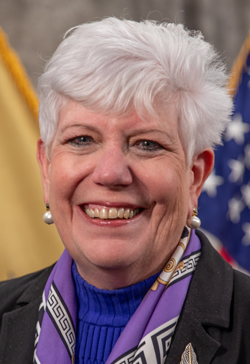
Maureen Rowan
100% support rate
Top opponent
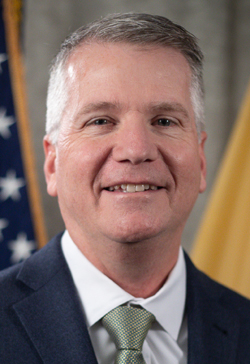
Bob Auth
6% support rate
Ranked legislators
10
5 support · 5 oppose
Key legislators

Who's moving healthcare in New Jersey

Legislators moving healthcare in New Jersey
Legislator Party Stance Support rate Decisive votes
Maureen Rowan
Maureen Rowan House · District 2
D
Strong +
100% 15
Jim Beach
Jim Beach Senate · District 6
D
Strong +
100% 14
Marisa Sweeney
Marisa Sweeney House · District 25
D
Strong +
100% 14
Anthony Angelozzi
Anthony Angelozzi House · District 8
D
Strong +
100% 13
Dave Bailey
Dave Bailey House · District 3
D
Strong +
100% 13
Bob Auth
Bob Auth House · District 39
R
Strong −
6% 18
John DiMaio
John DiMaio House · District 23
R
Strong −
10% 10
Paul Kanitra
Paul Kanitra House · District 10
R
Strong −
10% 10
Erik Peterson
Erik Peterson House · District 23
R
Strong −
12% 17
Joe Pennacchio
Joe Pennacchio Senate · District 26
R
Strong −
13% 15
Showing 881–890 of 1,685 bills

All healthcare bills

in committee · New Jersey · General Assembly Jan 13, 2026

A 3705: Waives 15 day waiting period for medical aid in dying under certain circumstances.

This bill (A 3705) modifies New Jersey's medical aid in dying law by waiving the standard 15-day waiting period between the patient's initial and second oral requests when a physician determines, with reasonable medical certainty, that the patient is not expected to survive 15 days. It directly affects qualified terminally ill patients with rapidly declining health who meet this medical criterion. The bill retains a 48-hour waiting period between the written request and prescription issuance, while requiring physicians to document the medical basis for waiving the 15-day period. All other requirements for medical aid in dying - such as written requests, physician consultations, and patient rights to rescind - remain unchanged.
in committee · New Jersey · General Assembly Jan 13, 2026

A 1647: Restricts use of restrictive employment covenants for physicians and nurses.

This New Jersey bill (A1647) invalidates most geographic restrictions that prevent physicians from practicing medicine in a specific area after leaving a job. It directly affects physicians by making non-compete clauses in employment contracts unenforceable, unless specific exceptions apply. Key exceptions include restrictions for large hospital systems (30+ physicians), federally qualified health centers (5-mile radius for up to 4 years), or when a "unique incentive" (like a $50,000 bonus) was clearly stated in the contract. The law applies immediately to new employment contracts and does not void other non-restrictive contract terms.
Sub-Topics Hospitals
in committee · New Jersey · General Assembly Jan 13, 2026

A 1721: Requires Medicaid coverage for self-administered hormonal contraceptives dispensed by pharmacist under standing order.

This bill requires New Jersey's Medicaid program to cover self-administered hormonal contraceptives when dispensed by a pharmacist under a standing order. It directly affects Medicaid beneficiaries, particularly low-income women, by expanding access to contraception without needing a separate prescription from a doctor. The key provision amends existing Medicaid coverage rules to explicitly include these contraceptives under the "prescribed drugs" category, allowing pharmacists to provide them under a standing order. This change would make contraceptive care more accessible and affordable for eligible individuals without altering prescription requirements.
in committee · New Jersey · General Assembly Jan 13, 2026

A 3624: Requires DHS to create English and Spanish-language Internet websites to promote enrollment in affordable health care plans.

This bill requires New Jersey's Department of Human Services to create two dedicated websites: one in English and one in Spanish, to help residents enroll in Medicaid and NJ FamilyCare programs. The English site will list health navigators and community centers that assist with enrollment, including the languages they speak. The Spanish site will mirror this content with a Spanish domain name for easier access by Spanish-speaking residents. A bilingual public awareness campaign will promote both websites. The bill directly affects New Jersey residents seeking affordable health care, particularly Spanish speakers facing language barriers.
Sub-Topics Medicaid
in committee · New Jersey · Senate Feb 5, 2026

S 3356: Requires Higher Education Student Assistance Authority to develop pathway to nursing scholarship for health care workers who want to become nurses; appropriates $1 million.

This bill creates the "Pathway to Nursing Scholarship Program" to address New Jersey's nursing shortage by helping healthcare workers transition into nursing careers. It requires the Higher Education Student Assistance Authority (HESAA) to develop a program offering 100 scholarships of $10,000 each to eligible healthcare workers enrolled in approved nursing programs. To qualify, applicants must be New Jersey residents, currently or previously working in healthcare, enrolled in an approved nursing program, and commit to working as a nurse after graduation. The program is funded by a $1 million appropriation from the General Fund to support this targeted workforce development initiative.
in committee · New Jersey · General Assembly Jan 13, 2026

A 3278: Requires reporting of suicide attempts made by first responders.

This bill requires hospitals and medical examiners to report all suicide attempts or deaths by suicide involving first responders to New Jersey's Division of Mental Health Services within three business days. It directly affects police officers, firefighters, EMTs, and other emergency personnel who respond to crises. The law mandates the creation of an anonymous state database tracking these incidents and requires an annual report to the Governor and Legislature with aggregated demographic data - without identifying individuals. The policy aims to improve data collection on first responder mental health, which has higher suicide rates than the general population. The bill takes effect immediately upon enactment.
Sub-Topics Mental Health Tags Public Safety
in committee · New Jersey · General Assembly Jan 13, 2026

A 2248: Requires DHS and DOH to conduct study on projected impact of federal Medicaid funding cuts.

This bill requires New Jersey's Department of Human Services and Department of Health to jointly study how federal Medicaid funding cuts (from H.R.1/Pub.L.119-21) would impact the state. The study must analyze effects on hospitals, long-term care facilities, transportation providers, Medicaid eligibility, and state/local budgets. The departments must complete the study within 90 days and submit a public report to the Governor and Legislature with findings and recommendations for maintaining Medicaid services. The bill expires once the report is submitted. It is a procedural study mandate, not a policy change.
in committee · New Jersey · General Assembly Jan 13, 2026

A 367: Establishes tuition reimbursement program for certain advanced practice nurses who provide mental health care services in underserved areas in New Jersey.

This bill creates a state-funded tuition reimbursement program for New Jersey residents who are certified advanced practice nurses (APRNs) with specialized mental health training. To qualify, nurses must agree to provide full-time mental health care in designated underserved areas for 1-4 years in return for reimbursement. The program covers 25% of eligible tuition costs per year of service (capped at 100% total), requiring participants to maintain NJ residency, certification, and service in areas identified by the Health Commissioner as having mental health professional shortages. It explicitly prohibits simultaneous participation with other state or federal loan repayment programs.
in committee · New Jersey · General Assembly Jan 13, 2026

A 3796: Establishes loan redemption program and gross income tax credit for mental health professionals who serve children and adolescents.

This bill proposes a program to help mental health professionals working with children and adolescents in New Jersey reduce student loan debt. Licensed mental health professionals who live in New Jersey, work full-time providing counseling to youth, and have qualifying student loan debt can receive up to $1,000 annually toward their loans (for up to 4 years) or claim a $1,000 tax credit against their state income tax. To qualify, participants must maintain residency, employment in qualifying roles, and provide proof of loan balance and service each year. The program aims to support mental health workforce development by easing financial burdens for professionals serving young people.
in committee · New Jersey · General Assembly May 11, 2026

A 1950: "Stop Sepsis Act"; requires hospitals to establish sepsis recognition and treatment protocols, train staff, and establish quality measures.*

This bill (A-1950) requires all general and special hospitals in New Jersey to adopt evidence-based protocols for early sepsis recognition and treatment. The protocols must include distinct guidelines for adult and pediatric patients, covering screening, treatment goals, infection source identification, and antibiotic timing, while specifying cases where treatment isn’t appropriate (e.g., palliative care). Hospitals must train relevant staff, submit protocols to the Department of Health for approval within 120 days of enactment, and annually report data to track adherence and mortality rates. These protocols aim to improve outcomes for sepsis patients, a condition that causes over 28% of deaths in New Jersey and is the eighth-leading cause of death in the state.
Sub-Topics Children's Health
Showing 881 to 890 of 1,685 bills
Previous 1 … 88 89 90 … 169 Next