Issue · Healthcare

Healthcare

Every healthcare bill, vote, and legislator stance in New Jersey, automatically classified by Maddy, our AI policy reader.

Total bills
1,685
2026-2027 Regular Session
Top supporter
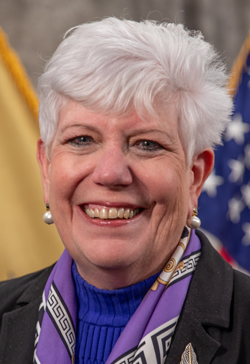
Maureen Rowan
100% support rate
Top opponent
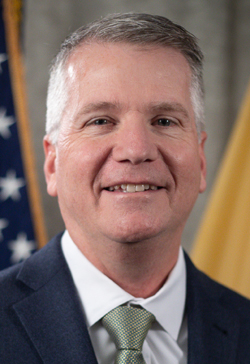
Bob Auth
6% support rate
Ranked legislators
10
5 support · 5 oppose
Key legislators

Who's moving healthcare in New Jersey

Legislators moving healthcare in New Jersey
Legislator Party Stance Support rate Decisive votes
Maureen Rowan
Maureen Rowan House · District 2
D
Strong +
100% 15
Jim Beach
Jim Beach Senate · District 6
D
Strong +
100% 14
Marisa Sweeney
Marisa Sweeney House · District 25
D
Strong +
100% 14
Anthony Angelozzi
Anthony Angelozzi House · District 8
D
Strong +
100% 13
Dave Bailey
Dave Bailey House · District 3
D
Strong +
100% 13
Bob Auth
Bob Auth House · District 39
R
Strong −
6% 18
John DiMaio
John DiMaio House · District 23
R
Strong −
10% 10
Paul Kanitra
Paul Kanitra House · District 10
R
Strong −
10% 10
Erik Peterson
Erik Peterson House · District 23
R
Strong −
12% 17
Joe Pennacchio
Joe Pennacchio Senate · District 26
R
Strong −
13% 15
Showing 871–880 of 1,685 bills

All healthcare bills

in committee · New Jersey · General Assembly Jan 13, 2026

A 977: Creates New Jersey Board of Paramedicine.

This bill creates the New Jersey Board of Paramedicine to regulate paramedic and EMT licensing and practice. It establishes a 11-member board with specific qualifications, including four active mobile intensive care paramedics, two EMTs, medical specialists, and public members. The board will set standards for advanced life support (paramedics) and basic life support (EMTs), oversee licensing, and define paramedicine as a regulated healthcare practice encompassing pre-hospital care and community health services. The bill does not change current service standards but creates the governing body to administer these regulations.
Sub-Topics Hospitals
in committee · New Jersey · General Assembly Jan 13, 2026

A 1765: Provides that institutions of higher education may permit final-year students in graduate degree programs for mental health care professions to graduate or be matched with residency or clinical programs early.

This bill allows New Jersey colleges to let final-year graduate students in mental health fields (like psychology or social work) graduate early or enter clinical residencies before the usual graduation date during the 2020-2021 and 2021-2022 academic years. To qualify, students must complete all coursework, and institutions must assign a staff mentor to guide them during their residency. It specifically covers licensed mental health professionals including psychiatrists, psychologists, counselors, and therapists. The law aims to address pandemic-related mental health workforce shortages by accelerating student entry into practice.
Sub-Topics Mental Health
in committee · New Jersey · General Assembly Feb 19, 2026

A 4183: Exempts specialty heart hospital from 0.53 percent hospital assessment under certain circumstances.

This bill exempts specialty heart hospitals from paying a 0.53% assessment on their total operating revenue, provided they certify to the Department of Health and Banking and Insurance that they waive direct billing for patient services. The exemption applies specifically to hospitals certified as specialty heart facilities under New Jersey law. Funds collected from the assessment otherwise support the Health Care Subsidy Fund, which finances federally qualified health centers, charity care programs, and other state health initiatives. The policy change directly affects specialty heart hospitals seeking relief from this mandatory payment.
Sub-Topics Hospitals
in committee · New Jersey · General Assembly Jan 13, 2026

A 2775: Requires health insurers, SHBP, and SEHBP to cover mammograms for women over 35 and women under 35 under certain circumstances.

This bill requires health insurers, the State Health Benefits Program (SHBP), and the State Employees Health Benefits Program (SEHBP) to cover specific mammogram screenings. It mandates one baseline mammogram for women aged 35 and annual screenings for women 35 and older, while also requiring coverage for women under 35 with breast cancer risk factors (like family history) as determined by their provider. Additional tests like ultrasounds or MRIs are covered if needed due to dense breast tissue, abnormal results, or other risk factors. The law applies to all health insurance plans in New Jersey, ensuring these screenings are covered without additional out-of-pocket costs for eligible individuals.
Sub-Topics Insurance
in committee · New Jersey · General Assembly Jan 13, 2026

A 3128: Requires health insurance coverage of diagnostic and supplemental breast examinations without cost-sharing.

New Jersey bill A3128 requires all health insurance plans sold in the state to cover diagnostic and supplemental breast examinations with no out-of-pocket costs to patients. It applies to group and individual health insurance contracts, mandating that insurers pay for these exams without deductibles, copays, or coinsurance. Diagnostic exams evaluate abnormalities found during screenings or detected another way, while supplemental exams screen high-risk patients (e.g., those with dense breasts or family history) when no abnormality is present. The law aligns with National Comprehensive Cancer Network Guidelines and applies to all plans except those specifically structured as medical savings accounts under federal law. This directly affects all New Jersey residents with health insurance who may need these breast exams.
Sub-Topics Insurance
in committee · New Jersey · General Assembly Jan 13, 2026

A 3312: Mandates biennial LGBTQ+ cultural competency training for certain educators, healthcare professionals, and State employees.

This bill requires biennial LGBTQ+ cultural competency training for three specific groups: K-12 educators, licensed healthcare professionals, and all State employees (including part-time, full-time, and contract workers). The training covers LGBTQ+ identities and terminology, creating inclusive environments, responding to bias, and supporting mental health. Educators must complete a module provided by the Commissioner of Education, healthcare professionals must complete training under Title 45 licensing rules, and State employees must complete a program administered by the State Ethics Commission. The mandate applies to all covered individuals regardless of their specific role, with training required every two years.
in committee · New Jersey · General Assembly Jan 13, 2026

A 1774: Prohibits certain forms of discrimination in DOH policies concerning allocation of critical health care resources.

This bill (A 1774) requires New Jersey's Department of Health (DOH) to create critical health care resource allocation policies that comply with federal anti-discrimination laws. It directly affects hospitals, nursing homes, and the DOH by banning policies that exclude or deprioritize people with disabilities from receiving resources based on their disability, using long-term survivability in treatment decisions, or reallocating ventilators from people who normally need them. The bill also mandates hospitals to adjust scoring systems to avoid penalizing patients with unrelated health conditions and prohibits blanket "do not resuscitate" orders, requiring policies to respect individual patient preferences through advance directives or POLST forms. These changes apply to all resource allocation during shortages, such as for beds, equipment, or medications.
Tags People with Disabilities
in committee · New Jersey · General Assembly Jan 13, 2026

A 2224: Requires Medicaid cover emergency contraception without requiring prescription or other authorization.

This bill (A2224) requires New Jersey's Medicaid program to cover over-the-counter emergency contraception (such as Plan B) without a prescription. Currently, Medicaid only covers prescription-based emergency contraception, forcing enrollees to pay out-of-pocket for the same products purchased without a prescription. The bill mandates that Medicaid managed care organizations include this coverage without requiring a prescription or other authorization. It directly affects Medicaid recipients in New Jersey who need emergency contraception for reproductive health.
in committee · New Jersey · General Assembly Jan 13, 2026

A 2070: Expands availability of NJ FamilyCare Advantage program.

This bill expands New Jersey's NJ FamilyCare Advantage program to make health coverage more accessible for low-income children under 19, their parents/caretakers, and adults without dependent children. Key changes include requiring simplified income verification (like pay stubs or tax record matching), implementing continuous enrollment to prevent coverage gaps, and allowing children to get immediate coverage during hospital visits if they meet income criteria (up to 350% of the poverty level). The program will also streamline renewal processes through preprinted forms and online options. These changes aim to reduce administrative barriers while maximizing federal funding for eligible residents.
Sub-Topics Hospitals
in committee · New Jersey · General Assembly Jan 13, 2026

A 2187: Establishes 10 year Menstrual Leave and Remote Work Pilot Program.

This bill establishes a 10-year voluntary pilot program in New Jersey for employers to provide two fully paid medical leave days or two remote work days per month to employees with qualifying menstrual disorders, such as endometriosis or uterine fibroids. Employees must provide physician documentation confirming their condition. Employers participating in the program receive tax credits (100% of wages for leave, 25% for remote work) to offset costs, with an annual $10 million cap on total credits. The program prohibits discrimination against employees using these accommodations and requires employers to follow existing anti-discrimination laws. It directly affects employees with specific medical conditions and participating employers.
Sub-Topics Paid Leave
Showing 871 to 880 of 1,685 bills
Previous 1 … 87 88 89 … 169 Next