

Issue · Technology
Technology
Every technology bill, vote, and legislator stance in New Hampshire, automatically classified by Maddy, our AI policy reader.
Total bills
62
2026 Regular Session
Top supporter
Denise DeDe-Poulin
100% support rate
Top opponent
Chris Herbert
11% support rate
Ranked legislators
10
5 support · 5 oppose
Key legislators
Who's moving technology in New Hampshire
| Legislator | Party | Stance | Support rate | Votes |
|---|---|---|---|---|

Denise DeDe-Poulin
House · District Strafford 6
|
R |
Strong +
|
100% | 34 |

Bob Lynn
House · District Rockingham 17
|
R |
Strong +
|
89% | 55 |

J.D. Bernardy
House · District Rockingham 36
|
R |
Strong +
|
89% | 55 |

Wayne MacDonald
House · District Rockingham 16
|
R |
Strong +
|
89% | 55 |
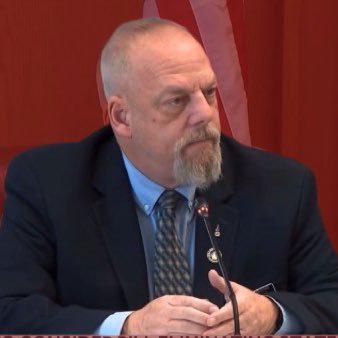
Dennis Mannion
House · District Rockingham 25
|
R |
Strong +
|
89% | 55 |

Chris Herbert
House · District Hillsborough 24
|
D |
Strong −
|
11% | 48 |

Christine Seibert
House · District Hillsborough 21
|
D |
Strong −
|
12% | 52 |

Dale Swanson
House · District Hillsborough 5
|
D |
Strong −
|
14% | 39 |

Stephanie Grund
House · District Hillsborough 34
|
D |
Strong −
|
14% | 49 |

Marc Plamondon
House · District Hillsborough 3
|
D |
Strong −
|
14% | 44 |
Showing 31–40 of 62
bills
All technology bills
HB 1154: restricting the texting of unsolicited advertisements, including political campaigns.
Sub-Topics
Data Privacy
HB 1589: establishing the digital choice act.
HB 1729: relative to the creation of a centralized enterprise resource planning service, and making an appropriation therefor.
Topics
✓ Budget & TaxesSupports Budget & TaxesBill explicitly makes an appropriation for a centralized ERP system, funding a state-managed service to streamline school district financial operations under fiscal management.
✓ TechnologySupports TechnologyMandates FERPA compliance and data security for school software, directly protecting student data privacy and enhancing cybersecurity standards in educational technology.
HB 1815: relative to education financing.
Topics
✓ EducationSupports EducationMandates 11 core curriculum areas including Holocaust education and computer science, strengthening educational standards and requirements for public schools.
✓ TechnologySupports TechnologyMandates technology/engineering and computer science as required K-12 curriculum subjects, directly advancing technology education in schools.
HB 1436: relative to the classification and protection of personal digital information and cloud-stored files.
Topics
✓ Criminal JusticeSupports Criminal JusticeRequires warrants for government access to digital data, protecting privacy rights in criminal procedure per Fourth Amendment standards.
✓ TechnologySupports TechnologyEstablishes ownership of cloud data, requires warrants for government access, strengthening privacy protections per bill's legal presumption of bailment and warrant requirement for searches.
HB 1265: prohibiting the construction of data centers in the state and establishing a committee to study the environmental impact of data centers.
Topics
✓ EnvironmentSupports EnvironmentBill imposes temporary construction ban on data centers to study environmental impact, showing precautionary approach to protect environment from potential harm of energy-intensive facilities.
✗ TechnologyOpposes TechnologyProhibits new data center construction for one year, directly restricting tech infrastructure development and business planning in this sector.
HB 1799: relative to required state funding for providing an opportunity for an adequate education.
Topics
✓ Budget & TaxesSupports Budget & TaxesMandates state funding for education resources (staff, materials, facilities) starting 2026, directly increasing public service appropriations per budget & taxes topic definition.
✓ EducationSupports EducationMandates state funding for staff, materials, technology, and infrastructure to ensure constitutionally adequate education access and address disparities.
✓ TechnologySupports TechnologyMandates state funding for technology resources in schools to ensure educational access, directly advancing technology access for students.
SB 640: relative to the use of artificial intelligence to provide services requiring a professional license.
Topics
✓ HealthcareSupports HealthcareProhibits AI from replacing licensed professionals in direct mental health counseling, protecting patient care quality and safety in mental health services.
✗ TechnologyOpposes TechnologyBill prohibits AI from replacing human professionals in direct client interactions for licensed services, restricting AI's application in a specific technology context.
SB 589: relative to port electrification, microgrid development, and cybersecurity standards for energy and water systems.
Topics
✓ EnergySupports EnergyAuthorizes microgrid pilot for resilience, mandates port electrification/transmission studies, and requires cybersecurity guidelines for distributed energy resources like solar/batteries.
✓ TechnologySupports TechnologyMandates cybersecurity guidelines for distributed energy resources, directly protecting critical technology infrastructure in energy systems.
✓ TransportationSupports TransportationBill mandates task force for trucking charging stations, port electrification, and microgrid pilot for transportation energy resilience - directly advances transportation infrastructure needs.
Sub-Topics
Electric Grid
Energy Resilience
Transmission
Cybersecurity
Electric Vehicles
Freight
Ports