Issue · Technology

Technology

Every technology bill, vote, and legislator stance in New Hampshire, automatically classified by Maddy, our AI policy reader.

Total bills
8
2026 Regular Session
Top supporter
Denise DeDe-Poulin
100% support rate
Top opponent
Chris Herbert
11% support rate
Ranked legislators
10
5 support · 5 oppose
Key legislators

Who's moving technology in New Hampshire

Legislators moving technology in New Hampshire
Legislator Party Stance Support rate Votes
Denise DeDe-Poulin
Denise DeDe-Poulin House · District Strafford 6
R
Strong +
100% 34
Bob Lynn
Bob Lynn House · District Rockingham 17
R
Strong +
89% 55
J.D. Bernardy
J.D. Bernardy House · District Rockingham 36
R
Strong +
89% 55
Wayne MacDonald
Wayne MacDonald House · District Rockingham 16
R
Strong +
89% 55
Dennis Mannion
Dennis Mannion House · District Rockingham 25
R
Strong +
89% 55
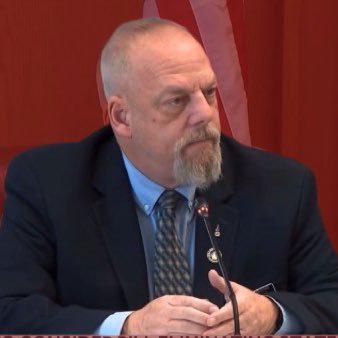
Chris Herbert
Chris Herbert House · District Hillsborough 24
D
Strong −
11% 48
Christine Seibert
Christine Seibert House · District Hillsborough 21
D
Strong −
12% 52
Dale Swanson
Dale Swanson House · District Hillsborough 5
D
Strong −
14% 39
Stephanie Grund
Stephanie Grund House · District Hillsborough 34
D
Strong −
14% 49
Marc Plamondon
Marc Plamondon House · District Hillsborough 3
D
Strong −
14% 44
Showing 8 of 8 bills

All technology bills

failed · New Hampshire · House Mar 11, 2026

HB 1329: requiring the secretary of state to add voters' ages to the voter file.

HB 1329 requires New Hampshire's Secretary of State to include voters' ages in the public voter file. This change directly affects political parties, political committees, and candidates for office, who can now request voter lists containing age data upon request. The bill amends existing law to add "age" to the list of information (alongside name, address, and party affiliation) that must be provided to these groups. The Secretary of State will continue to charge standard fees for these lists, with the new data becoming available 60 days after the bill's passage.
failed · New Hampshire · House Mar 11, 2026

HB 1265: prohibiting the construction of data centers in the state and establishing a committee to study the environmental impact of data centers.

HB 1265 prohibits the construction of new data centers in New Hampshire for one year from its effective date, affecting developers and businesses planning such facilities. It establishes a four-member committee (three House members appointed by the Speaker, one Senate member appointed by the President) to study the environmental impact of data centers. The committee must submit interim findings by November 1, 2025, and a final report by November 1, 2026, to legislative leaders and the governor. The bill does not ban existing data centers or address operational impacts, only pausing new construction while studying environmental effects.
failed · New Hampshire · Senate May 14, 2026

SB 640: relative to the use of artificial intelligence to provide services requiring a professional license.

SB 640 prohibits using artificial intelligence to provide services requiring a professional license (such as psychology, mental health, or substance abuse counseling) unless those services are delivered by a licensed professional. The bill specifically bans AI from replacing human professionals in direct client interactions, though it allows AI for administrative tasks like scheduling or billing. It also authorizes the Office of Professional Licensure to collect fees to cover enforcement costs for violations. This applies to all licensed professions in New Hampshire, with additional specific rules for psychologists and mental health practitioners.
failed · New Hampshire · Senate May 14, 2026

SB 648: requiring age verification by commercial entities to allow access to pornographic material.

SB 648 requires websites and apps that profit from distributing material harmful to minors (defined as content appealing to prurient interest, depicting sexual conduct offensively, and lacking value for minors) to implement age verification. It mandates that commercial entities using reasonable methods (like government ID checks without storing data) verify users are 18+, post clear warnings, and not retain personal information. Parents or guardians can sue for up to $10,000 per violation if a minor accesses such content due to non-compliance, while the attorney general can seek $25,000 penalties. Exemptions include news organizations, libraries, museums, and educational institutions distributing content for legitimate purposes. The law takes effect January 1, 2027.
died · New Hampshire · House Feb 25, 2026

HB 1316: restricting the collection and disclosure of autism-related data by state agencies.

HB 1316 restricts New Hampshire state agencies from collecting or disclosing personally identifiable autism-related data (such as an individual's autism diagnosis) unless the data is used for specific, limited purposes like administering benefits, providing medical care, or complying with education laws. Agencies must ensure any data collection complies with federal privacy laws (like HIPAA) and avoid using data scraping technology. Disclosure outside state government requires the individual’s or guardian’s written consent, court order, or necessity for essential services like education or healthcare. The bill explicitly preserves existing disability protections under federal laws like the Americans with Disabilities Act and IDEA.
Sub-Topics Data Privacy
failed · New Hampshire · House Aug 5, 2026

HB 1406: relative to health carrier recordkeeping requirements in utilization review, including specifications regarding the use of artificial intelligence.

HB 1406 prohibits health insurance companies (health carriers) from using artificial intelligence to override doctors' clinical decisions. Specifically, it bans AI from auditing or adjusting provider codes based on AI recommendations that would change a physician's professional judgment about patient care. Health carriers must document all AI use in claims processing and provide these records to regulators. Violations are considered unfair insurance practices, potentially resulting in fines or restitution for denied care. The law directly affects healthcare providers and insurers, taking effect January 1, 2027.
died · New Hampshire · House Aug 20, 2026

HB 1612: relative to the use of price-fixing websites, algorithms, or other software by landlords.

HB 1612 prohibits landlords from using price-fixing websites, algorithms, or software to set rental prices, making such use a violation of New Hampshire's Consumer Protection Act. It directly affects landlords who employ these tools, requiring them to stop using such software or face enforcement actions. The bill establishes a process where tenants or others can file complaints with the Department of Justice's Consumer Protection Bureau, which must investigate these claims. The law takes effect January 1, 2027, and would require one additional attorney position at an estimated annual cost of $72,000 starting in 2027, though no funding is provided in the bill.
failed · New Hampshire · House Feb 5, 2026

HB 1508: permitting one-party consent for audio and video recordings in certain instances.

HB 1508 allows New Hampshire residents to record audio and video conversations they are part of without the other person's consent, provided the recording doesn't violate privacy laws (as defined in RSA 644:9) or is used for blackmail or harassment. The bill requires the Department of Justice to create a public awareness campaign explaining the new rules, including educational materials for the public and training for law enforcement and prosecutors. This campaign will clarify legal boundaries for recording and prevent misuse. The state will fund these efforts using existing resources, with an estimated one-time cost of $500,000 for the campaign and ongoing costs for staff support.