

Issue · Environment
Environment
Every environment bill, vote, and legislator stance in New Hampshire, automatically classified by Maddy, our AI policy reader.
Total bills
75
2026 Regular Session
Top supporter
Wayne MacDonald
72% support rate
Top opponent
Sheri Minor
33% support rate
Ranked legislators
10
5 support · 5 oppose
Key legislators
Who's moving environment in New Hampshire
| Legislator | Party | Stance | Support rate | Votes |
|---|---|---|---|---|
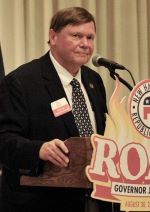
Wayne MacDonald
House · District Rockingham 16
|
R |
Support
|
72% | 30 |

Linda DiSilvestro
House · District Hillsborough 17
|
D |
Support
|
70% | 20 |

Linda Ryan
House · District Hillsborough 4
|
D |
Support
|
62% | 27 |

Denise DeDe-Poulin
House · District Strafford 6
|
R |
Support
|
62% | 20 |

Barbara Comtois
House · District Belknap 7
|
R |
Support
|
62% | 20 |

Sheri Minor
House · District Belknap 5
|
R |
Oppose
|
33% | 18 |

Richard Brown
House · District Carroll 8
|
R |
Oppose
|
33% | 21 |

Karel Crawford
House · District Carroll 3
|
R |
Oppose
|
36% | 23 |

Mike Bordes
House · District Belknap 5
|
R |
Oppose
|
38% | 16 |

Julie Miles
House · District Hillsborough 12
|
R |
Oppose
|
39% | 30 |
Showing 11–20 of 75
bills
All environment bills
SB 628: enabling curbside electric-vehicle charging.
Topics
✓ EnergySupports EnergyEnables EV charging infrastructure, promoting electric vehicles and reducing fossil fuel dependence. Directly advances clean energy infrastructure development for transportation.
✓ EnvironmentSupports EnvironmentEnables EV charging infrastructure to promote electric vehicle adoption, reducing transportation emissions and supporting clean energy transition.
✓ TransportationSupports TransportationEnables curbside EV charging infrastructure in public rights-of-way, promoting sustainable transportation and modernizing transportation infrastructure.
HB 1476: permitting third-party payment for point-of-entry treatment system and water line installation to expand access to clean drinking water.
Topics
✓ EnvironmentSupports EnvironmentBill expands access to clean drinking water systems, directly advancing environmental protection by ensuring safe water quality and reducing pollution risks in underserved areas.
✓ HealthcareSupports HealthcareBill expands access to clean drinking water, a public health necessity, directly supporting community health outcomes and public health program goals.
Sub-Topics
Drinking Water
HB 1742: relative to customer-generators inadvertently enrolled in a municipal or county aggregation program.
Topics
✓ EnergySupports EnergyProtects solar customer-generators' net metering rights, ensuring fair compensation for renewable energy exports and preventing forced enrollment in third-party programs, directly advancing distributed renewable energy adoption.
✓ EnvironmentSupports EnvironmentProtects net metering for solar customers, enabling renewable energy adoption and grid credits, which supports clean energy infrastructure and reduces reliance on fossil fuels.
Sub-Topics
Solar
HB 1739: relative to energy infrastructure, economic development, and workforce training for large-scale data facilities.
Topics
✓ Budget & TaxesSupports Budget & TaxesOffers property tax breaks and transferable tax credits (up to 20% of costs) to attract data centers, directly using tax policy for economic development.
✓ EnergySupports EnergyMandates non-gas electricity (solar/wind) matching data center energy use, funds grid modernization, and requires renewable energy sourcing via Grid Modernization Agreements.
✓ EnvironmentSupports EnvironmentMandates non-gas electricity (solar/wind) for data centers, requiring renewable energy matching and grid modernization programs to reduce fossil fuel reliance.
✓ Labor & EmploymentSupports Labor & EmploymentBill mandates partnerships with community colleges for workforce training, directly advancing employment standards and job readiness for data center roles.
✓ TechnologySupports TechnologyBill provides tax incentives for data centers, mandates renewable energy use, and requires grid modernization, directly advancing tech infrastructure development.
HB 1285: establishing a commission to study if New Hampshire may implement an R-PACER program.
Sub-Topics
Coastal & Flood Protection
HB 1282: establishing a commission to advise the department of environmental services on food waste diversion.
Sub-Topics
Waste Management
HB 1468: relative to a flood resilience section in municipal master plans.
Sub-Topics
Coastal & Flood Protection
HB 595: relative to coastal resilience zones.
Topics
✓ Budget & TaxesSupports Budget & TaxesEnables property tax abatements, funds flood resilience via municipal fees, and appropriates $500k - provides tax relief and new funding mechanisms for resilience projects.
✓ EnvironmentSupports EnvironmentBill funds flood mitigation via tax incentives and $500k analysis, directly enhancing coastal resilience against climate impacts
HB 1536: establishing penalties for unauthorized parking in designated electric vehicle and motorcycle spaces.
Topics
✓ EnvironmentSupports EnvironmentEnsures dedicated EV charging spaces to promote electric vehicle adoption, reducing emissions from gasoline vehicles and supporting clean energy infrastructure.
✓ TransportationSupports TransportationEnforces designated EV/motorcycle parking to promote sustainable transportation adoption and prevent obstruction of charging infrastructure.