

Maddy summaryThis bill changes tax rules for specific education loan repayments. It allows graduates to exclude from taxable income amounts received through "post-graduation scholarship grants" that repay part of their student loans. These grants must be provided by qualified nonprofits (like private foundations or community trusts) to individuals who agree to live and work in communities with below-average bachelor's degree attainment rates. The grants require direct payments to loan holders, exclude employees of the granting organization, and include reporting requirements for the Treasury Department on program effectiveness within three years.
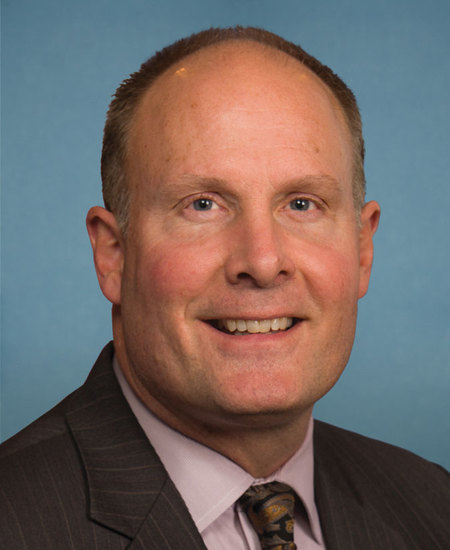
Rep. John R. Moolenaar
Sponsored bills
Maddy summaryThis bill expands existing U.S. sanctions authority to target foreign countries whose chemical or biological programs cause harm to other nations. It requires the President to investigate and sanction foreign officials or entities involved in such harmful activities, with specific focus on programs producing benzylfentanyl, 4-anilinopiperidine, or norfentanyl precursors. The law establishes a three-stage sanctions process: initial restrictions on scientific cooperation and certain exports, intermediate measures that may cut off foreign assistance and additional export controls, and final sanctions that prohibit financial transactions involving the affected country. Sanctions can be lifted if the foreign government addresses the harm, provides information, and takes steps to prevent future incidents, with a five-year limit on presidential waiver authority.
Maddy summaryThis bill establishes the United States-Israel Defense Technology Cooperation Initiative to accelerate joint development and integration of defense technologies between the two countries. It directs the U.S. Secretary of Defense, with Israel’s agreement, to identify Israeli-origin technologies for rapid adoption into U.S. military systems, focusing on areas like counter-drone systems, missile defense (including "Golden Dome for America"), AI, cyber defense, and directed energy. The initiative requires annual congressional reporting on progress, partnerships with industry, and technology transitions, while authorizing $150 million annually for fiscal years 2027-2029. It aims to strengthen bilateral defense innovation and streamline the use of Israeli technologies within U.S. military programs.
Maddy summaryThe SCAM Act requires online platforms that display paid advertisements (like social media sites) to verify advertiser identities, implement scam detection systems, and remove fraudulent ads within 24 hours of confirmation. It directly affects platforms that accept payment for ads, targeting scams such as fake giveaways, romance scams, and AI impersonations that cost consumers $195 billion in 2024 (per FTC data). Key mechanisms include mandatory identity checks for advertisers, active monitoring systems, and a 72-hour investigation window for reported scams. The law aims to reduce fraud by shifting responsibility to platforms, with enforcement by the FTC and state attorneys general.
Maddy summaryThis bill authorizes the U.S. Mint to produce two types of commemorative $2.50 coins for the 250th anniversary of the Declaration of Independence: a circulating coin for everyday use and a numismatic (collector) coin. Both would feature designs based on the 1926 Sesquicentennial coin - showing allegorical liberty holding the Declaration on one side and Independence Hall on the other - with "1776-2026" inscriptions. The bill requires the Mint to issue these coins by July 4, 2026, if technically and economically feasible, but does not mandate their production or affect any specific groups beyond the public who may purchase them.
Maddy summaryHR 7516, the "No Funds for Forced Labor Act," requires the U.S. Treasury to direct American representatives at international financial institutions (like the World Bank) to oppose loans for projects that use or risk using forced labor, particularly those involving state-run entities in Xinjiang. It mandates these institutions to vet projects for forced labor risks, explain their vetting process, and detail mitigation steps before funding. The bill directly affects international financial institutions and the projects they fund, especially those linked to Xinjiang. It does not ban all loans but targets projects with documented forced labor concerns, requiring annual reports to Congress on implementation. The law focuses on policy changes to prevent U.S.-aligned financial support for forced labor practices.
Maddy summaryThis bill restructures the Federal Acquisition Security Council (FASC) to operate under the Executive Office of the President and establishes a Federal Acquisition Security Council Program Office within that office. It creates a process for the Council to issue "designated orders" that can exclude foreign entities posing national security risks from government contracts, with mechanisms for agencies to request temporary waivers under certain conditions. The Council must also report annually to Congress on security risks associated with covered sources of concern, directly affecting federal agencies and government contractors involved in procurement.
Maddy summaryThis bill prevents state or local governments from banning or restricting energy connections (like installation, modification, or access) based on the type or source of energy, such as electricity, natural gas, or renewable fuels. It directly affects consumers choosing energy providers and energy companies seeking to offer services. The key provision prohibits local laws, regulations, or policies that limit energy services sold in interstate commerce, covering all energy types listed in the bill’s definitions. It does not create new programs but limits regulatory authority at the state or local level. The law aims to ensure open access to diverse energy sources without source-based restrictions.
Maddy summaryThis bill establishes a Truth and Healing Commission to investigate the history and impacts of U.S. Indian Boarding School policies on Native American communities, including their cultural, emotional, and physical effects. The Commission will document these policies' history through research, public meetings across all 12 Bureau of Indian Affairs regions and Hawai'i, and consultation with survivors, tribes, and relevant Federal agencies. It will develop recommendations for federal action on memorialization, education, and addressing ongoing impacts, with a final report due six years after enactment. The Commission will include a Survivors Truth and Healing Subcommittee with 15 members representing boarding school survivors, their descendants, and tribal communities. The bill requires trauma-informed care at public meetings and mandates consultation with Native American communities throughout the process.
Maddy summaryThe Make Elections Great Again Act (HR 7300) would require voters to present photo identification to cast ballots in person or by mail for federal elections, with limited exceptions for religious objections or military voters. It would establish new requirements for proving U.S. citizenship during voter registration, including documentary proof of citizenship and proof of state residency. The bill would change mail-in ballot procedures by requiring voters to request mail-in ballots (rather than universal mail-in voting), implementing barcode tracking for mail-in ballots, and setting strict deadlines for ballot receipt. These provisions would apply to all states for federal elections held in 2027 or later, affecting how voters register, vote in person, and submit mail-in ballots for federal office elections.