

Safeguard American Voter Eligibility Act or the SAVE America Act This bill requires individuals to provide documentary proof of U.S. citizenship when registering to vote, and requires photo identification to vote, in federal elections. Specifically, the bill prohibits states from accepting and processing an application to register to vote in a federal election unless the applicant presents documentary proof of U.S. citizenship. The bill specifies what documents are considered acceptable proof of U.S. citizenship, such as identification that complies with the REAL ID Act of 2005 that indicates U.S. citizenship. Further, the bill (1) prohibits states from registering an individual to vote in a federal election unless, at the time the individual applies to register to vote, the individual provides documentary proof of U.S. citizenship; and (2) requires states to establish an alternative process to demonstrate U.S. citizenship. Each state must take affirmative steps on an ongoing basis to ensure that only U.S. citizens are registered to vote, which shall include establishing a program to identify individuals who are not U.S. citizens using information supplied by certain sources. Additionally, states must remove noncitizens from their official lists of eligible voters. The bill (1) provides for a private right of action for certain violations, and (2) establishes criminal penalties for certain offenses. Individuals voting in federal elections must present an eligible photo identification document. An individual who votes by absentee ballot must submit a copy of their identification document with both the request for, and the submission of, the absentee ballot.
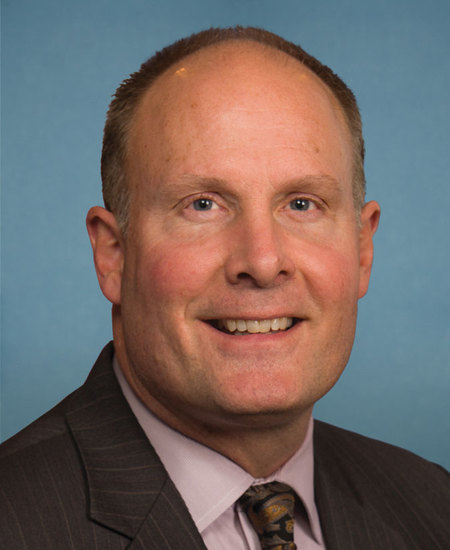
Rep. John R. Moolenaar
Sponsored bills
Maddy summaryThis resolution is a symbolic gesture supporting the designation of January 25-31, 2026, as "National School Choice Week." It does not create new laws or affect specific groups, but formally expresses the House's backing for raising public awareness about parental education options. The resolution encourages parents to learn about K-12 education choices (including public schools, charters, private schools, and homeschooling) and urges communities to host events during that week. It has no binding effect and focuses solely on recognition and awareness, not policy change.
Maddy summaryThis resolution designates July 6, 2025, as "A Day of Compassion" to commemorate the 90th birthday of the Dalai Lama. It expresses congressional support for the Tibetan people's human rights, religious freedom, and cultural/linguistic protections. The resolution affirms that decisions about Tibetan Buddhist religious leadership - including the selection of a future Dalai Lama - must be made by Tibetan Buddhist authorities, not the Chinese government. It does not create new laws or policies but serves as a symbolic expression of support through congressional recognition.
Maddy summaryThe SAFE KIDS Act would void surrogacy contracts between U.S. surrogates and foreign nationals from designated "foreign entities of concern" (nations listed under 10 U.S.C. §4872(f)(2)), except for married couples where at least one prospective parent is a U.S. citizen or lawful permanent resident. It prohibits surrogacy brokers from facilitating such contracts, imposing fines or up to one year in prison for knowingly arranging these agreements. If a contract is voided, custody decisions for the child would be determined by state courts based solely on the child’s best interests, disregarding the invalid agreement. The bill aims to address what Congress identifies as a national security threat involving exploitation of U.S. surrogacy laws and potential human trafficking.
Maddy summaryThe AI OVERWATCH Act requires U.S. exporters to obtain a license for sending certain high-performance integrated circuits (defined by specific technical specifications like processing power or bandwidth) to countries designated as "concerns," including China, Russia, Iran, and North Korea. Before approving such licenses, the Commerce Department must submit detailed certifications to Congress, including assurances the export won’t support military/intelligence capabilities of the recipient country and won’t harm U.S. semiconductor availability or AI leadership. The bill also creates an exemption for U.S. companies meeting strict security and ownership standards ("trusted United States persons") to export these chips to non-target countries without a license. Additionally, it mandates a national security strategy assessing how such exports affect U.S. AI competitiveness, particularly regarding China’s semiconductor production and capabilities.
Maddy summaryThe Tribal Labor Sovereignty Act of 2025 amends the National Labor Relations Act to explicitly include tribal governments and their enterprises as covered employers under federal labor law. It adds new definitions clarifying that "Indian tribe," "Indian," and "Indian lands" encompass federally recognized tribes, their members, and lands held in trust or within reservation boundaries. This change directly affects tribal nations, their member-owned businesses, and tribal employees by bringing them under the same labor protections (like collective bargaining rights) previously applicable to most private-sector employers. The bill does not create new programs but adjusts the legal definition to ensure tribal entities operating on tribal lands are subject to the NLRA’s standard labor regulations.
Maddy summaryHR 2683, the Remote Access Security Act, amends the Export Control Reform Act of 2018 to regulate how foreign entities remotely access U.S.-controlled technology. It defines "remote access" as foreign persons accessing U.S. items (like sensitive technology) via internet or cloud services from outside the item's physical location. The bill updates existing export control rules to include remote access as a regulated activity, requiring oversight similar to physical exports or in-country transfers. This primarily affects foreign companies, cloud providers, and technology firms handling U.S.-jurisdiction items.
Maddy summaryThis bill amends the Fair Labor Standards Act to exclude the value of employer-provided child or dependent care services from overtime pay calculations. It directly affects employers who offer such care benefits, allowing them to exclude the cost of these services when determining overtime wages for eligible employees. The key change adds a new exclusion (paragraph (9)) to the overtime calculation rules, meaning the value of childcare or elder care provided by an employer is no longer counted toward an employee's regular rate for overtime purposes. The change applies to overtime pay required for workweeks beginning after the bill's enactment date.
Maddy summaryHR 909, the Crime Victims Fund Stabilization Act of 2025, modifies how funds from the False Claims Act are deposited into the Crime Victims Fund. It specifies that from 2025 through 2029, certain False Claims Act proceeds (specifically those for qui tam plaintiff payments and government damage reimbursements) cannot be deposited into the fund. This change directly affects the composition of the Crime Victims Fund by excluding these specific revenue streams during the specified period. The bill does not create new benefits or alter victim services; it only adjusts fund allocation rules for existing False Claims Act revenues.
Maddy summaryThis bill imposes penalties on freight brokers who contract with carriers that have a history of safety violations. Specifically, brokers face a civil penalty equal to 10% of the contracted cargo's value if they work with a carrier (or employ a driver) that received three or more Department of Transportation violations in the past five years. Penalties collected go to the Highway Trust Fund and can be used for roadway safety projects. The bill also authorizes investigations into fatal crashes involving brokers' contracted carriers, allowing safety requirements to be added if brokers showed disregard for safety.