

Maddy summaryThis bill, the Tribal Tax and Investment Reform Act of 2026, treats federally recognized Indian tribes and Alaska Native entities as states for specific tax purposes, allowing them to issue tax-exempt bonds and maintain employee pension plans under the same rules as state governments. It creates a new $175 million annual tax credit allocation for investments in tribal areas, expands existing employment tax credits, and clarifies how tribal general welfare benefits and trust funds are treated for federal assistance programs. The legislation also establishes uniform fiduciary standards for tribal pension plans, provides technical assistance for tribal area investments, and ensures tribal areas qualify for certain affordable housing tax incentives.
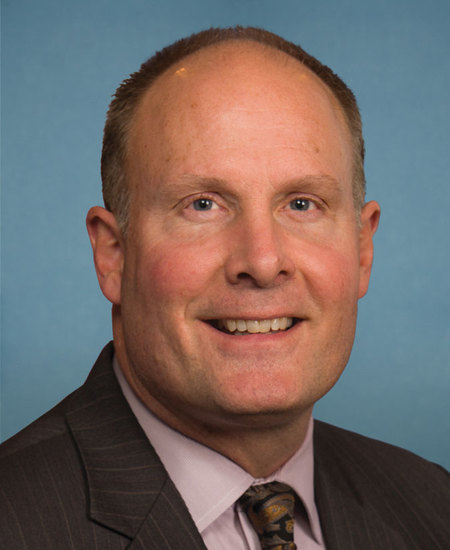
Rep. John R. Moolenaar
Sponsored bills
Maddy summaryHR 7678, the Gun Owner Registration Information Protection Act, prohibits federal funding for state or local databases that track lawfully owned firearms or their owners. The bill allows federal funding for databases recording lost or stolen firearms but bans it for databases listing legal gun ownership. This means states cannot use federal money to create or maintain systems that compile information about legally owned guns. The bill directly affects state and local governments that rely on federal funds for firearm ownership databases.
Maddy summaryThis bill, titled the Closing the Workforce Gap Act of 2026, modifies the H-2B temporary worker visa program by adjusting numerical limits, strengthening enforcement measures, and adding new requirements for employers. It directly affects employers seeking to hire foreign workers under the H-2B program and the workers themselves. The legislation caps the number of H-2B visas at half the number of certified positions from the previous year, while exempting rural and seasonal locations from this limit. It also increases penalties for employers who misrepresent information or fail to meet program requirements, establishes a formal complaint process for workers, and requires employers to maintain workplace safety plans and report certain employment issues to authorities. Additionally, the bill restricts H-2B petitions to nationals from countries designated as participating based on factors like visa fraud rates and overstay statistics, and prohibits workers from paying fees for recruitment or petition processing.
Maddy summaryThis bill, known as the Justice for Allie Act, would create a new federal crime for coercing adults with specific disabilities into sending intimate images. It directly affects individuals aged 18 and older who have conditions like autism, intellectual disabilities, cerebral palsy, Down syndrome, dementia, or schizophrenia that may limit their ability to protect themselves from exploitation. The law prohibits anyone from using mail or interstate communications to persuade, induce, entice, or coerce these protected adults to transmit intimate visual depictions with the intent to harm them. Penalties include fines and up to one year in prison for a first offense, or up to two years for repeat offenses. The bill defines harm broadly to include physical, psychological, financial, or reputational damage.
Maddy summaryThe SECURE Minerals Act of 2026 establishes a Strategic Resilience Reserve Corporation to secure U.S. supply chains for critical minerals and materials essential to defense, energy, technology, and renewable energy sectors. The Reserve will provide financing and acquisition support for domestic and partner country projects focused on producing, recycling, reusing, and repurposing critical minerals, with the goal of reducing U.S. dependence on foreign sources to no more than 75% for each mineral. It authorizes $2.5 billion in funding and establishes a Board of Governors with specific expertise requirements to oversee operations, while requiring regular risk assessments and annual reporting. This legislation directly affects mineral production and processing companies, federal agencies managing mineral resources, and partner countries working with the U.S. on supply chain security.
Maddy summaryHR 2969, the Finding ORE Act, authorizes the U.S. Secretary of the Interior to enter into memorandums of understanding (MOUs) with partner countries that supply critical minerals and rare earth elements. The bill requires these MOUs to include cooperative mapping of mineral reserves, give U.S. or allied foreign country companies the "right of first refusal" for development, and facilitate U.S. private-sector investment through financial institutions like the Development Finance Corporation. It also mandates data protection for mapping information against unauthorized access by non-partner or non-allied countries. This legislation directly affects partner foreign countries (mineral sources), U.S. companies, and the U.S. Geological Survey, focusing on securing supply chains through international scientific collaboration.
Maddy summaryHRES 1073 is a non-binding resolution designating February 21-28, 2026, as "National FFA Week" to recognize the National Future Farmers of America (FFA) Organization’s role in developing agricultural education leaders and to celebrate the 50th anniversary of Alaska’s State FFA Association. It does not create new laws or affect any specific groups or policies; instead, it formally expresses the House’s support for this commemorative week. The resolution highlights FFA’s mission to prepare students for leadership and careers in agriculture, food, and natural resources. As a symbolic gesture, it has no direct legislative or financial impact on constituents.
Maddy summaryHRES 1070 is a non-binding House resolution congratulating Michigan athletes who competed in the 2026 Milano Cortina Olympics and Paralympics. It formally honors 232 U.S. athletes (including 88 Michigan-affiliated competitors) who represented Team USA, highlighting their collegiate backgrounds and achievements. The resolution specifically recognizes Michigan Olympians and Paralympians like Dylan Larkin and Emilea Zingas through symbolic language. It has no policy impact or legal effect, serving solely as a ceremonial expression of support for athletes.
Maddy summaryThis bill directs U.S. agencies to support Iranian people's access to uncensored information and hold Iranian officials accountable for human rights abuses. It requires the State Department and FCC to report on technologies (like satellite networks and mesh systems) that could bypass internet restrictions in Iran, and authorizes $2 million annually to develop such tools. The bill also establishes a new "Iran Kleptocracy Initiative" at FinCEN to track corruption, freeze assets of Iranian regime officials and state-owned businesses, and coordinate with international partners. These measures apply to U.S. policy toward Iran but do not alter Iran's domestic laws; they focus on U.S. sanctions, technology development, and anti-corruption efforts targeting the Iranian regime.
This bill specifies a legal standard for determining whether an individual is considered an independent contractor rather than an employee for the purposes of federal labor laws that address issues such as the federal minimum wage, overtime compensation, and collective bargaining. The rights and protections provided by these laws exclusively apply to employees. Under the bill, an individual is considered an independent contractor if (1) another individual or entity does not exercise significant control over the details of how the individual's work is performed, without regard to any control the other individual or entity may exercise over the final result of the work performed; and (2) while performing such work, the individual has opportunities and risks inherent with entrepreneurship (for example, the discretion to exercise professional judgment). The bill also sets forth factors that may not be used to determine whether an individual is an employee. Specifically, factors such as whether another individual or entity requires the individual to meet certain legal, health and safety, insurance, or performance requirements may not be used to make such a determination.