

Maddy summaryThe SCALE Act aims to limit the ability of foreign adversaries, such as China and Russia, to acquire advanced artificial intelligence (AI) hardware. It requires the U.S. government to establish metrics for assessing the AI hardware capabilities of these countries and their associated entities. Based on these assessments, the Commerce Department must set annual export limits for AI hardware, generally denying licenses that exceed these thresholds or would allow adversaries to accumulate more than 5% of the U.S.'s total AI hardware capacity. The bill also imposes strict conditions on any approved exports, including independent verification of hardware capabilities and prohibitions against military or unauthorized remote access.
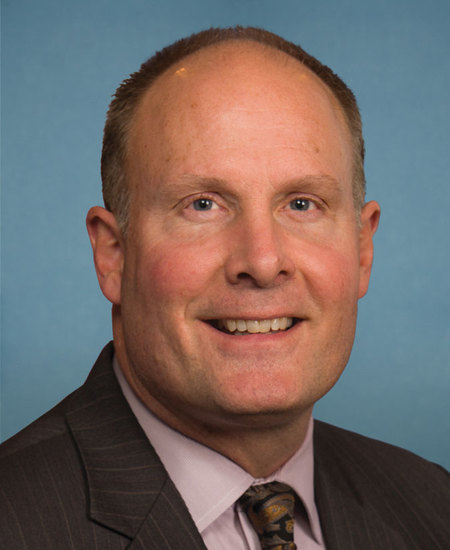
Rep. John R. Moolenaar
Sponsored bills
Maddy summaryThis resolution congratulates the University of Michigan Wolverines men's basketball team on winning the 2026 NCAA Division I Men's Basketball Championship. It recognizes the achievements of the student-athletes, coaches, and support staff who contributed to the team's victory, which marks the program's second national title in history. The resolution also invites the team to be honored at the United States Capitol Building and directs the House Clerk to provide copies of the resolution to University leadership for display.
Maddy summaryThis resolution formally acknowledges the American Chemical Society's 150th anniversary and recognizes its long-standing contributions to American science and innovation. It highlights the organization's role in advancing chemical research, supporting STEM education, and addressing global challenges through chemistry. The House of Representatives will send a copy of this resolution to the society's leadership to honor their work.
Maddy summaryThe Interstate Ferry Fairness Act allows privately owned ferries and ferry terminals operating between two adjoining states to receive federal funding for construction and purchase. Under this legislation, private ferry operators can apply for federal assistance if the Secretary of Transportation determines the project provides substantial public benefits or meets surface transportation needs. The bill also permits privately owned ferries to charge fares that cover operational costs plus a reasonable rate of return approved by the Secretary. These changes expand eligibility for the Ferry Boat Program beyond publicly owned vessels, while maintaining oversight on fare structures and fund usage.
Maddy summaryThis bill, titled the Ensuring Better Interest Treatment and Deductibility Act, would change how businesses calculate the limit on interest expenses they can deduct on their taxes. It directly affects corporations and other businesses that pay interest on loans by modifying the rules for determining adjusted taxable income. The key provision removes a specific clause from the tax code that currently limits how much interest can be deducted based on a company's earnings, effectively allowing more interest to be treated as a deductible business expense. These changes would apply to tax years starting after December 31, 2025, meaning businesses would need to adjust their financial planning for future tax filings.
Maddy summaryHRES 971 is a non-binding resolution condemning China's economic and military actions against Japan following Japanese officials' comments about Taiwan. It specifically addresses China's travel advisory (causing $1.2 billion in tourism losses), a ban on Japanese seafood imports, and military drills near Japanese territory. The resolution reaffirms U.S. support for the U.S.-Japan alliance under their mutual security treaty and calls on China to cease coercion. It emphasizes U.S. commitment to upholding a "free and open Indo-Pacific" based on international law. This resolution directly affects Japan's economy and security, with no new legal obligations but serving as a formal U.S. policy statement.
Maddy summaryHR 3447, the Chip Security Act, requires manufacturers to equip specific advanced integrated circuits (classified under export control numbers like 3A090) with security mechanisms before exporting them. These mechanisms must verify location and prevent unauthorized access, diversion, or tampering. The law mandates this for covered chips within 180 days of enactment, with a follow-up assessment within one year to develop additional security requirements. It directly affects U.S. chip exporters and importers of these high-tech products, aiming to strengthen export control compliance and national security.
Maddy summaryThis bill creates new funding opportunities for rural health facilities (like hospitals, clinics, and long-term care centers) in areas with populations under 50,000. It allows these facilities to use existing Rural Development Agency funds to refinance debt, update telehealth/equipment, or cover operating costs - provided the assistance preserves health access and improves the facility’s financial health. Eligibility requires the facility to be in a rural area or a persistent poverty area (defined as a 20%+ poverty rate for 30 years), and the Secretary may waive certain requirements for insolvent facilities in distressed communities. The law amends existing farm and rural development programs to directly support rural health infrastructure without creating new funding streams.
Maddy summaryHR 556, the Protecting Access for Hunters and Anglers Act, prevents federal agencies from banning lead ammunition or tackle on public lands and waters managed for hunting or fishing. It directly affects hunters and anglers using federal lands (like national wildlife refuges, public forests, and BLM lands) by blocking nationwide restrictions on lead products. The bill allows limited exceptions only for specific locations where wildlife decline is directly linked to lead use, and the restriction must align with state law or get approval from the state wildlife agency. This changes how federal land managers can regulate lead, requiring state coordination for any local restrictions.
Enhanced Iran Sanctions Act of 2025 This bill imposes sanctions on certain foreign persons (individuals and entities) that are involved in Iran's petroleum sector as well as certain associated persons. The bill also requires or authorizes actions to facilitate the enforcement of sanctions on Iran. Specifically, the bill requires the President to impose visa- and property-blocking sanctions on any foreign person that, after the bill's enactment, knowingly engages in any transaction related to the processing, export, or sale of oil, condensates, gas, liquefied natural gas, or other petrochemical products in whole or in part from Iran. The President must also impose sanctions on certain foreign persons associated with a sanctioned individual or entity. For example, the President must sanction the subsidiaries and corporate officers of a sanctioned business. The bill provides certain exceptions to these sanctions, including specifying that sanctions do not apply to the importation of goods or to conducting or facilitating transactions for humanitarian assistance. The Department of State must establish an interagency working group that shall seek to establish a multilateral contact group to coordinate international efforts to enforce sanctions on Iran. The bill expands the State Department rewards program to authorize a reward payment to any individual who furnishes information leading to the identification of a person (1) subject to sanctions under this bill, or (2) that has attempted or is attempting to evade sanctions under this bill.