

Maddy summary# Summary of Proposed Higher Education Act Amendments This document outlines significant proposed amendments to the Higher Education Act of 1965, primarily as part of the "College Cost Reduction Act." The key elements include: ## Accreditation Reform - Major overhaul of accreditation standards, requiring accrediting agencies to demonstrate independence from trade associations - New requirements for accrediting agencies to assess student achievement outcomes, including median value-added earnings relative to median total price charged - Introduction of an "Alternative Quality Assurance Experimental Site Initiative" to test non-accredited institutions - Protections for religious institutions, including a new process for appealing accreditation decisions related to religious mission - Removal of "litmus tests" that would require institutions to support specific political viewpoints ## Student Success Initiatives - Establishment of "Postsecondary Student Success Grants" to increase participation, retention, and completion rates for high-need students - Focus on evidence-based practices, with tiered requirements (tier 1, 2, and 3 reforms) - Mandatory inclusion of high-need student populations (low-income, first-generation, military-connected, etc.) - Requirements for institutions to report on completion rates, retention rates, and student demographics ## Regulatory Changes - Repeal of numerous existing regulations including: * Closed school discharges * Borrower defense to repayment * Pre-dispute arbitration * False certification requirements * Ability-to-benefit rules * Financial responsibility regulations - New restrictions on incentive compensation for recruiters - Changes to third-party servicer definitions and regulations ## Transfer and Credit Policies - New requirement that institutions cannot deny transfer credit based solely on the source of accreditation - Requirements for transparent transfer policies - Changes to reverse transfer policies ## Other Key Provisions - Modifications to the National Advisory Committee on Institutional Quality and Integrity (NACIQI) - New definitions for "total price" and "value-added earnings" - Changes to the process for institutions to change accrediting agencies - New requirements for institutions to report on student outcomes The overall focus of these proposed amendments is to reduce regulatory burden on institutions, promote transparency, improve student outcomes (particularly for high-need students), modernize accreditation processes, and protect religious institutions' rights in accreditation decisions.
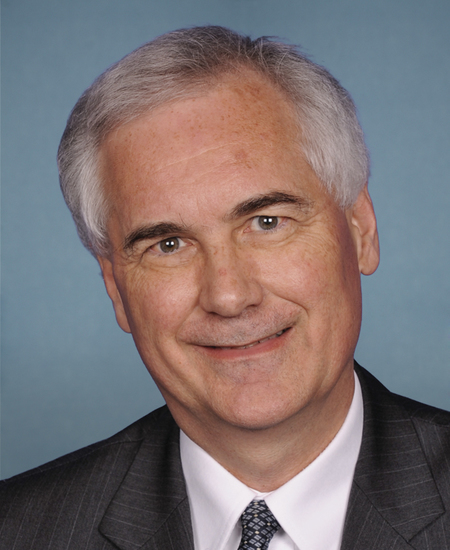
Rep. Tom McClintock
Sponsored bills
Maddy summaryThe Fix Our Forests Act creates a new system for managing wildfire risk on federal lands by designating "firesheds" (landscape-scale areas with high wildfire risk) and establishing a central coordination center called the Fireshed Center. It streamlines environmental reviews for vegetation management projects in these areas, requires public tracking of wildfire risk and management activities through a Fireshed Registry, and limits legal challenges to these projects. The bill affects federal land management agencies (like the Forest Service and Bureau of Land Management), communities in wildfire-prone areas, and utility companies managing vegetation near power lines. It also includes provisions for community wildfire risk reduction programs and research on new wildfire management technologies, aiming to accelerate risk reduction while maintaining transparency about where and how these projects are implemented.
Maddy summaryHRES 1554 is a symbolic House resolution expressing U.S. support for recognizing and commemorating the 1984 Sikh genocide in India. It calls for official remembrance of the violence that killed over 30,000 Sikhs, destroyed communities, and involved state complicity. The resolution specifically urges the U.S. government to commemorate the genocide, demand accountability for perpetrators, and reject any denial of the event. This resolution does not create new laws or affect specific groups directly; it is a formal statement of the House's position on historical recognition.
Maddy summaryThis bill amends Section 4013 of the Water Infrastructure Improvements for The Nation Act to allow water districts and project developers who received federal loans for western U.S. water infrastructure projects to repay those loans faster. It adds a new provision (paragraph (3)) directing repayment authority under Section 4011, streamlining the process for accelerating loan repayment. The change directly affects entities managing federally funded water projects in the western United States, enabling earlier repayment without altering loan terms or funding amounts.
Maddy summaryHRES 1537 is a non-binding House resolution condemning Hamas' October 7, 2023, attacks on Israel, which killed over 1,200 people and took 251 hostages, including 7 Americans still held captive. It calls on Hamas to immediately surrender, cease attacks, and release all hostages unconditionally, while reaffirming Israel's right to self-defense. The resolution also urges international organizations to condemn Hamas' actions and address the global surge in antisemitism following the attacks. As a symbolic statement, it does not create new laws or alter policy but expresses congressional position. The bill specifically references the ongoing captivity of seven U.S. citizens: Edan Alexander, Itay Chen, Sagui Dekel-Chen, Gadi Haggai, Judith Weinstein Haggai, Omer Neutra, and Keith Siegel.
Maddy summaryHRES 1348 is a non-binding resolution urging Nigeria to immediately release Tigran Gambaryan, a U.S. citizen and former IRS agent detained since February 2024. The resolution cites his unlawful detention after legal deadlines expired, deteriorating health (including malaria), and poor conditions at Kuje Prison, where he was transferred despite a court order for hospital care. It calls for Nigeria to grant him medical access, consular support, and due process, while urging the U.S. government to use all resources to secure his release. The resolution highlights concerns that his detention appears linked to pressure on his employer, Binance, rather than legitimate legal grounds.
Maddy summaryHR 9277, the REG Act, prohibits federal agencies from considering "environmental justice" when creating rules or enforcing laws, unless required by existing law. It directly affects agencies like the EPA by restricting how they evaluate policies' impacts on minority and low-income communities during rulemaking. The bill repeals three key executive orders: E.O. 12898 (addressing environmental justice in vulnerable communities), E.O. 14008 (climate action), and E.O. 14096 (environmental justice commitments). This changes how agencies develop regulations by removing mandatory consideration of environmental justice in their processes.
Maddy summaryHJRES 127 is a congressional disapproval resolution targeting a Securities and Exchange Commission (SEC) rule requiring public companies to standardize climate-related financial disclosures. It seeks to block the SEC’s March 2024 rule (89 Fed. Reg. 21668), which would mandate consistent reporting on climate risks for investors. If passed, this resolution would prevent the SEC rule from taking effect, directly affecting publicly traded companies required to comply with the proposed disclosure standards. The bill uses a specific congressional process under Title 5, U.S. Code, to nullify the rule without creating new regulations.
Maddy summaryHR 9191, the "No Union Time on the Taxpayer's Dime Act," amends 5 U.S.C. § 7131 to eliminate paid "official time" for federal employees performing union-related activities. The bill requires that any work employees do for labor organizations must occur during non-duty hours, not during regular work time. This directly affects federal workers who are union members, as it would end the practice of using paid work hours for union business. The key provision changes the existing rule to ensure union activities are conducted outside of standard work schedules, shifting the cost from taxpayers to employees' personal time.
Maddy summaryHRES 1371 is a House resolution condemning the Biden Administration and Vice President Kamala Harris for failing to secure the U.S. border. It cites statistics including over 9.7 million illegal immigration encounters since 2021 and the end of the Remain in Mexico program as evidence. As a symbolic resolution with no policy changes, it publicly expresses the House's disapproval of current border policies without altering any laws or enforcement actions.