

Maddy summaryThe SAVE Act (HR 8281) requires U.S. citizens to provide documentary proof of citizenship when registering to vote in federal elections. It defines acceptable proof as documents like passports, REAL ID-compliant IDs, military IDs, or birth certificates, and mandates that states verify citizenship using information from government agencies like DHS and Social Security. States must establish processes for voters without required documentation to provide an attestation under penalty of perjury. The law also requires states to remove noncitizens from voter rolls when verified evidence shows they're not citizens. This bill directly affects all applicants registering to vote in federal elections and state election officials who must implement these requirements.
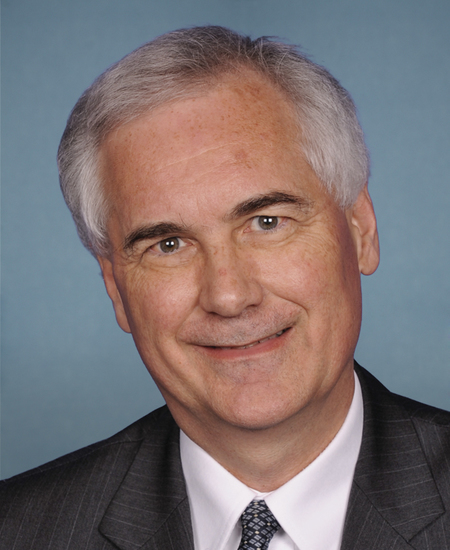
Rep. Tom McClintock
Sponsored bills
Maddy summaryHRES 1365 is a non-binding House resolution calling for the immediate termination of Kimberly Cheatle as U.S. Secret Service Director. It directly addresses the Secret Service Director and the executive branch, though it has no legal force to remove her from office. The resolution’s sole provision is a formal request for her termination, reflecting the sponsors' position on her leadership. As a symbolic gesture, it does not change her employment status or require any action from the President or Secret Service.
Maddy summaryHR 4848, the Censorship Accountability Act, allows individuals to sue federal employees who, while acting in their official capacity, deny others their First Amendment rights (such as free speech or assembly). It directly affects federal employees (excluding the President/Vice President) who may restrict protected expression under federal law. Key provisions create a private right of action for victims to seek legal redress in court, with courts able to award attorney fees to the winning party. The bill explicitly excludes lawsuits against the federal government for employment-related conduct and clarifies that unconstitutional sections won’t invalidate the rest of the law.
Maddy summaryHJRES 171 is a joint resolution seeking congressional disapproval of a proposed rule by the Department of Health and Human Services (HHS) regarding the Unaccompanied Children Program. The rule, published in the Federal Register on April 30, 2024, aimed to update regulations governing the placement, care, and services for unaccompanied alien children (children entering the U.S. without a parent or guardian). This resolution would block the rule from taking effect, preserving existing regulations under the current program framework. It uses a standard congressional disapproval process under Title 5 of the U.S. Code to halt the rule without altering the program’s underlying policy.
Maddy summaryThis bill rescinds unspent funds from specific federal programs. It targets leftover money from pandemic relief (like the CARES Act and American Rescue Plan) and certain infrastructure initiatives (including education stabilization funds and transportation programs like the Congestion Mitigation Program). The rescission is limited to amounts already allocated for Israel, Ukraine, and Indo-Pacific security supplements under recent appropriations. Unspent funds must be returned to the Treasury, with no new spending created.
Maddy summaryHR 537 authorizes a Congressional Gold Medal to honor 60 diplomats who saved Jewish lives during the Holocaust by issuing visas and passports against their governments' orders, risking expulsion and personal danger. The medal will be presented to the next of kin of these diplomats, alongside representatives from their home countries, and permanently displayed at the United States Holocaust Memorial Museum. The bill also permits the sale of bronze duplicates to cover production costs, with proceeds going to the U.S. Mint. This legislation recognizes the diplomats' humanitarian actions without creating new government programs or altering existing laws.
Maddy summaryHR 1687 names the United States Postal Service facility at 6444 San Fernando Road in Glendale, California, as the "Paul Ignatius Post Office." All official U.S. government references to this location - such as in laws, maps, or documents - will now use the new name. This is a procedural bill with no policy changes beyond the naming designation.
Maddy summaryHR 5403, the CBDC Anti-Surveillance State Act, prohibits the Federal Reserve from issuing or facilitating central bank digital currency (CBDC) directly or indirectly to individuals through financial institutions. It specifically bans Federal Reserve banks from offering digital products to individuals, maintaining individual accounts, or using CBDC for monetary policy implementation. The bill also clarifies that its restrictions do not apply to existing physical cash or private, permissionless digital payment systems. This bill directly affects the Federal Reserve's ability to develop or deploy a government-run digital dollar. The law aims to prevent the Federal Reserve from creating a digital currency that could enable transaction tracking or government oversight of personal financial activity.
Maddy summaryHJRES 154 is a resolution seeking to block a Bureau of Land Management (BLM) rule that would have updated the process for leasing federal lands for oil and gas extraction. The rule, published in the Federal Register on April 23, 2024, specifically addressed "Fluid Mineral Leases and Leasing Process" (89 Fed. Reg. 30916). If passed, this resolution would cancel the rule under the Congressional Review Act, preventing it from taking effect. This action would directly impact the BLM's regulatory authority and oil and gas companies operating on federal lands.
Maddy summaryThis bill requires the U.S. Department of Defense and State Department to immediately deliver all previously approved military equipment and services to Israel within 15 days, reversing any pauses on arms transfers. It prohibits using federal funds to withhold, halt, or cancel defense article deliveries to Israel and mandates that unobligated security assistance funds for Israel must be spent by the end of 30 days. The bill also requires monthly reports to Congress detailing all security assistance provided to Israel since October 7, 2023, including specific items delivered and funding sources. The law directly affects U.S. agencies responsible for military aid and Israel as the recipient of the security assistance.