

Maddy summaryThe Equality Act (HR 15) amends federal civil rights laws to explicitly prohibit discrimination based on sexual orientation and gender identity in employment, housing, public accommodations, credit, and jury service. It expands existing protections under the Civil Rights Act of 1964 by adding sexual orientation and gender identity as protected characteristics under sex discrimination prohibitions. The bill clarifies that discrimination against LGBTQ people is a form of sex discrimination, consistent with the Supreme Court's Bostock decision, and adds specific definitions for gender identity and sexual orientation. This legislation directly affects businesses, employers, housing providers, financial institutions, and government entities that serve the public. The bill creates a more comprehensive legal framework to address discrimination that LGBTQ people face in multiple aspects of daily life.
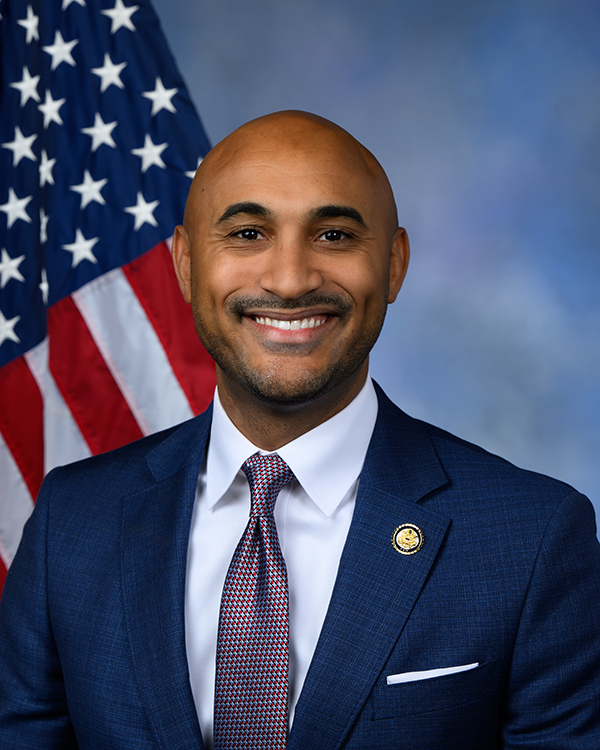
Rep. Shomari Figures
Sponsored bills
Maddy summaryHR 3063, the Rural Hospital Stabilization Act of 2025, provides federal grants to help financially struggling rural hospitals in remote areas (defined as at least 15 miles from the nearest hospital and 20 miles from urban areas). The bill authorizes up to $5 million per hospital over five years for facility repairs, equipment upgrades, and operational costs like non-leadership payroll and debt payments, while requiring hospitals to demonstrate how projects address financial needs and ensure continued community access. Grants must supplement - not replace - existing funding, and hospitals must submit sustainability plans. The $500 million total funding authorization covers fiscal years after 2025, with a report to Congress on program outcomes within 18 months.
Medicare for All Act This bill establishes a national health insurance program that is administered by the Department of Health and Human Services (HHS). Among other requirements, the program must (1) cover all U.S. residents; (2) provide for automatic enrollment of individuals upon birth or residency in the United States; and (3) cover items and services that are medically necessary or appropriate to maintain health or to diagnose, treat, or rehabilitate a health condition, including hospital services, prescription drugs, mental health and substance abuse treatment, dental and vision services, long-term care, gender affirming care, and reproductive care, including contraception and abortions. The bill prohibits cost-sharing (e.g., deductibles, coinsurance, and copayments) and other charges for covered services. Additionally, private health insurers and employers may only offer coverage that is supplemental to, and not duplicative of, benefits provided under the program. Health insurance exchanges and specified federal health programs terminate upon program implementation. However, the program does not affect coverage provided through the Department of Veterans Affairs or the Indian Health Service. The bill also establishes a series of implementing provisions relating to (1) health care provider participation; (2) HHS administration; and (3) payments and costs, including the requirement that HHS negotiate prices for prescription drugs. Individuals who are age 18 or younger, age 55 or older, or already enrolled in Medicare may enroll in the program starting one year after enactment of this bill; other individuals may buy into the program at this time. The program must be fully implemented two years after enactment.
Maddy summaryThe Hunger-Free Future Act of 2025 amends the SNAP program to require that any update to the thrifty food plan must not increase food insecurity. It mandates that adjustments to the diet cost must continue following existing rules while explicitly ensuring updates do not worsen food insecurity, defined as households lacking adequate food due to insufficient money or resources. This directly affects SNAP beneficiaries by setting a new standard for how the program's cost calculations are reviewed. The bill changes the procedural requirement for SNAP re-evaluations without altering benefit amounts or eligibility rules.
Hot Foods Act of 2025 This bill expands the Supplemental Nutrition Assistance Program (SNAP) to permit the use of SNAP benefits to purchase hot foods or hot food products ready for immediate consumption.
Maddy summaryHRES 332 is a resolution designating April 11-17, 2025, as "Black Maternal Health Week" to raise awareness about maternal health disparities affecting Black women and birthing people in the U.S. It references CDC data showing Black women are 2-3 times more likely to die from pregnancy-related causes than White women and that the U.S. has the highest maternal mortality rate among developed nations. The resolution emphasizes the need to address systemic inequities contributing to these outcomes without creating new laws or funding. It serves as a symbolic recognition to amplify community-led efforts, such as those by the Black Mamas Matter Alliance, rather than implementing policy changes.
Maddy summaryThis resolution (HRES 330) honors Volkert, Inc. for its 100th anniversary and century of engineering service to Alabama and the U.S. It recognizes the company’s historical contributions, including designing major infrastructure like the Mobile Bay Causeway, Lake Pontchartrain Causeway, and Alabama’s Cochrane Africatown Bridge, as well as its role in economic development. The resolution directs the House to send a copy to Volkert’s leadership (CEO Thomas Hand and COO Leon Barkan). As a ceremonial resolution, it has no legal effect or policy changes.
Supplemental Oxygen Access Reform Act of 2025 or the SOAR Act of 2025 This bill establishes certain requirements with respect to the payment and provision of supplemental oxygen and related services under Medicare. For example, the bill provides for separate payments, indexed to inflation, of oxygen and related equipment, supplies, and services under Medicare (rather than under the competitive acquisition program). It also specifically covers services that are provided by respiratory therapists under Medicare and provides for an additional payment adjustment for these services. Additionally, the bill (1) requires the Centers for Medicare & Medicaid Services to develop an electronic template for providers to use when prescribing oxygen and related equipment, supplies, and services; and (2) establishes certain rights for beneficiaries receiving these items and services, such as the right to choose their suppliers and to receive clear communications and be informed about the services provided.
Maddy summaryThe Community First Act provides federal grants to local governments and community partnerships to reduce jail populations and shorten pretrial stays. It funds planning grants ($100,000 for 1 year) and implementation grants ($500,000-$3 million over 6 years) for evidence-based strategies like expanding pretrial services, reducing cash bail, and creating non-incarceration diversion programs. Grantees must achieve specific annual jail reduction targets (5% in year one, 50% by year six) while addressing racial/ethnic equity disparities in incarceration data. The bill directly affects communities with high local jail rates, particularly those disproportionately impacted by the justice system, by requiring data-driven reforms and community collaboration.
Maddy summaryThe Adult Education WORKS Act establishes "college and career navigators" who provide personalized guidance to help individuals access education, job training, and workforce development services. These navigators help people identify career paths, connect to financial aid, and develop digital literacy and information literacy skills needed for success in education and employment. The bill requires state and local workforce boards to collaborate with adult education providers to promote these navigator positions and authorizes $135 million annually for library-based and community-based navigator programs. It updates definitions to include digital and information literacy skills as essential components of adult education. The bill directly affects adult education providers, workforce development systems, and individuals seeking to improve their job skills or educational opportunities.