

Stronger Communities through Better Transit Act This bill requires the Department of Transportation (DOT) to establish a grant program to support operating projects for public transportation and related service improvements, particularly in underserved communities and areas of persistent poverty. Specifically, the bill requires DOT to allocate funding under the program for urbanized areas, states, and Indian tribes that are recipients of funds under either the Federal Transit Administration's (FTA's) Urbanized Area Formula Funding program or Formula Grants for Rural Areas program. Eligible recipients may use funding for operating costs associated with projects that improve public transportation service for transit-dependent populations and support increased transit ridership (e.g., service expansion, information technology enhancements, and workforce development). DOT must apportion the funding so that recipients receive funds that are proportional to their share of operating costs. The bill also provides for an increased federal cost share for operating assistance for projects or programs carried out in areas of persistent poverty or underserved communities. DOT must set up a multimodal access measurement interface for public agencies to aid transit agencies in determining and reporting on access to jobs and essential services. A grant recipient must (1) report specific information to the FTA for inclusion in the National Transit Database, and (2) survey transit riders and non-riding residents regarding transit service improvements. Further, the bill expands the purposes of the public transportation programs to include supporting public transportation's role in combating climate change through growing/retaining transit ridership.
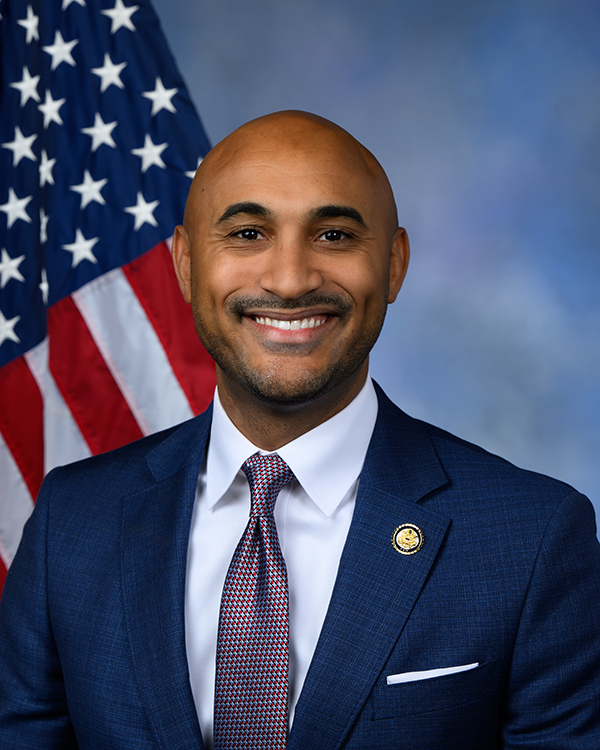
Rep. Shomari Figures
Sponsored bills
SNAP Administrator Retention Act of 2025 This bill directs the Food and Nutrition Service (FNS) to pay Supplemental Nutrition Assistance Program (SNAP) state agencies for 100% of SNAP administrative personnel costs. The bill also requires that state SNAP agency administrators be paid at least the same amount as federal employees. (Under current law, FNS generally pays 50% of a state's administrative costs for SNAP.) Specifically, FNS must pay a state agency for 100% of all SNAP administrative personnel costs that are part of an FNS-approved state agency personnel wage plan. This must include all costs associated with hiring and training new employees, maintaining those personnel costs, and complying with wage standards. The state agency must use these funds (1) to supplement, not supplant, nonfederal funds used for existing administrative personnel costs; and (2) for existing or additional full-time positions that are above the number of positions that were held in FY2024. The bill also requires that the wage standards for SNAP state agency administrators be (1) at least the same amount as the General Schedule (GS) pay rate for federal employees; and (2) updated annually based on any increase in the GS pay rate, including locality adjustments.
Maddy summaryHR 3376 creates the Water Affordability, Transparency, Equity, and Reliability Trust Fund, funded by increasing the corporate tax rate from 21% to 24.5% starting in 2025, with annual funding capped at $35 billion or 1/20th of 20-year infrastructure needs. The bill allocates funds to clean water programs (42%), safe drinking water programs (42.5%), household water well systems (1%), colonias assistance (0.5%), and Indian health services (3%), requiring specific prioritization of low-income and minority communities for many programs. It mandates an EPA study on water affordability, discriminatory practices, and civil rights violations in water service, including data collection on service disconnections affecting vulnerable populations. The bill also includes provisions for lead service line replacement, PFAS contamination response, and job training grants for water system operators with specific requirements to prioritize low-income communities.
Maddy summaryThis bill prohibits federal officials from reducing, eliminating, or suspending funding for land-grant colleges and universities without specific authorization from Congress. It directly affects public institutions designated as land-grant colleges under the 1977 National Agricultural Research, Extension, and Teaching Policy Act. The key provision requires that any change to their funding must be explicitly approved by an Act of Congress, preventing unilateral federal action. This creates a clear legal barrier against unexpected funding cuts to these institutions. The bill focuses on preserving existing funding streams rather than creating new programs.
Maddy summaryHR 3257, the Bridge to Medicaid Act of 2025, would make healthcare more affordable for low-income Americans by reducing out-of-pocket costs for individuals with household incomes at or below 138% of the federal poverty level. The bill extends cost-sharing reductions through 2028, creates special enrollment periods for eligible low-income individuals, and provides additional benefits including non-emergency medical transportation services. It also temporarily expands premium tax credits for 2026-2028 and increases federal Medicaid funding for newly eligible individuals through 2029. The legislation aims to improve access to healthcare for millions of Americans who face financial barriers to coverage.
Maddy summaryHR 3184, the PFAS Alternatives Act, funds research to develop turnout gear (firefighter safety clothing) without harmful PFAS chemicals, directly affecting firefighters who wear this gear. It authorizes $25 million annually (2025-2029) for grants to eligible organizations to research and test PFAS-free gear, requiring partnerships with firefighting groups to translate findings into practice. The bill also allocates $2 million yearly (2027-2031) for training programs on safe gear use and decontamination. Its goal is to reduce firefighters' exposure to chemicals linked to occupational illnesses during operations.
Maddy summaryHRES 380 is a symbolic resolution supporting the designation of May 5-9, 2025, as "Teacher Appreciation Week." It does not create new laws or funding but formally recognizes teachers' contributions to education. The resolution affirms teachers' role in shaping students' futures and calls for including teachers in education policymaking at all levels. It highlights teacher survey data showing broad support for policies like equitable school funding and culturally responsive teaching, though the resolution itself only expresses support for the week's designation. This is a non-binding gesture with no direct impact on affected individuals or policies.
Maddy summaryThis bill amends the Small Business Act to allow surviving children of service-disabled veterans to maintain a business's status as "owned and controlled by service-disabled veterans" after the veteran owner's death. It adds surviving children (biological or adopted) to the definition of eligible owners, enabling them to inherit the veteran's ownership stake if they acquire it immediately after the death. The business must have been previously certified under the program, and the child must hold the ownership for up to three years (or until they relinquish it) to keep the business eligible for veteran-owned business benefits. This change directly affects small businesses owned by service-disabled veterans that would otherwise lose their veteran-owned status upon the owner's death.
Maddy summaryThe SALUTE Act establishes a 5-year pilot program to provide supplemental insurance for military members and their TRICARE-eligible dependents who face uncovered cancer-related costs. It requires the Secretary of Defense to partner with up to two insurance companies to offer fixed indemnity plans that pay direct cash benefits for cancer screening, diagnosis, and treatment expenses not covered by standard military health benefits. These plans must operate separately from existing coverage, be available through TRICARE's online portal, and be funded entirely by enrollee premiums with no government subsidies. The program targets active-duty service members (Army, Navy, Marine Corps, Air Force, Space Force) and their TRICARE-enrolled dependents facing out-of-pocket cancer costs.
Assault Weapons Ban of 2025 This bill makes it a crime to knowingly import, sell, manufacture, transfer, or possess a semiautomatic assault weapon (SAW) or large capacity ammunition feeding device (LCAFD). The prohibition does not apply to a firearm that is (1) manually operated by bolt, pump, lever, or slide action, except for certain shotguns; (2) permanently inoperable; (3) an antique; (4) only capable of firing rimfire ammunition; or (5) a rifle or shotgun specifically identified by make and model. The bill also exempts from the prohibition the following, with respect to a SAW or LCAFD: importation, sale, manufacture, transfer, or possession related to certain law enforcement efforts, or authorized tests or experiments; importation, sale, transfer, or possession related to securing nuclear materials; and possession by a retired law enforcement officer. The bill permits continued possession, sale, or transfer of a grandfathered SAW, which must be securely stored. A licensed gun dealer must conduct a background check prior to the sale or transfer of a grandfathered SAW between private parties. The bill permits continued possession of, but prohibits sale or transfer of, a grandfathered LCAFD. Newly manufactured LCAFDs must display serial number identification. Newly manufactured SAWs and LCAFDs must display the date of manufacture. The bill also allows a state or local government to use Edward Byrne Memorial Justice Assistance Grant Program funds to compensate individuals who surrender a SAW or LCAFD under a buy-back program.